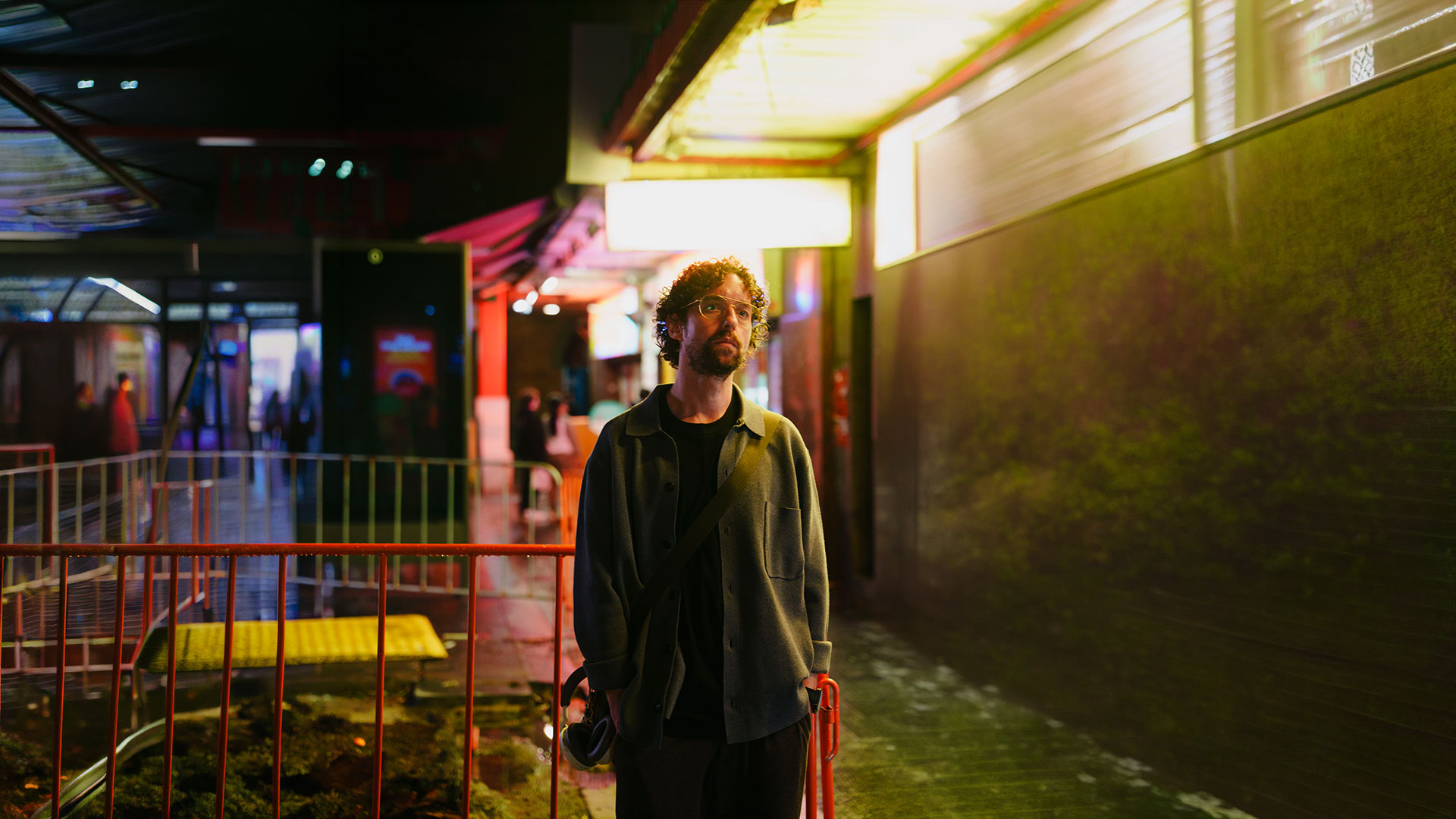
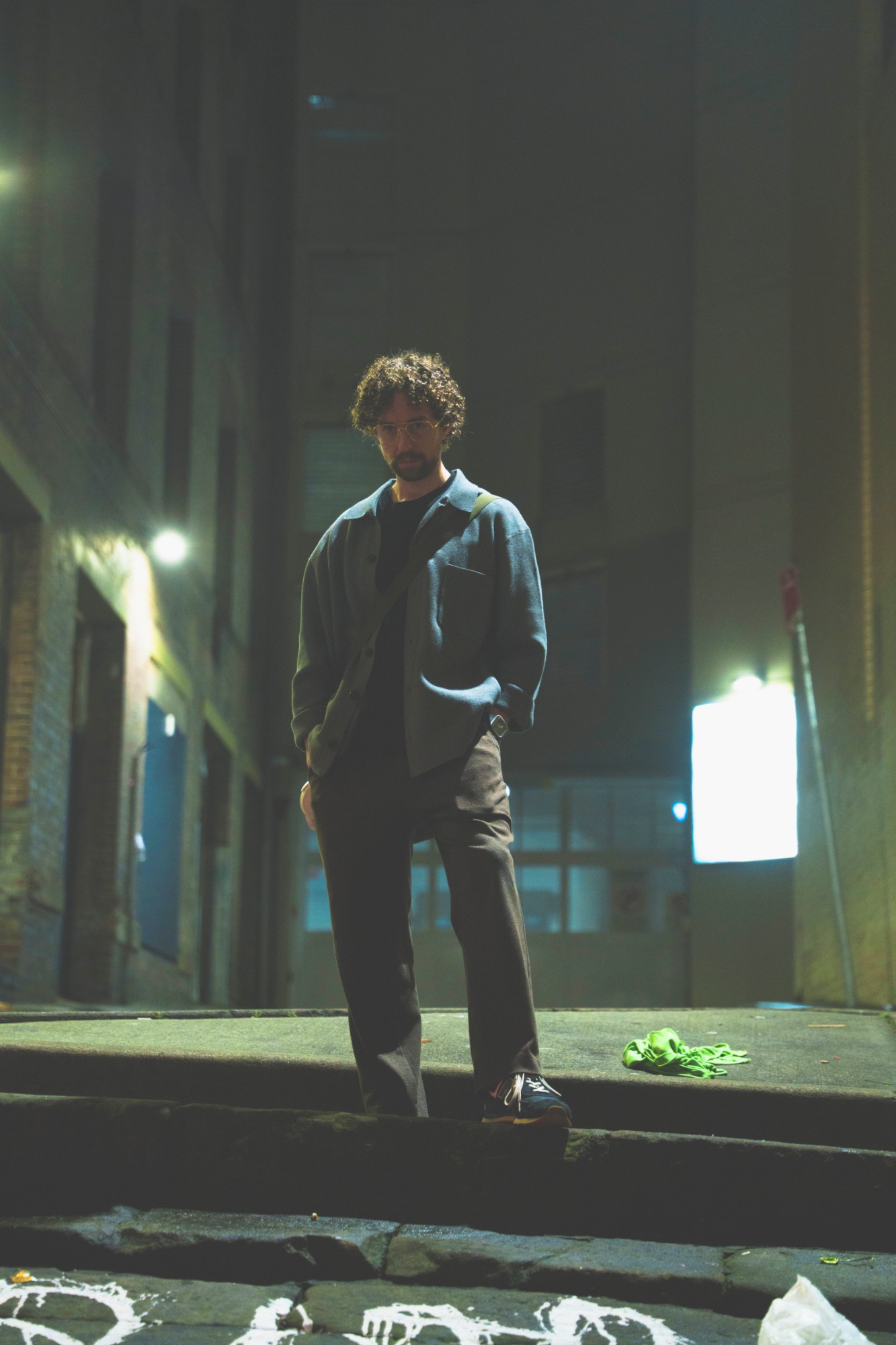
Voix Nulle is the electronic project of Brendon Warner, a composer and multi-instrumentalist working out of Newtown with hardware synthesisers, samplers, and drum machines. The name is pronounced Vwa-Noole. Before this debut he played in the 2000s metal outfit Sound the Mute, then spent eight years inside We Lost The Sea, contributing guitar to the band’s first three records, including the 2015 landmark Departure Songs. In 2016 he stepped away from that circuit to study sound design and composition theory through Berklee, and to rebuild his language around analog volatility rather than band architecture. The scores that pulled him across were Geoff Barrow and Ben Salisbury’s work for Ex Machina and Trent Reznor and Atticus Ross on The Social Network. Texture as structure. Weight without a singer.
In French electoral language, a voix nulle is a ballot that exists and still counts as nothing. A mark on paper that the system records and then discards. Warner spent years inside one of Australia’s most public post-rock records, a work that learned how to speak after a singer was gone, and then chose a name that means the vote that does not register. That is the pressure under Latticework. The album is a textured collage drawn from Haruki Murakami and from the architectural, social, and human weave of inner-west Sydney. The cover shows a white industrial walkway receding into glare, pipes and grating stacked until the image almost forgets there was ever a person standing on it. The music does the same thing for a while. It builds a city you can feel in the low end, then leaves you unsure whether you are inside it or only passing through.
Signing Secrets with the Moon opens at a distance. No drum kit. A slow synthetic pulse under wide pads and a bass floor that feels more like weather than rhythm. The piece moves sideways. Small changes in timbre, more reverb, a night sky that stays night. Then No Aware tightens the frame. The title carries the Japanese sense of things already slipping, and Warner writes that feeling as a metallic ping, close to a sonar tick, repeating over a dark, almost airless bed. Distortion arrives in thin layers. The track never detonates. It accumulates. Open in Rhythms keeps the percussion out and lets bright, distant resonances cut across the bass. The space gets larger and colder. You are still in a city, but the city has become a shaft.
The centre of the record is where the grid starts to spark. Neon Storm is a continuous wall, low and slightly chewed, with sharp metallic lines tearing through it like cables in rain. Childlike Empress takes its name from the figure in The NeverEnding Story, the presence that holds a world together while The Nothing eats the edges. Warner answers that image with a rising arpeggiator and stacked, rough electronic grain. Filters keep moving. Harmony stays secondary to modulation. The piece is eight minutes of machine breath, and it makes the modular setup feel like a performance of resilience rather than a mood board. For listeners who come from Alessandro Cortini or Tim Hecker, this is the clearest handshake. For anyone who knows Warner’s older band, it is the same taste for scale, rebuilt from a sawtooth and a curve.
He has said as much himself. “Just how much richness and range there is in a simple sawtooth wave is, to me anyway, grossly underappreciated. Paired with a curvy envelope, a low-pass filter, and an amp, a humble East Coast subtractive synth setup remains profound.” Latticework is that belief stretched across seven rooms. Lonesome Embrace is the empty one. Pads drift. Low frequencies hold still. Reverb puts every event far away. Isolation here is not a lyric. It is a floor plan.
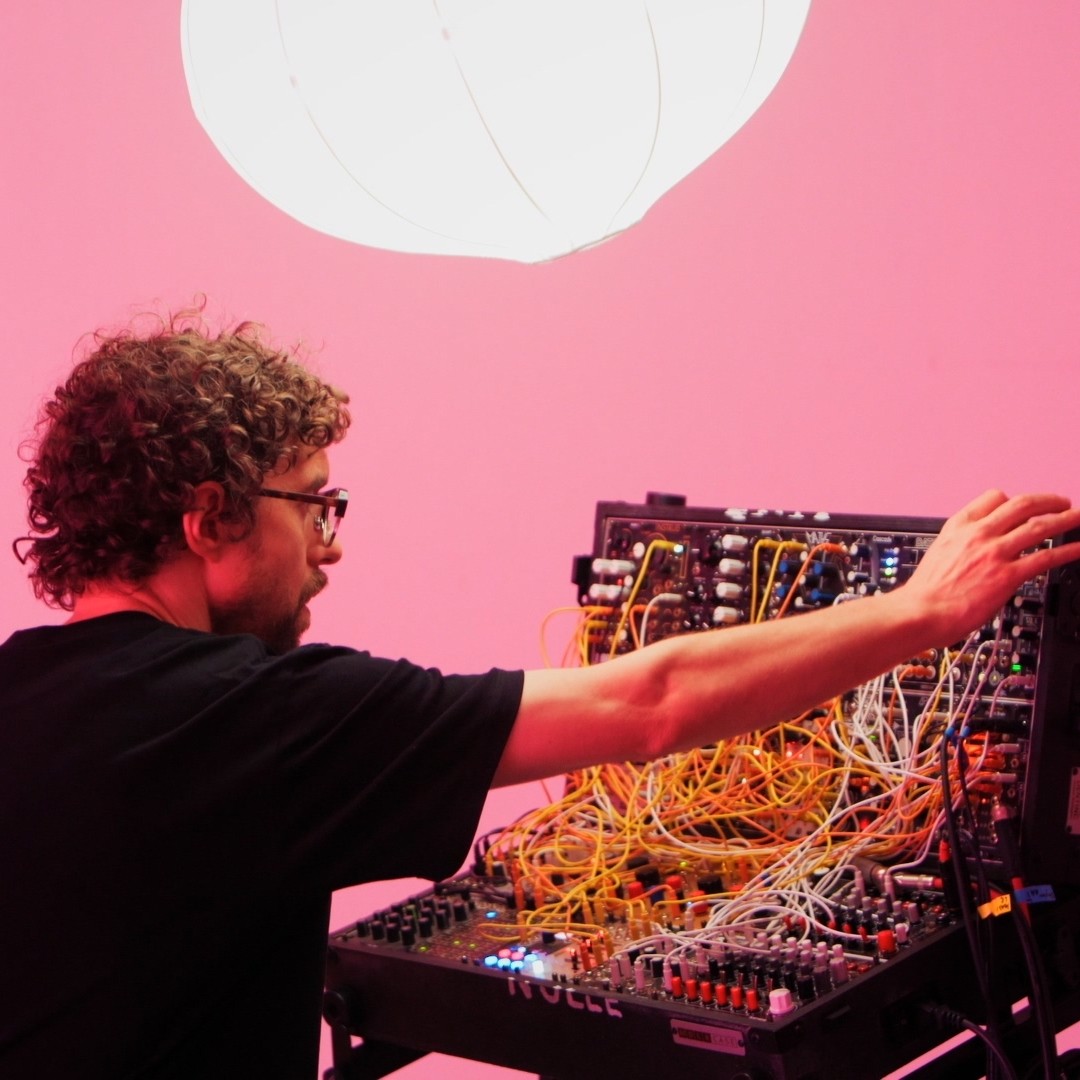
Then Hold on, Tengo changes the temperature. After an album of synthetic weather, the closer reaches for grip. The title itself is a hand on something, English and Spanish in the same breath, hold on, I have this. Studio footage of the piece shows Eurorack sequenced with Elektron machines, the same hardware volatility Warner has been chasing since he left the band room. On the album the last movement also lets more bodily attack into the lattice, a physical pulse after so much processed air. The grid does not vanish. It gets touched.
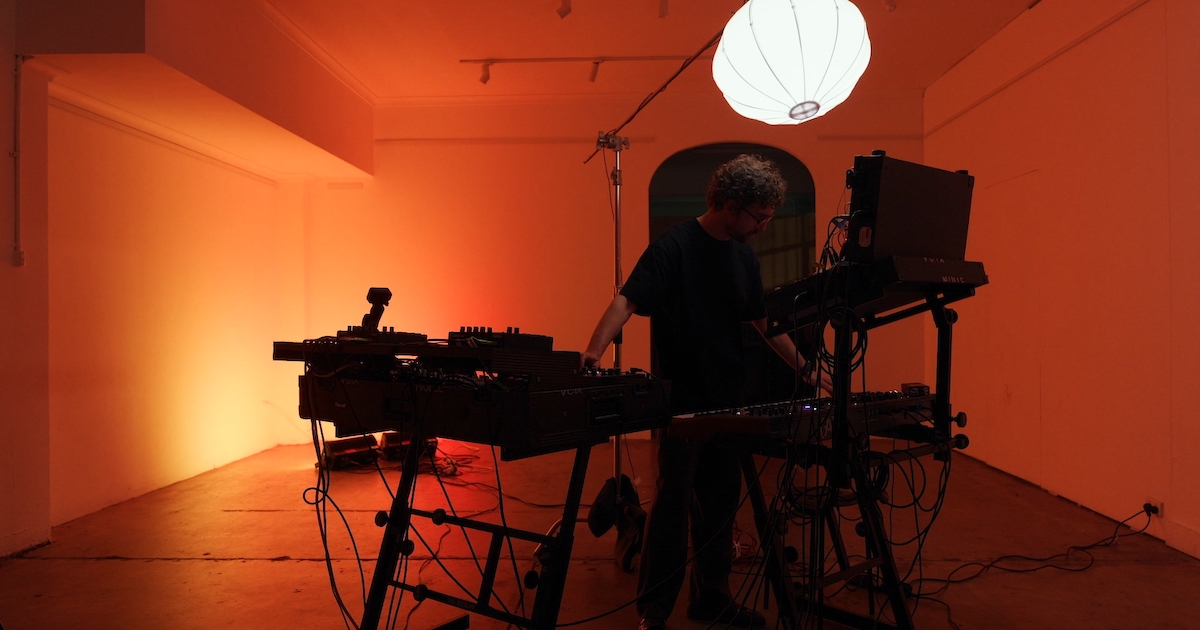
That is why the record belongs in this frame. Warner is not illustrating Sydney with field recordings taped to the pavement. He is translating the district’s empty lots, rail cuts, glass, and night electricity into subtractive sound, then asking what kind of person can still stand inside that design. On 7 November he opens for We Lost The Sea at City Recital Hall, where Departure Songs returns with orchestra and choir for its tenth year. The sequencing is almost too neat. First the null voice. Then the old monument. Latticework earns its place before that night because it refuses nostalgia. It listens to a city until the architecture starts to hum, and it keeps enough human pressure in the last room that the white grid on the cover finally feels occupied.