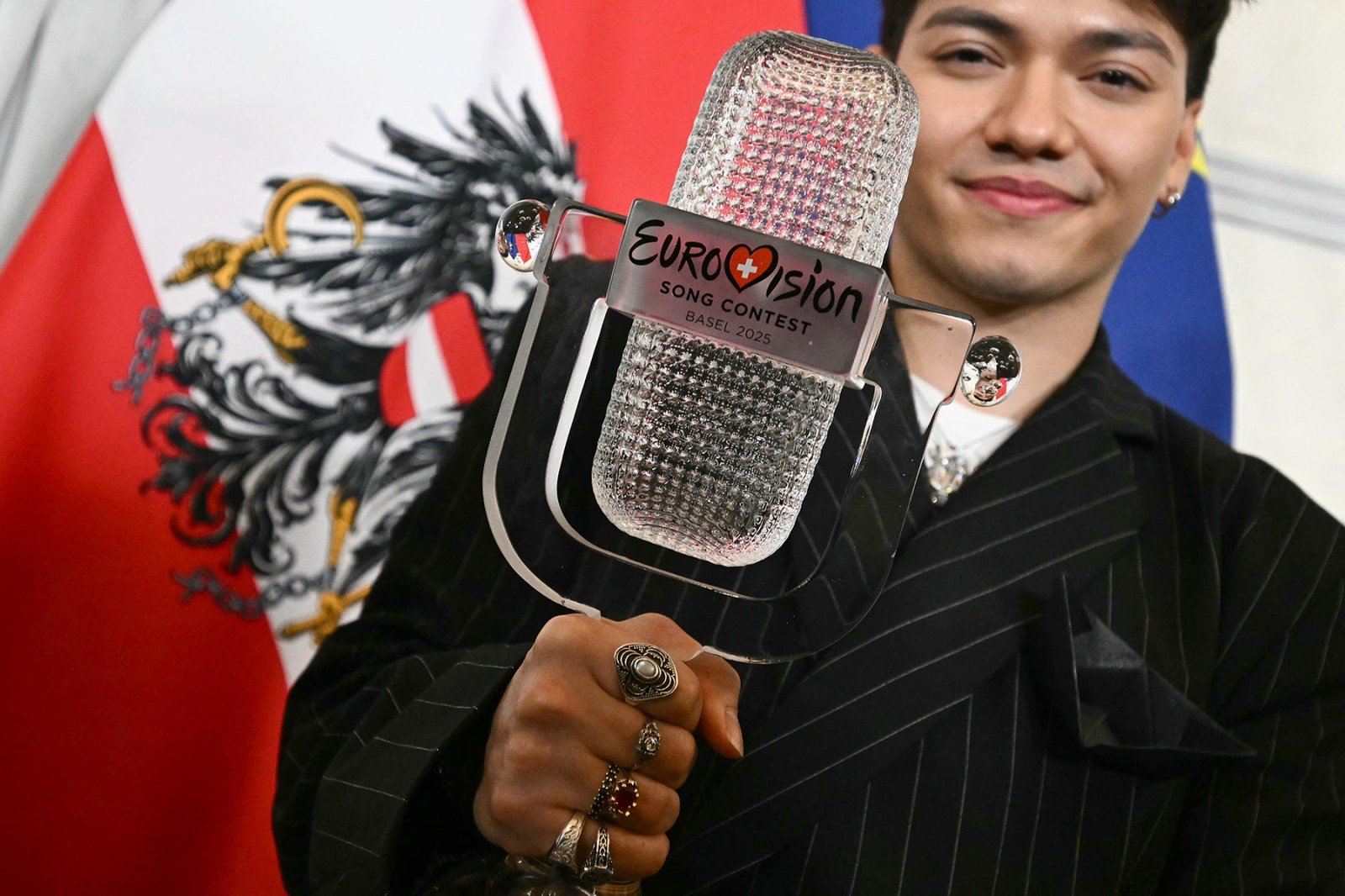
The Wiener Stadthalle in Vienna hosts the Eurovision 2026 final this Saturday with a roster that keeps circling a single idea: release through rhythm or unequivocal romance. Denmark’s Søren Torpegaard Lund, Cyprus’ Antigoni and Italy’s Sal Da Vinci all search for it, but with tactics that pull the long-running contest into notably distinct cultural territory.
After five consecutive English-language entries, Denmark sent Lund with “Før Vi Går Hjem,” a hedonistic cut that tries to bottle the sticky urgency of a nightclub at 3 a.m. A hammering bass line runs underneath lyrics that torch the possibility of restraint: “We let the night stand in flames and forgetting ourselves / Holding onto each other until we burn to death.” Denmark’s three previous wins, the most recent in 2013, lend the switch back to Danish a calculated weight rather than a nostalgic gesture.
Lithuania, a country that has never won, arrives with Lion Ceccah’s “Sólo Quiero Más.” The song opens with a Lithuanian verse, leans on English and Spanish for the chorus, then folds in German, Italian and French during the final stretch. The message is communal resilience: “Even if we’re living in a mad world / Even if we’re standing as the sky falls.” Ceccah’s performance treats language-switching as an argument for togetherness rather than a technical flourish.
Italy’s Sal Da Vinci chose the opposite route, narrowing the focus to Neapolitan alongside Italian for “Per Sempre Sì.” It is the first time the Romance language has