Rihab Azar learned the oud in a house where the instrument was already a craft before it was a career. She was born in Homs into a musical family. Her father, the luthier Samir Azar, made her first oud when she was seven and became her first teacher. She trained at the Conservatoire of Damascus, and in 2014 she became the first woman oudist to stand as a soloist with the Syrian National Orchestra for Arabic Music. A Chevening Scholarship brought her to London in 2015 for a master’s in music education at UCL. Arts Council England named her a musician of exceptional promise the following year. Since then she has worked as a soloist, a collaborator with ensembles including London Sinfonietta and Royal Northern Sinfonia, and a community music leader, including a trainee year at Wigmore Hall. In 2025 she was named a finalist for the Aga Khan Music Awards. Dandelion, released on 13 March 2026 with the support of the Arab Fund for Arts and Culture, is her first album.
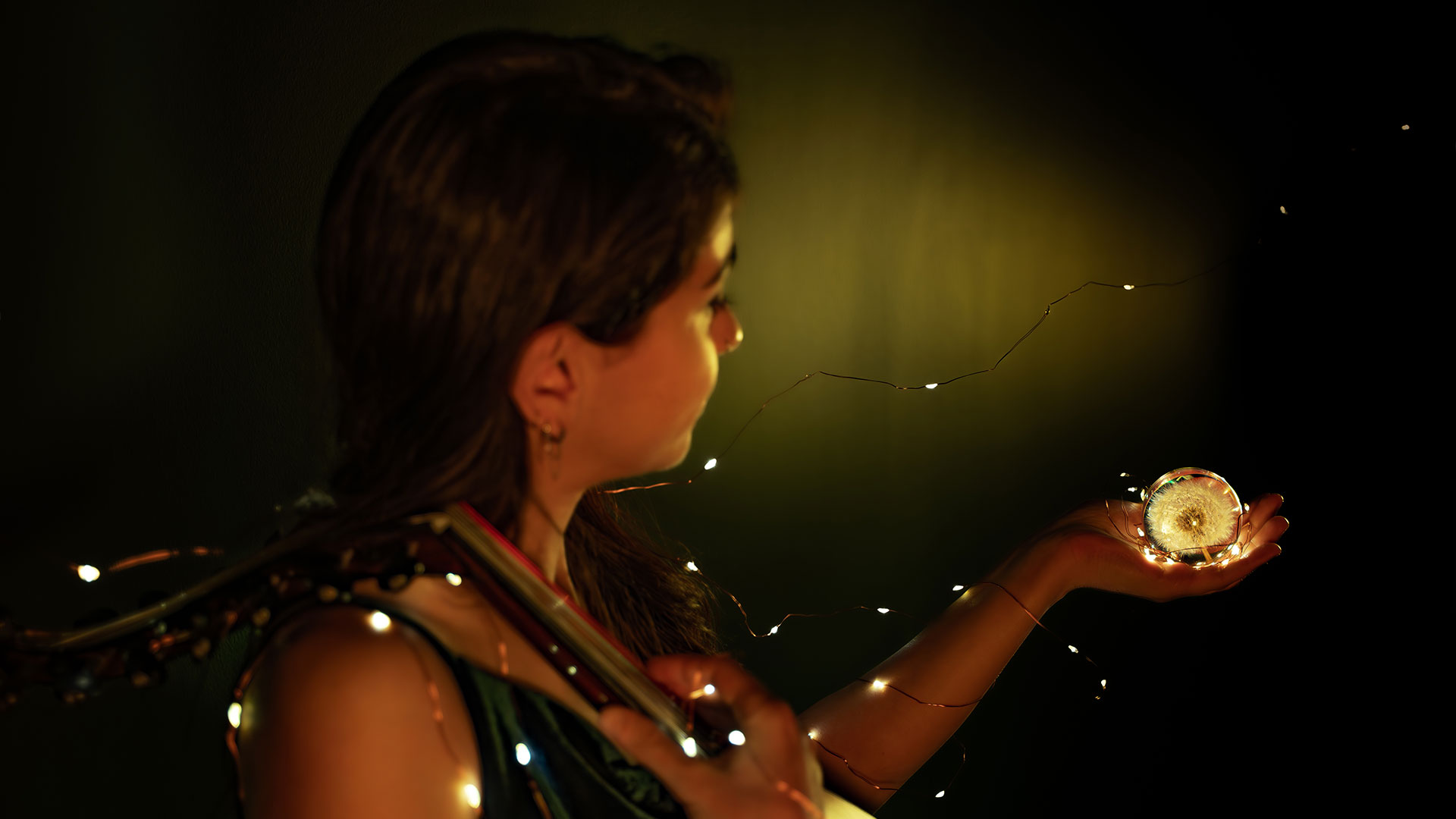
Children used to tell the hour by blowing a dandelion clock. One breath, two, three, until the seed head emptied and the time, they decided, had been spoken. It is a poor clock. The number is invented. The plant does not care. What the game actually measures is how much air a person still has, and how willingly the seed will leave the stem. That image sat far from this record until it did not. Azar has said a mighty dandelion grew on the sixth-floor balcony of her London flat. She wrote the music through years of isolation, when the work of being a migrant woman oud player who would not sit inside an orientalist frame felt small against the grind. She wanted a title that held resilience, unpretentiousness and what she calls fierce enchantment. A weed on a balcony is a clock that refuses official time. Dandelion works in that same weather.
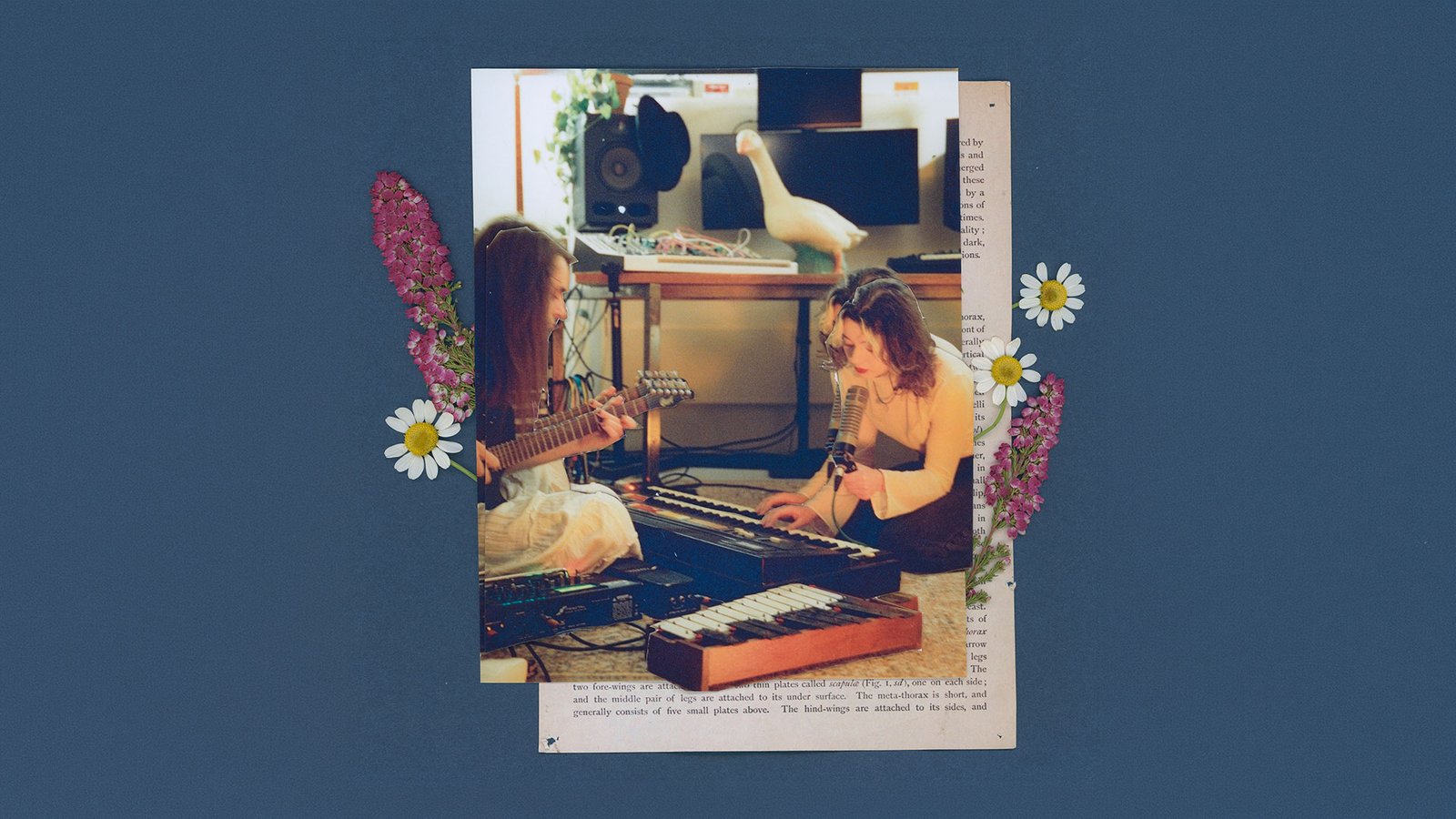
The record is short and concentrated, eight instrumental pieces arranged for oud, violin, cello and percussion. Azar recorded the oud alone onto a laptop in a small South London booth. Andrew Chung’s violin and Ben Bolt-Martin’s cello arrived during a compacted Canadian tour in spring 2025. Firas Hassan’s percussion was tracked in Belgium. Ian Dean mixed the album at Arda Recorders in Porto. Clara Araújo mastered it at Knurl. Galahad Jones frames the set with two poems. The geography is scattered. The sound stays close, wooden, and carefully paced. Much of the album’s inner life sits in the dialogue between plucked oud and bowed cello, the bright attack of one line set against the long warmth of the other.
Questions opens because Azar needed the weight first. She wrote it for the Grenfell Tower memorial service at St Paul’s Cathedral on 14 December 2017. An intimate, circular oud arpeggio sets a reflective temperature in the first seconds. Time feels suspended. The cello does not sit behind the phrase. It answers in counterpoint, dark and searching, until the arrangement becomes a set of interior questions that refuse a clean landing. At under two minutes the piece stays essential. The low frequencies of the bow fill the room while the form stays open. As long as injustice remains, she has said, the objection continues.
The Pull of Time keeps that acoustic climate and gives it a pulse. The oud turns the arpeggio into an ostinato, circular and constant, close to the abstract tick of a clock. That pattern is the engine. The cello becomes the pull named in the title, long notes, vibrato, a gravity that moves around the rigid count of the oud. Measured time and felt time share the same bar. The track does not look for a surge. It evolves slowly, cinematic and meditative, and leaves the listener with time as an authority that will not be negotiated.
Biography of a Bubble was written in memory of Eyad Osman, a Syrian musician and friend who died young. The mood lifts at once. The oud arpeggio becomes lively, almost dancing, with a folk current that feels Mediterranean in its motion. The cello stops carpeting the harmony and starts speaking in rhythmic, even percussive lines. Time signatures shift. Phrasing turns unpredictable. Lightness and a funeral gravity share the same room. The music rises, thins, and vanishes as a bubble would, a short life told through acceleration and sudden quiet.
Indulgence, composed in the first lockdown of 2020, is Azar giving herself more room in form and phrasing. The oud arpeggio remains her signature, only now it is languid, circular, willing to take its time. The cello enters without a hard edge, long warm notes that twine around the oud until the two lines linger on their own decay. Tension gathers through persistence rather than volume. The atmosphere is dense, slightly dark, and unhurried. She has said there is a flavour of rock in the piece. What you hear is permission.
Samaie is the album’s most explicit conversation with tradition. The form is one of the central cycles in Arab and Turkish composition, ten beats typically grouped 3-2-2-3, with a recurring section and a faster close. Azar spent a long time on this piece because she wanted it recognisable and not obedient. The oud leaves some of its fluid arpeggio behind for asymmetric patterns and modal phrasing. The cello answers with drones, harmonic resonance, small glissandi in the low register. The dialogue becomes a shared cycle rather than a chase. Violin and percussion thicken the ritual. The 10/8 remains an anchor she can lean against while the phrasing finds new places to land.
I. Sand, Roots and II. & Blossoms belong together. They were written for an exhibition by visual artist Latifah A., The Universe Within. Azar had an oasis in mind, travellers, rare water, the unlikely fact of flowers in hard ground. The first movement is the album’s most stripped and dark. Silence becomes structure. The oud arpeggio, when it appears, is broken and slow. The cello turns spectral, low drones, scraped and breathy sounds that feel buried, root-like, older than melody. The second movement is the flowering. A fast, nervous oud pattern breaks the soil. The cello returns to song, tense and bright, and the two lines chase each other upward. After the dirt, a sudden lift.
Enchanted Weavers, also written with Latifah A. and tied to Burne-Jones’s Garden Court at the Bowes Museum, closes the album. Six weavers sleep under a spell in the painting. The oud arpeggio becomes a weave, articulated and close, driving without the frenzy of Blossoms. The cello takes its most lyrical role, wide singing lines set against the dense plucked fabric. Intensity and transparency trade places. Azar places the piece last because she wants enchantment to remain active. Fierce enchantment, in her language, is a reservoir you carry back into labour. The quartet moves toward a waking that does not shout.
What gives Dandelion weight is the precision of its world. The production leaves air around the oud so the attack stays tactile. Strings answer without smothering the centre. Percussion arrives as colour and pulse. The path is clear even without words. Suspended questions, the drag of time, a bubble’s short life, lockdown permission, a samaie that still recognises itself, sand then blossom, then a final weave. The album asks for attention and rewards it with control rather than display.
A dandelion clock is a lie that still tells the truth. The hour is wrong. The breath is real. Azar’s debut works that way. It shows how a line can leave the stem and still belong to the plant that made it.