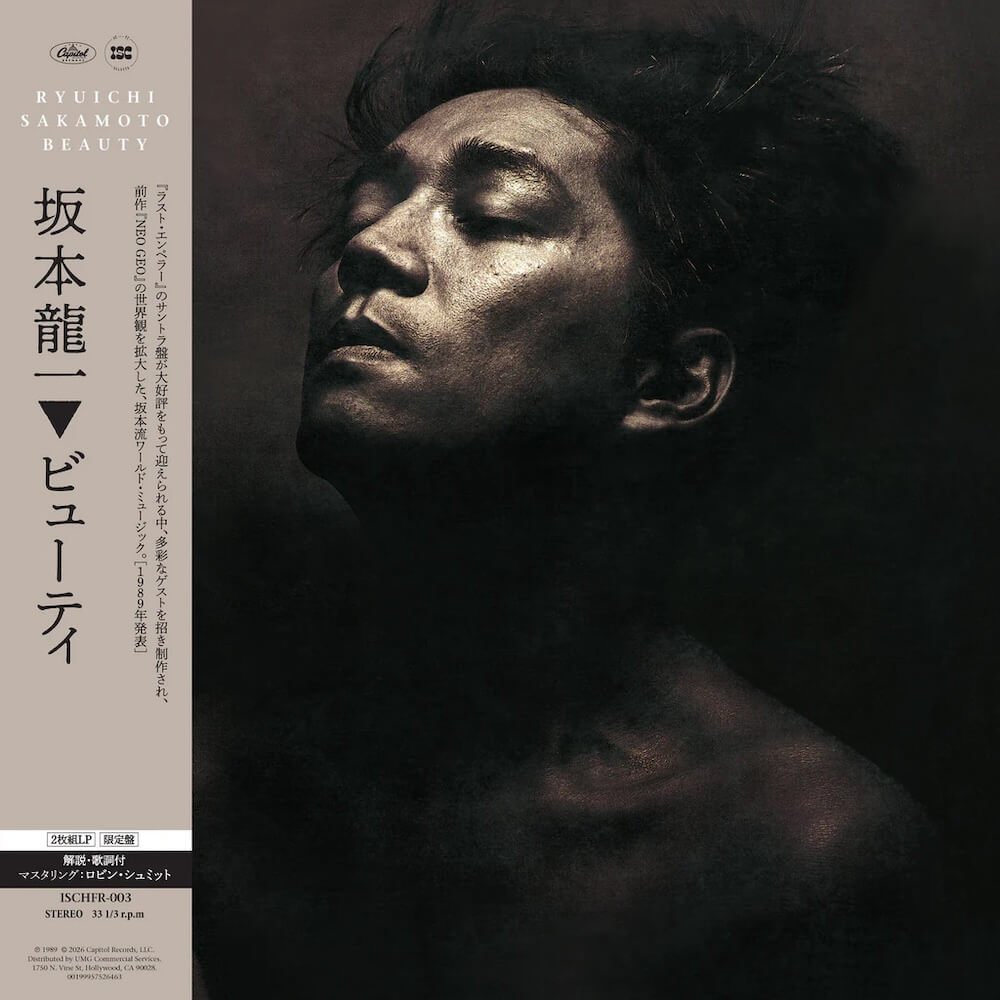
By 1989, Ryuichi Sakamoto had already moved through Yellow Magic Orchestra, solo electronic experiments, and a film score Oscar. But his album Beauty marked a quieter, more deliberate culmination. It closed a decade of work that steadily refused the boundaries of genre, nation, and scene.
Sakamoto called his approach “outernationalism”—a term he used to sidestep the flattening habits of “world music.” The record was built from sessions that pulled in Brian Wilson, Sly Dunbar, Robert Wyatt, Senegalese vocalist Youssou N’Dour, and Arto Lindsay, among others. The result was not fusion for its own sake. Okinawan folk songs, a Rolling Stones cover, and sharp pop instincts were stitched together with genuine curiosity, not tourist fascination.
The album’s construction was deliberately patchworked, almost like a sonic map. Sakamoto trusted his collaborators enough to let their distinct approaches hold, and the production clarity that marked his earlier work gave way to something more textured and unrushed. It was less a showcase of diversity than a demonstration that cultural material could be handled with respect without losing shape.
Beauty has never received the retrospective attention of Thousand Knives or the Merry Christmas, Mr. Lawrence soundtrack. But as a document of an artist thinking through connection while the rest of the industry defaulted to sampling and signifiers, it remains a quiet landmark. A reminder that the path across borders can be deliberate, not just decorative.