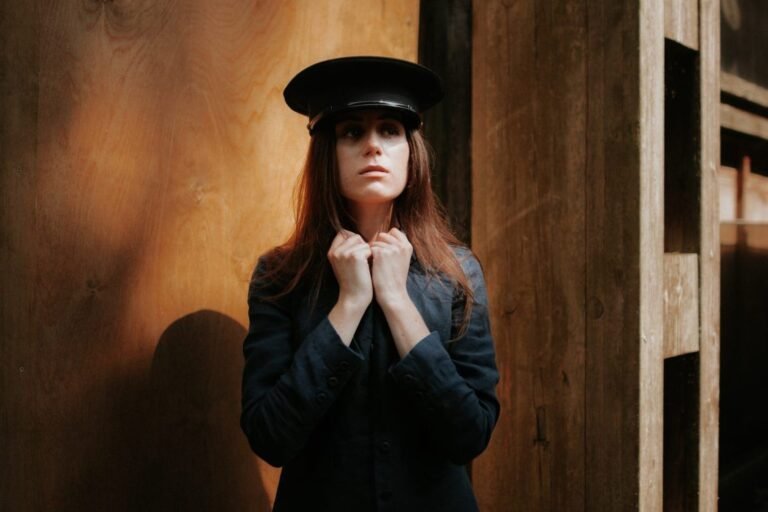
On the opening volume of Water Remembers, a violinist with a decade inside criminal justice reform treats Liszt’s quiet as a surface that can still shift.
Katie Mosehauer has spent more than a decade inside criminal justice reform. The work sits alongside a classical path that has taken her through the Charlottesville Symphony, the Puget Sound Symphony Orchestra, and the Seattle Rock Orchestra, and through the independent project Glass Heart String Choir. Raised outside Washington, D.C., she now works from California’s Coachella Valley, where she treats older repertoire as material that can still be spoken with. Water Remembers I: The Current Carries is the first of four paired volumes in an audiovisual series that keeps that background in the room.
In the Coachella Valley the surface of the ground can look settled for years while the aquifers underneath continue to move. Draw too much and the land itself begins to sink. What appears stable is often only the visible edge of a current that has already started to reverse. Mosehauer has described the same pattern in the systems she knows: change can look inevitable from a distance, then show itself as dependent on people who keep showing up when the outcome is still uncertain. The music on The Current Carries stages that difference without requiring a lyric.
The opening track, Consolations, S. 172: No. 3 in D-Flat Major, Lento placido, keeps the original’s slow pulse but replaces the piano with harp and strings. The harp’s arpeggios arrive as a steady, liquid motion. Violin and cello answer each other across a close, natural space that lets the friction of the bow stay audible. The cello takes the main line in its lower register before the violin climbs. The ascent feels measured rather than dramatic. What remains is a held quiet, the kind of consolation that acknowledges weight without claiming it has been lifted. The arrangement stays intimate. Nothing in the texture suggests the larger forces have paused.
Converging Tides (after Liszt) begins from a different depth. Layered drones and warm synths sit under the first gestures, a still surface that does not yet declare direction. Crystalline arpeggios appear, then accelerate. Delicate pizzicato and the softer support of the string ensemble leave room for the solo violin to lean into longer notes, the vibrato and portamento carrying a human contour even without words. Density increases. Separate figures begin to draw toward one another. Near the end a rapid ascending spiral opens into the full weight of the strings, a broad and solemn mass that holds for a time before the texture thins and returns toward silence. The piece does not resolve the question of what will be carried forward. It simply keeps the currents in motion long enough for them to meet.
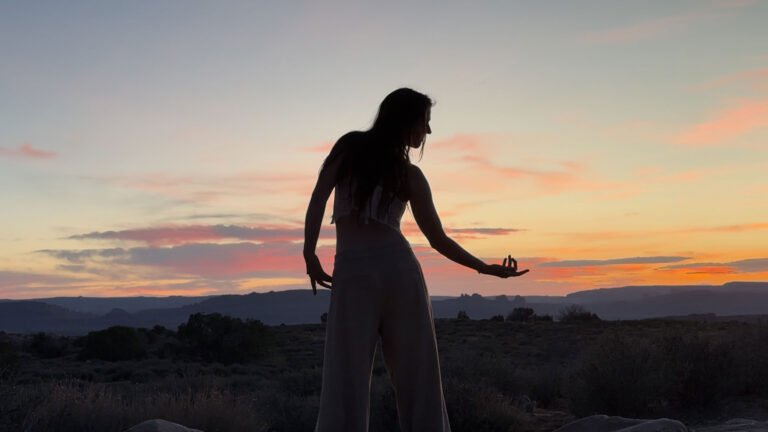
The accompanying film extends the same logic into image. Gestures repeat, falter, and start again. No single action alters the landscape on its own. Each one becomes part of the sequence that follows. Mosehauer has said the tension at the center of the work is the recognition that progress remains fragile and that it depends on continued presence. The two tracks place that recognition inside sound. The first holds a surface of calm that still contains the possibility of movement. The second lets the deeper current become audible, then lets it recede without pretending the motion has ended.
Across the short span of the release the music refuses to treat either moment as complete. The consolation stays close and physical. The larger convergence opens and then returns to quiet. What remains is the sense that both belong to the same ongoing work: the choice of what to keep carrying when the outcome is still uncertain. The Current Carries does not announce that the water has already arrived. It asks what the current sounds like while people are still deciding to move with it.
Follow Katie Mosehauer
Water Remembers I: The Current Carries is out now.
Listen: Spotify · SoundCloud
Follow: Instagram · YouTube · Facebook · Official Site
Join the Club
Like this story? You’ll love our monthly newsletter.
Thank you for subscribing to the newsletter.
Oops. Something went wrong. Please try again later.

ROMBO Editorial Staff
The collective voice behind ROMBO Magazine’s news, reviews, features, and cultural coverage.