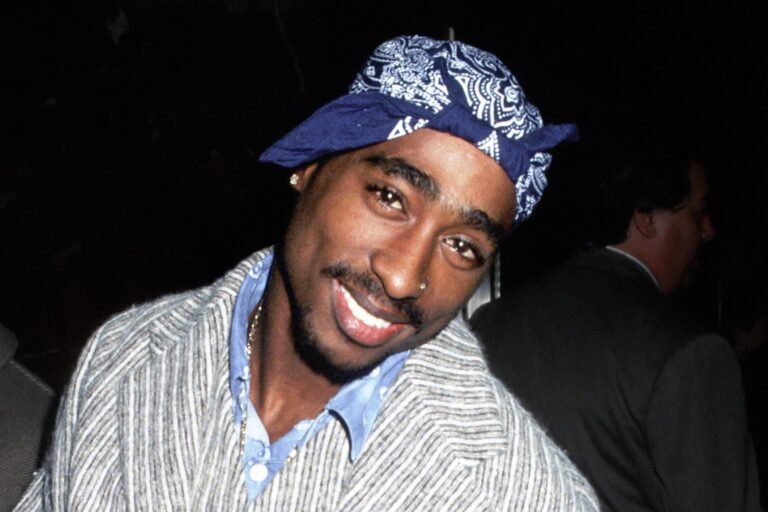
Three decades after his death, the cultural conversation around Tupac Shakur has shifted from dismissal to a more complicated reckoning with his influence and the violence that cut it short.
The coverage that followed Tupac Shakur’s fatal shooting in Las Vegas on September 7, 1996, was often more concerned with moralizing than mourning. Time ran the headline “What goes ‘round …” while Newsweek called its piece “Blood on the Record Biz.” The American Spectator went further, reducing the artist to a “Bozo in the Hood.” Even as a mural by Andre P. Charles appeared in New York, the tone was one of judgment rather than loss.
That framing has not aged well. The recent conviction of Duane “Keffe D” Davis for orchestrating Shakur’s murder brought the case back into public view, but the coverage this time felt different. There was no shortage of political analysis, with The Guardian pointing to failures in U.S. policing. The New York Times noted that Shakur was at his cultural peak when he was killed. The mockery had largely vanished.
Part of that shift comes from the sheer weight of time. Shakur has now been dead longer than he was alive. He has been a Rock & Roll Hall of Fame inductee since 2017, and his posthumous catalog continues to circulate. But the trial also forced a confrontation with something older: the sight of another broken Black body, a reminder that the Nineties conspiracy theories about Shakur hiding in Cuba were always a refusal of a simpler, harsher truth.
P. Frank Williams, who covered the vigil for the Los Angeles Times, recalls colleagues dismissing Shakur as a thug who got what he deserved. That reaction has not disappeared from the world, but it no longer dominates the conversation. What remains is a figure impossible to reduce to either a martyr or a cautionary tale.
Join the Club
Like this story? You’ll love our monthly newsletter.
Thank you for subscribing to the newsletter.
Oops. Something went wrong. Please try again later.

ROMBO Editorial Staff
The collective voice behind ROMBO Magazine’s news, reviews, features, and cultural coverage.