This Friday’s releases trace artists who work with scale and self in equal measure. Some expand into conceptual or immersive worlds that demand sustained attention. Others turn toward renewal, independence or precise moments of groove and reflection. Muse channel a famous radio anomaly into theatrical space-rock that treats cosmic scale as personal metaphor. Ibeyi step into full independence with an ambitious offering that reframes their sound around ego and identity. Beth Orton documents survival and renewal through live-tracked art-rock that holds both fragility and force. Abul Mogard and Rafael Anton Irisarri shape durational drone from shared physical space. Chanel Beads let dream-pop drift through memory and expectation. The singles arrive as focused statements of voice and rhythm. What connects them is a clear sense that music holds weight when it respects the time it asks from the listener.
Muse – The Wow! Signal
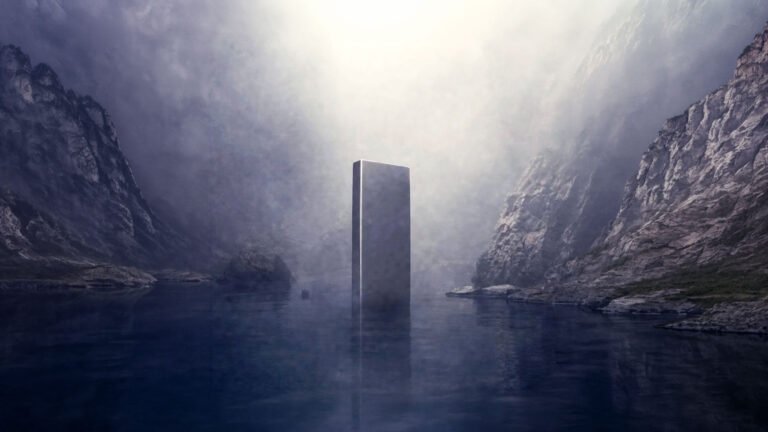
Muse arrive at their tenth studio album with a decisive lean into sci-fi maximalism. The record takes the 1977 Wow! Signal radio anomaly as its conceptual anchor and builds a suite of theatrical space-rock epics from it. Prog-rock, metal, EDM and cinematic choral writing fold into dense, high-stakes arrangements that read as a refined synthesis of the band’s three decades of experimentation. Lyrically, extraterrestrial contact and cosmic paranoia function as metaphors for romantic collapse and a wider dystopian tension. With co-writing and co-production from Dan Lancaster alongside a full-blast rhythm section, The Wow! Signal lands as a towering, high-concept arena album that still manages to push the band’s sound into sharper, stranger territory. The precision of its world gives the scale its charge.
Ibeyi – Offering
French-Cuban twin duo Ibeyi return with Offering, their first full-length in four years and their first release since going fully independent. The twelve-track album frames itself as a process of shedding ego and circling back to self. Across the record they stretch their vulnerable, experimental pop into a more electrified and grand scale while balancing Yoruba-rooted spirituality with contemporary electronic R&B tension. Moments like “Moshpit” push toward post-industrial club energy. The title track explores abandoning “spells” in favour of more grounded, adult forms of expression. The result is a restless, ambitious statement that treats identity, change and fear as moving targets, constantly reframing its own sound rather than settling into one lane. The clarity of its intention stands out.
Beth Orton – The Ground Above
Beth Orton’s ninth studio album arrives as a live-tracked, eight-song cycle that threads art-rock, jazz-tinged improvisation and singer-songwriter intimacy. Written and produced by Orton with a close circle of collaborators including Shahzad Ismaily and Tom Herbert, the record documents survival, renewal, motherhood and political unease. It carries the clarity of writing from the far side of a personal rupture. The tension between invincibility and fragility gives the songs their charge. They move like bruised meditations that can suddenly swell into glowing, ensemble-driven climaxes without losing emotional precision. The album understands lived experience as material for both quiet detail and expansive release.
Abul Mogard & Rafael Anton Irisarri – Where Light Pauses in the Silence of the Sun
This second collaboration between drone architect Abul Mogard and ambient sculptor Rafael Anton Irisarri emerges from a residency at Morphine Raum in Berlin. There, performers and listeners shared the same floor and exposure. The duo translated those live sessions into a studio-shaped album of slow-building, heavy drones and electroacoustic textures that feel monumental without ever turning static. The record presents itself as a luminous architecture of sound, steeped in European minimalism, industrial memory and sacred-music atmospherics. Low frequencies press forward while strings from Martina Bertoni and Andrea Burelli add grain and vertical tension. It becomes a demanding, immersive listen that treats ambient as serious durational work rather than decoration. The weight sits in the shared physical and sonic space it creates.
Chanel Beads – Your Day Will Come
Shane Lavers’ project Chanel Beads returns with Your Day Will Come, released via Jagjaguwar and positioned as a more expansive evolution of his dream-pop experiments. The record smears lo-fi 90s rock, breakbeat pulses and ghosted vocal duets into a fever-dream pop language. Hooks drift in and out of focus rather than arriving cleanly. Walls of sound blur shoegaze haze with chamber-like orchestrations and dissonant strings, giving the songs a fragile, half-remembered quality. The recurring title phrase shifts from hopeful mantra to something more complicated. It reflects the tension between what we expect from life and the messy reality that arrives instead. The album earns its presence through that unresolved drift.
Peggy Gou & Ayra Starr – “Wo, man”
Peggy Gou and Ayra Starr pair for “Wo, man”, a sleek, vocally driven dance single built for late-night sets. The track locks rhythmic vocal phrasing over glossy synth work into a concise, playlist-ready form. It sits comfortably between underground house sensibilities and pop-leaning chorus architecture. On the Ayra Starr side, the single marks another step in how her voice embeds itself in international club circuits. The collaboration arrives as a focused crossover moment that prioritises groove and presence over maximal impact.
Ravyn Lenae – “Saturday Night”
Ravyn Lenae’s “Saturday Night” extends her soft-focus R&B universe into a groove that feels exactly like a slightly delirious weekend in motion. Built on a supple rhythm section and airy melodic lines, the track sits closer to future-soul and alt-R&B than straightforward radio pop. It gives space for her voice to float and bend around the beat. The song captures the mood of a Saturday without resorting to big-room clichés. It stays intimate and coolheaded, more about tracing micro-sensations than blowing up the room. As a standalone single it deepens Lenae’s lane as an artist whose work feels both relaxed and carefully detailed.
Tyler, The Creator – “That Guy”
Tyler, The Creator’s “That Guy” arrives as part of this week’s singles and extends the post-CALL ME IF YOU GET LOST era into a looser, self-reflective space. The track moves with his characteristic off-kilter swing, folding conversational bars into production that blurs jazz-rap warmth with sharper, synthetic edges. Within his catalog it reads as another chapter in an ongoing conversation about ego, self-image and success. It arrives with the mix of humour and melancholy that has defined his mature work. The single feels personal and slightly sideways rather than engineered for mass impact, adding a stylish, narrative-driven hip-hop moment to the week.
The Through Line
What connects these releases is a shared refusal to treat music as something to scroll past. Muse build towering conceptual statements that still speak to personal and societal tension. Ibeyi use independence as fuel for honest expansion rather than safety. Beth Orton turns rupture into song cycles that hold both bruise and glow. Abul Mogard and Rafael Anton Irisarri make shared space and duration the architecture of the work. Chanel Beads let expectation and reality blur in drifting hooks. The singles from Peggy Gou and Ayra Starr, Ravyn Lenae and Tyler, The Creator offer precise, intentional entry points into groove, voice and self-examination. In different registers they all remind that presence is earned through intention, not volume.
Join the Club
Like this story? You’ll love our monthly newsletter.
Thank you for subscribing to the newsletter.
Oops. Something went wrong. Please try again later.