After a career that ran from Swiss rock stages to Hollywood guitar school and a late return through ambient lo-fi, the Thun producer treats September light as an instrument.
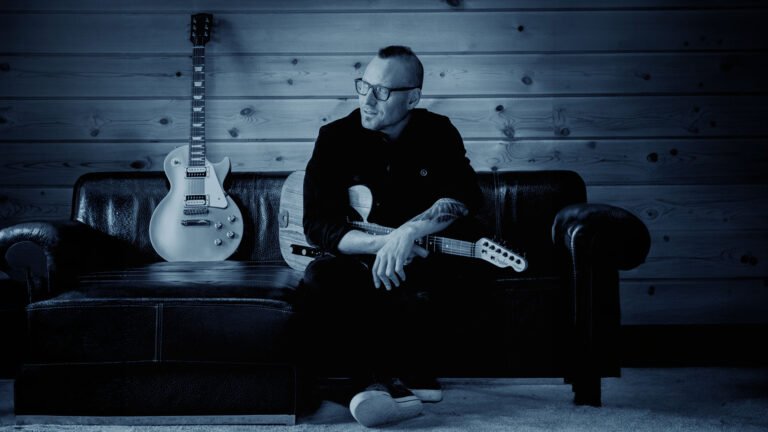
Photographers wait for a short window after sunset when the sky still holds colour and no lamp has taken over the room. They call it the blue hour. In the Bernese Oberland it arrives quietly over the lake and the wooden houses around Thun. The light wraps rather than cuts. Faces lose their hard edges. A guitar leaning against a sofa starts to look like furniture and a companion at the same time. Tony Sieber has spent the last few years writing music for that exact temperature.
He comes from Switzerland and learned the instrument the loud way first. Metal with Cry Out. Rock stages with Big Red One, the band behind Trouble Maker in 1996 and Russian Roulette in 1998. In 1993 he was accepted at the Musicians Institute in Hollywood, finished in 1994, and came home with technique that could sit inside jazz, country, and the kind of rock that fills a festival field. Then the work moved behind the glass. With H2U, the production company he built with T.J. Gyger and Fredrik Stromberg, he scored films, cut campaigns, and sat in sessions for names that included DJ BoBo. Between 1999 and the mid 2000s the solo catalogue already leaned toward atmosphere. Trance Dance, Wonderland, Himalayan Atmospheres, Native Chill. The volume dropped long before the branding did.
A longer pause followed. When he came back in 2023 it was with Ambient Guitar Tales, the record Echoes in the United States named its album of the year. Sine Music took him on for Because We Are in June 2025. Tides of Stillness arrived on 8 May 2026, sixteen short pieces of lo-fi guitar music that the label and the artist have treated as a settled home. Along the way, Dark Moon with Thomas Lemmer was nominated for Best Engineered Song at the German Songwriting Awards in Berlin. The monthly audience on Spotify now sits above one hundred thousand. The guitar never left the centre of the picture. Only the room around it changed.
Dreaming in Soft Light, released on 4 September 2026 through Sine Music, lasts two minutes and forty-one seconds. That is barely enough time for a thought to finish, which is part of its control. A clean electric line opens the piece, already wet with chorus, delay, and a long reverb that makes each note hang as if the strings were played in a larger space than the beat will admit. The guitar is liquid without turning vague. You can still hear the finger, the attack, the small decision to let a tone bloom instead of cutting it short.
Under that line a lo-fi beat arrives already muffled, as if the kit had been recorded through a closed door and then invited back in. Kick and snare stay polite. The low end is a round bass that fills the floor and refuses to climb into the melody. Soft synth pads sit further back and give the mix its width. Nothing in the arrangement is in a hurry to prove a point. The form is cyclic. A few elements enter, a few recede, and the last gesture is a fade rather than a last word.
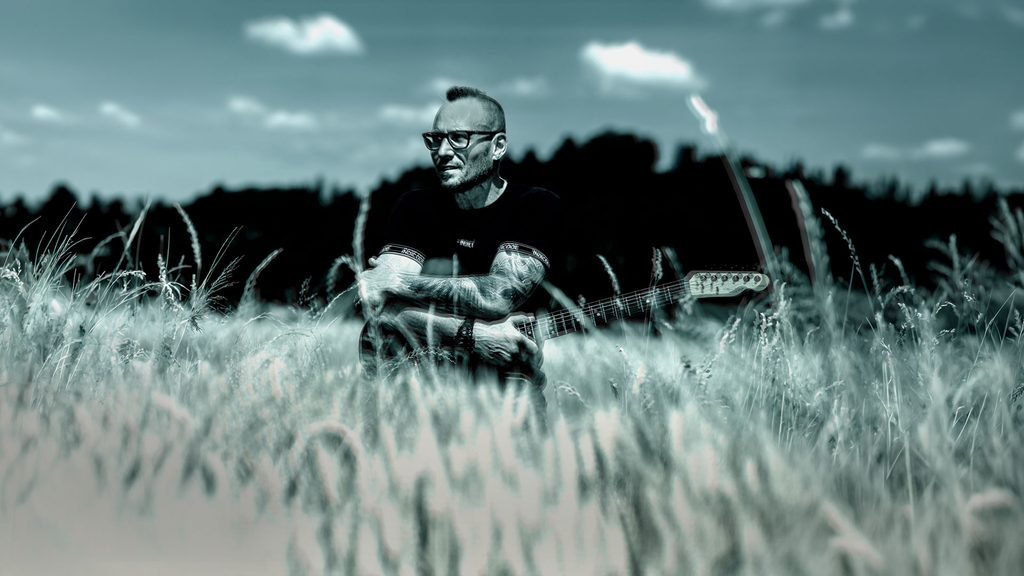
This is where the blue hour becomes useful. Soft light in a photograph is not weaker light. It is light that has been scattered until the subject can be seen without being pinned. Sieber treats the mix the same way. The guitar is the face. The beat is the room. The pads are the leftover sky. He does not stack drama on top of that balance. He trusts the loop to do the work that a chorus would do in a vocal song. Listeners who live inside Chillhop playlists will recognise the grammar. Kupla, Jinsang, Idealism, the long afternoon of Lofi Girl. The guitar, though, keeps a different company. There is a touch of the delayed, slightly seasick electric tone that Mac DeMarco and Homeshake made familiar, and a cleaner, more spacious patience that sits nearer Tycho when Tycho decides to leave the drums half asleep.
What gives the single weight is how little it asks of you and how precisely it occupies the asking. Sieber has said in interviews that lo-fi appeals to him because of its deliberate roughness, the hiss and the edges that keep a track from feeling sealed. Here those edges are almost cosmetic. The real craft is in the restraint of the guitar phrase, the way it returns without decorating itself into a solo. After decades of knowing how to fill a stage, he writes a piece that would collapse if someone turned the midrange up for attention.
Dreaming in Soft Light will do the quiet jobs people already hire this music to do. Study. Late work. The walk home when the streetlights are on and the sky is still not dark. It also works if you sit still and follow the guitar as a line rather than a texture. That double use is the point of Sieber’s current catalogue. The songs are short enough for a playlist and finished enough to stand alone. This one does not announce a new chapter so much as confirm the temperature he has been tuning since Ambient Guitar Tales. Dusk, held in place for two minutes and forty-one seconds, then released before it turns into night.
Follow Tony Sieber
Dreaming in Soft Light is out now.
Listen: Spotify
Follow: Instagram · YouTube · Official Site · Facebook