In a new interview, the guitarist explains why his records were built around strong musical personalities, from Jaco Pastorius to Steve Gadd.
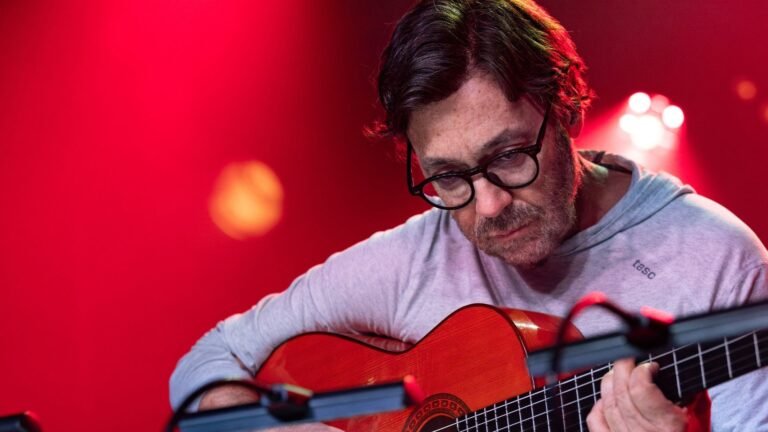
Al Di Meola’s records have always been populated by names rather than credits. Speaking to MusicRadar about the first decade of his solo career, the guitarist framed his choices plainly: “I didn’t want anonymous great players. What’s the point of that? I wanted personalities.”
That preference shaped a catalog that reads like a roster of jazz fusion’s most distinctive musicians. Di Meola joined Chick Corea’s Return to Forever in the early 1970s, alongside bassist Stanley Clarke and drummer Lenny White. His 1976 solo debut, Land of the Midnight Sun, brought in Jaco Pastorius and Steve Gadd, with Corea, Clarke and White appearing as guests. The follow-up, Elegant Gypsy, arrived in 1977 and carried his first collaborations with Paco de Lucía and Jan Hammer. In 1981 he recorded Friday Night in San Francisco with de Lucía and John McLaughlin, and his 1983 album Scenario drew on two drummers with progressive rock roots, Bill Bruford and Phil Collins.
Di Meola’s account of Pastorius centers on confidence that turned out to be accurate. “Jaco was unbelievable,” he says, recalling the bassist announcing to other musicians that he was the best bass player who ever lived. “It sounds incredibly arrogant, except he could back it up. And the funny part was, nobody really argued with him.”
Gadd earns a different kind of praise: efficiency. “You didn’t need to spend a month teaching Steve Gadd a drum part. You showed him the music. Steve got it.” Di Meola used him across Land of the Midnight Sun, Elegant Gypsy, Casino, Splendido Hotel, Electric Rendezvous and Tour de Force. The point was never speed of recording. It was what happens when the time is simply there.
Join the Club
Like this story? You’ll love our monthly newsletter.
Thank you for subscribing to the newsletter.
Oops. Something went wrong. Please try again later.

ROMBO Editorial Staff
The collective voice behind ROMBO Magazine’s news, reviews, features, and cultural coverage.