Tibetan monks spend days guiding coloured sand through a metal funnel, tapping it into precise lines and symbols. They work from the centre outward, layering millions of grains into a geometry that will hold for a few hours before the whole thing is swept into a jar and poured into a river. The image is a by-product. The point is the letting go.
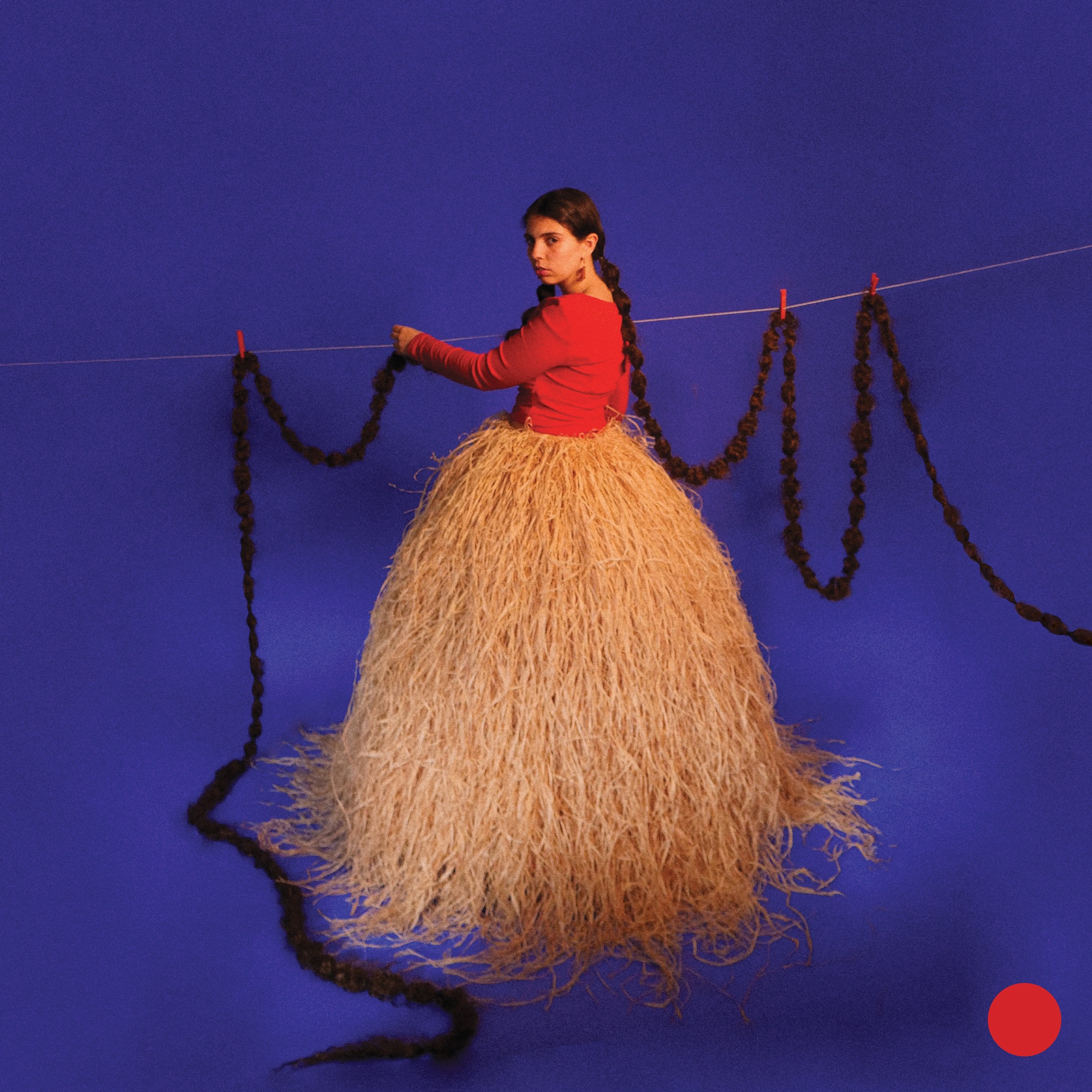
Ana Lua Caiano grew up in Lisboa with protest music playing at home, and she now works as a singer, producer and visual artist. Her second full-length record, Devagar Que A Vida É Curta, takes its title from a Portuguese phrase that means go slowly because life is brief. She has said she once understood that as a reason to rush. The record sounds like she built a sand mandala in a hurry, particles flying, knowing the river is waiting. I think it is her most assured collection, and also the one where her own advice is hardest to follow.
Think of a monk tapping the funnel; Caiano taps a drum machine and a choir of her own voices, then sweeps the pattern away before it can settle. The title track, Devagar Que A Vida É Curta, is the clearest case: a warm handclap groove drops out, leaving a high, stuttering synth to slice the word “Devagar” into urgent fragments, and the plea “Vai devagar que a vida é curta” becomes its own contradiction. Se A Cabeça Anda Manca turns a warning about time into a breathless chant, its vocal cadence accelerating on “Que lá vem o vento, que lá vem o tempo” over a dry, stomping beat. Duas Mil Horas counts grief in domestic arithmetic, “Duas mil horas de conversas perdidas,” while Procissão Dos Dias stretches wordless cries over a slow, dry drum. Each song is a small mandala of percussion and voice, swept away before the pattern can be memorised.
Sand art is often destroyed as quickly as it is made; Caiano's songs about mortality make that immediate destruction audible. Come, Come, Cresce chains obedience into a death march, its litany eat, grow, shut up, sit, shoot sounding like a playground rhyme and a firing order at once. A Bala Nunca Fez Amigos / Du Sang Sur Les Mains (feat. Sages comme des sauvages) sets French lyrics about hunters and hounds to a stomping industrial tread, its chorus a looped accusation. Um Mais Um treats every step as digging one's own grave, with piercing vocal cries and a buzzing low synth, and Perguntei À Morte turns a tongue-twister about the dead and the living into a dry, percussive riddle. The sand is swept away, but the hands keep tapping.
The weekly routine is the most persistent mandala of all: it is rebuilt every Monday and destroyed every Sunday. Hoje É Segunda (feat. Bandua, Edgar Valente & Tempura the Purple Boy) lists the days of the week like a factory shift, and Uma Vida A Menos is the record's sharpest social critique, its piercing bagpipe-like synth hook arriving alone before a heavy beat drops in and the vocals snap out “Há mais homens enterrados no trabalho do que em covas.” E Tu, Que Fazes? braids two vocal lines into a canon about carrying a partner on your back through housework, while Meu Amor, Fui imagines leaving home as losing a leg, an arm, lungs, head, until the body is left at the port. One pattern after another, all swept toward the same river.
Two more collaborators join the circle: Ai, Digo, Digo (feat. Stereossauro) and Vem Dançar complete the set, while Procissão Dos Mortos closes with a title that echoes the processional image from Procissão Dos Dias. I would need to hear those last songs in full to say more, but the titles themselves scatter sand on the same ground.
I would argue that the record's reliance on stomping percussion and buzzing low-end risks monotony across fifteen songs. The material is confident and the urgency is deliberate, but I keep wanting one track to slow down and let the sand settle before the next gust. The constant hurry is the point, yet it can feel like watching the mandala being swept away in real time without ever seeing the completed pattern.
I would hand Devagar Que A Vida É Curta to the listener who loves Portuguese folk with its edges sanded off by samplers. Two neighbours that come to mind are Bandua, who appears on Hoje É Segunda, and Stereossauro, who cuts into Ai, Digo, Digo; beyond them, Lula Pena and Marlene Ribeiro feel like neighbours. Play it on a late-night walk through the city, or on a long train journey, or while cleaning the house at full volume. Start with Se A Cabeça Anda Manca, then Uma Vida A Menos, then Meu Amor, Fui. Leave it alone if you need a slow build, a ballad, or a moment of silence between the beats.
The monks know the sand will be swept away, and they keep tapping the funnel. Devagar Que A Vida É Curta does the same: it rushes toward the river, grain by grain, chant by chant. I keep picturing the coloured dust scattered on the current, and I think that is the only honest way to hear this record.