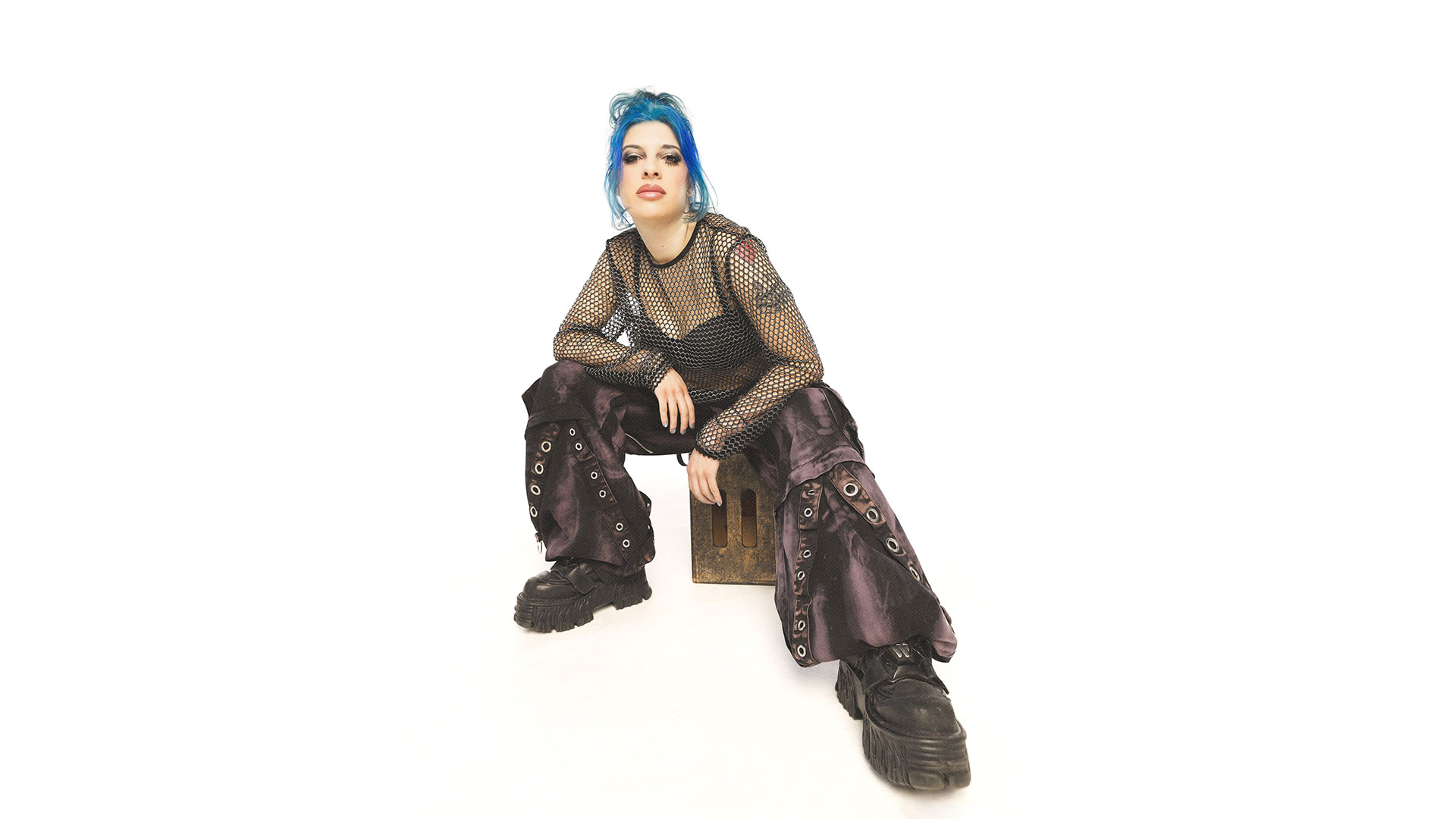
There is a particular physics to learning how to stay upright on two wheels. The instruction arrives less as theory than as a hand that stays on the seat just long enough for the body to discover it already knows the correction. Then the hand lifts. The rider continues. The teacher keeps walking. Alfredo Salvati, the London-raised, Barcelona-based songwriter behind colourshop, has spent years testing that same distance on actual roads. Born in Anagni, south of Rome, he began with a cheap red Magyar guitar found in a second-hand shop and with the records his mother and father played in the house. International music of the 1960s and 1970s from one side, sophisticated Italian pop from the other. In London he formed colourshop with his brother Diego, released the album Sparks, and carried songs such as Florence and Sailing Boat across stages from the UK to continental Europe. The project’s earlier singles often moved like open water or open countryside. Old Man stays inside the house.

The song was written after the sudden death of Salvati’s father in October 2025 and recorded over two concentrated weeks in the parents’ home, the home studio set up while the family remained together. Producers Jason Boshoff and Oscar Bragado later shaped a few arrangements in Barcelona’s RoomTo Studio, yet the core remains the intimate, unhurried frame Salvati captured on site. What emerges is not a general meditation on grief. It is a specific accounting of one man’s teachings and the practical problem of living without the person who gave them. The opening lines name the inheritance directly: “You taught me how to fight / You taught me how to play / You taught me how to be / A better version of me.” Later the same voice adds empathy and freedom, then asks the question that cannot be answered by any of those gifts: “What am I supposed to do / Now that you’re not around.”
The arrangement understands the difference between recollection and absence. A measured acoustic guitar and soft bass keep the first verses close, almost conversational, as if the singer is still walking the same path and testing the ground. When the need for contact arrives, “I can’t do without your embrace,” the space opens. Warm keyboard pads and vocal harmonies rise without crowding the line. The production does not dramatise the loss. It simply allows the room to feel larger once the other body is no longer in it. A later guitar figure takes the melody for a few bars and says, without words, what the lyric has already admitted: the history keeps replaying in different versions, and the singer is still wandering through them rather helplessly.
Salvati’s delivery stays low and almost spoken at the start, placing each remembered instruction with care. On the repeated “I am thinking ’bout you today” the notes lengthen and the breath becomes more exposed. The moment that carries the most weight arrives where the second statement of strength and the first full admission of need overlap. “A stronger version of me” sits inside the same phrase as the thought of the missing person. The voice does not choose between the two. It lets them occupy the same breath, which is precisely the condition the song describes. The final instrumental stretch and the return of the unanswered question leave the track where the recording itself began: inside a house that still holds the traces, with no further instruction available.
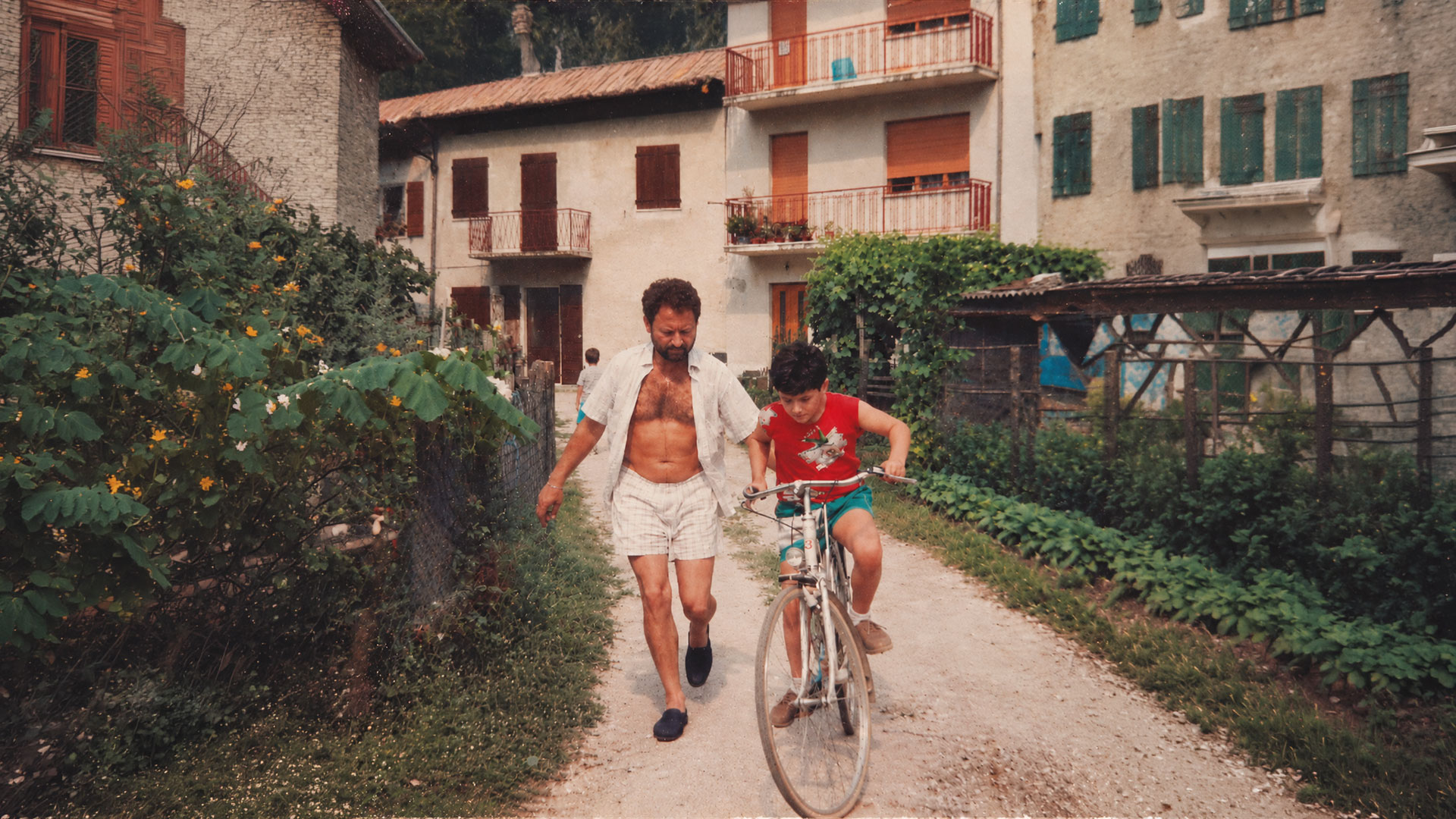
The accompanying video stays with the same image the cover already suggests. An older man walks beside a boy on a white bicycle along a dirt path between houses and tall grass. He steadies the shoulder, lets the child continue, waves, then runs to catch up. In the other sequence the man rides with the child seated behind him. Slow, frontal tracking keeps both fragments circulating for the length of the song. Yellow subtitles carry the lyric. The images do not invent a new story. They return, again and again, to the exact gesture the verses describe: the teaching that ends in a moment of release, and the later question of how to move once that hand is no longer there to correct the balance.
Old Man does not ask the listener to admire the depth of the loss. It simply places the received lessons and the remaining need side by side and lets the gap stay audible. The wheel keeps turning. The seat is empty. The song records both facts with the same quiet precision.