
Alex Julia came out of Toms River, New Jersey, and the Jersey Shore rooms that still carry the weight of Asbury Park weekends. The 2020 EP Better Part of Me moved between stripped acoustics and fuller rock, enough to place her in local charts and on stages from Bowery Electric to smaller Queens rooms. She has spent the years since hosting open mics and showcases in the city, building a practice of giving other voices a night while keeping her own material close. The debut album Making Friends With My Demons arrives from a different distance. She wrote it in Brooklyn. Producer Patrick Wörner shaped it from Karlsruhe, Germany. They have never met. The whole record was made across that gap, yet the architecture holds.
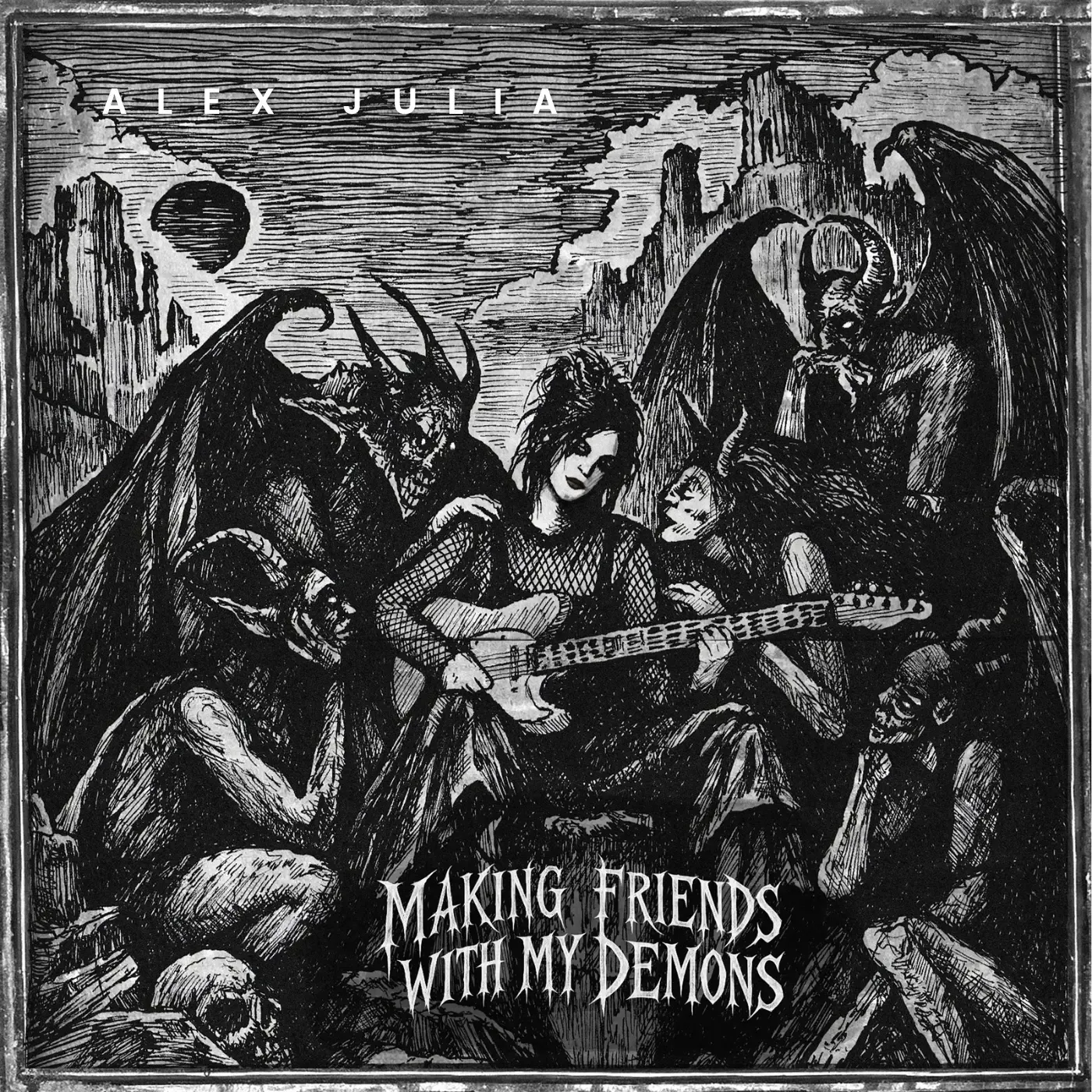
In the manuals of early modern demonology the practitioner does not banish the spirit. He learns its true name, the hours it answers, the offerings it prefers, and the precise words that bind it to useful work. The woodcut cover of this album looks like one of those plates: a figure with a guitar ringed by winged and horned forms against a scratched night sky. Julia has done the same with the material that arrived after her father’s death. The press notes frame the record as transformation and the reclaiming of power. The songs themselves name the actual terms of the inheritance. In “Next of Kin” a sister and then a mother sign a vulnerable man’s life away, treat him like a cash cow, sell him off to the highest bid. The voice promises to tell everyone what they did, then collapses into the spoken line “I’m gonna fucking tell everyone.” The acoustic version of the same song keeps the arpeggio dark and the strings close, so the same accusation arrives without the electric wall to hide behind. “He’s Always On My Mind” asks how anyone is supposed to act like he is not dead while the racing thoughts refuse to stop. These are not metaphors drawn only from the title. They are the ledger of a specific family and a specific loss.
Around that core the rest of the sequence keeps the same company. “Losing The Plot” circles a clean guitar figure in chorus and reverb until the pulse drops out and the voice is left with “You were my only friend” and the admission of drugs again. “Created A Monster” watches the tables turn and claims the hardness as something received rather than chosen: “I’m the monster you created.” “Can I Take You Back In Time” returns to the cold hard ground and the kicks that left no room to walk, only to drown, then lifts the memory over distorted guitars so the return of the old presence is refused in real time. “Naked In Your Bed” accepts the villain role with sarcasm once the false relationship and the outside judgment have both failed. “I Felt A Chill” holds a quieter night watch, the one stretch where the voice can say it would never run. “Can You Be My Guide” and “54321” push into the narrower rooms of sobriety and the countdown before the gun, the synthesizer alarm and the breathless spoken rush making the panic physical. The title track places the same isolation inside the social feed: fake followers who like the sick sounds and feed the habits, so the only remaining company is the demons themselves because nothing makes sense. The acoustic version of that song strips the electric saturation and leaves the circular acoustic pattern and the final whispered “Nothing makes sense” with almost nothing between the listener and the line.

The sound follows the same logic of naming rather than covering. Clean arpeggios and cold synthetic beds build the claustrophobic rooms of rumination. Sudden walls of distortion and relentless drums mark the moments when rage or panic arrives. When the instruments pull away, the voice is often left nearly bare, moving from a low, numbed delivery that sounds chemically slowed to a full, scraped projection that carries the accusation or the plea without softening it. The spoken breakdowns, especially on the two versions of “Next of Kin,” drop the formal distance entirely. Influences from Nirvana, Deftones, and The Cure are audible in the dynamic swings and the darkwave pulse of the opening track, yet the record does not lean on those references for authority. It uses the contrast between empty space and saturated attack to keep the real events present: the legal instruments used against a father, the chemical returns that filled the empty hours, the public that treats the wreckage as content, the dead man who remains more present than some of the living.
Making Friends With My Demons holds its twelve tracks as a single account rather than a series of separate statements. The acoustic versions of “Next of Kin” and the title track do not soften the material. They remove the electric shield so the same sentences land closer. Julia has described the album as the realest she has ever been, the work of acknowledging the demons and coming to terms with grief after becoming a different person. The songs do not offer resolution or a higher power that arrives in time. They keep the names, the hours, and the precise weight of what stayed. That is the working relationship the cover and the title both describe.