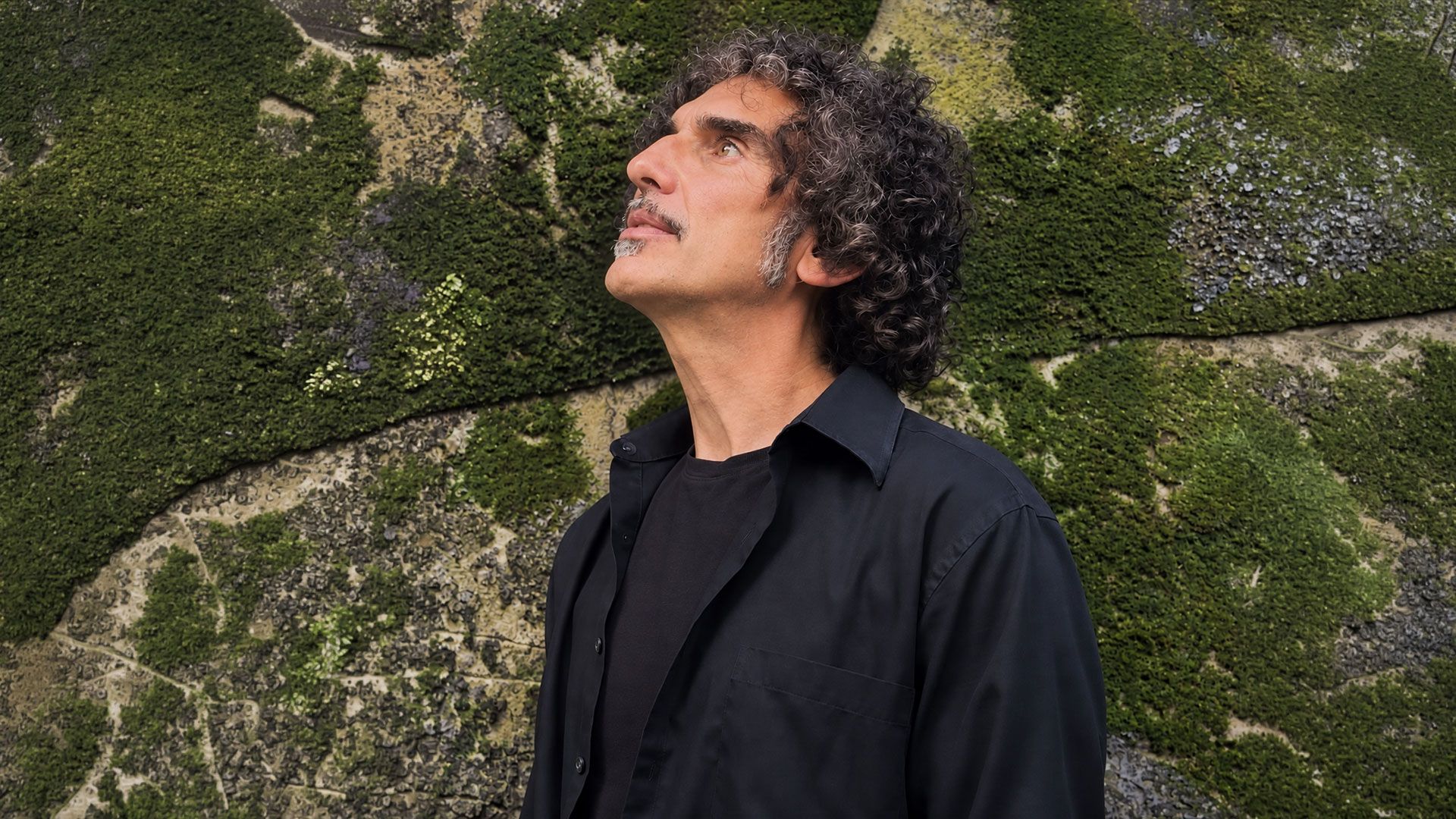
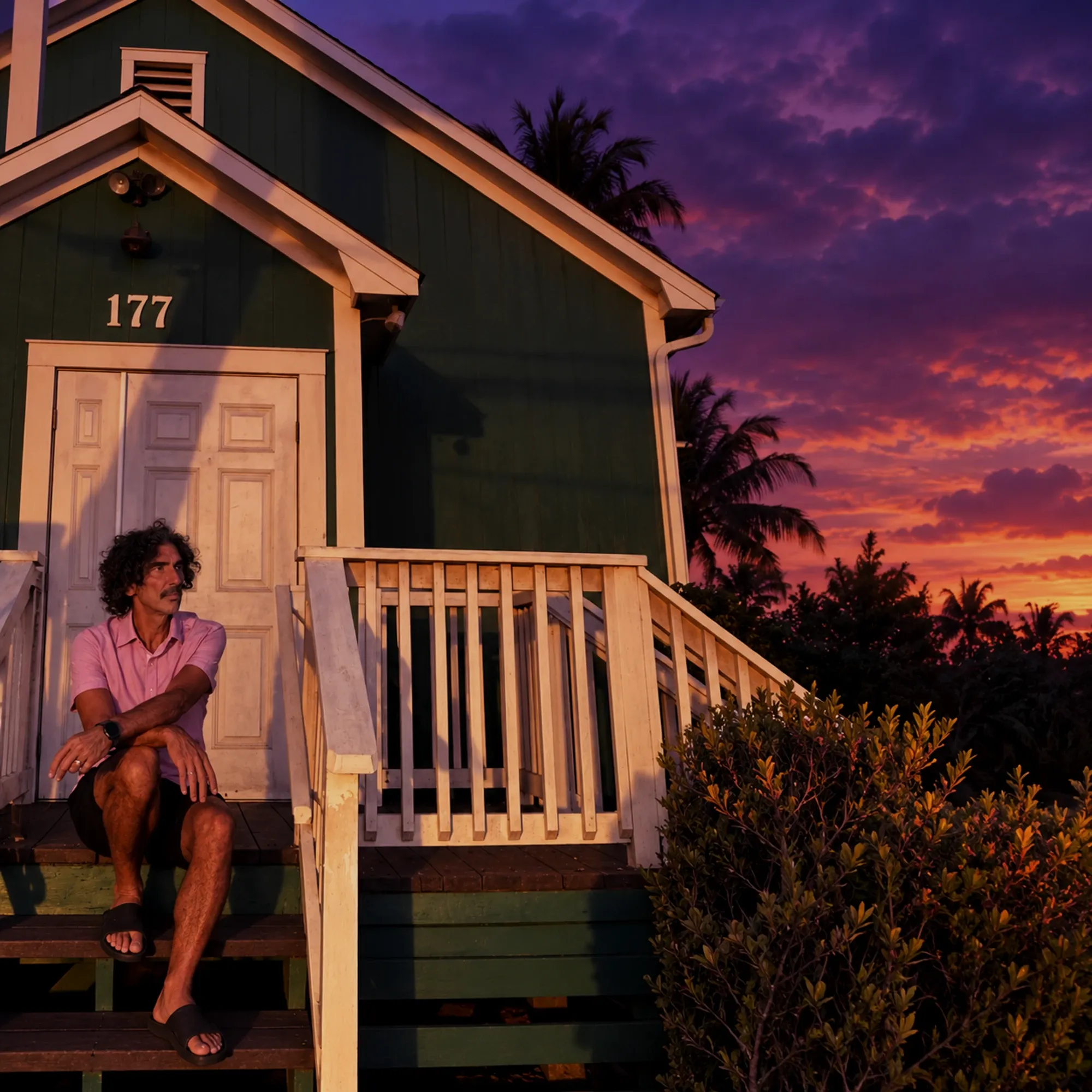
Gianfranco Pescetti was born on the Tuscan island of Capraia, a place closer to Corsica than to the Italian mainland, where the sea decides arrivals and departures. He trained as a ballet dancer and performed professionally before moving to San Francisco in 1988, where he played bass in bands, including the group he founded with Jane Woodman and cellist Zoe Keating. After a period spent studying landscape architecture, he returned to music. Love Is Rain arrived in 2014. The fully instrumental Daystar Nocturnal followed in 2024. this side of the door is the third album, written and produced in his Maui home studio with contributions from guitarist Ziv Chalev, pianist Giuliano Poles, and saxophonist Hugo Lee, then mixed and mastered by Sefi Carmel in London.
In landscape architecture the threshold is rarely left to chance. The path, the step, the frame of the door are placed so the act of crossing carries a change in light, temperature, or status. Pescetti’s record treats the same moment as lived fact. Across fourteen tracks the door is not a title device. It is the place where people are kept out, let in, or forced to decide which side they occupy. Memory, connection, and change are not abstract themes here. They are the rooms that remain, the locks that hold, the doors that swing wide or stay closed.
The record opens in a motel room on Nightbloom, where an exchange of flesh and borrowed time becomes an unexpected prayer. “I don’t give a fuck about your past / My past is worse than your past,” the voice offers, then asks to be held up from the floor. Flicker moves to the stages of Paris and the French Riviera, where two dancers measure time against the clock and the constant presence of someone at the door. One continues. The other stops to write it down. Colors with No Name holds the residue of a shared perception that cannot be unlearned, the moment when yellow skies shake the walls and the arrangement later thins to acoustic guitar alone.
Heidi, the lead single and tribute to former bandmate and mentor Heidi Vincent, carries the bass she gave him years earlier. The song moves from Sonoma light to New York streets, where art becomes a shield and the cello notes remain in the mind. In the In Between holds the suspended state of a separation, the place where “the edge softens into the in between” while the world outside burns. A Different Joy stages the double life of sobriety and the night that follows, the pills that keep one clean and the pills that make one dream. Sugar Cut turns a kitchen into a battlefield when solidified sugar cuts like glass. In Reverb watches the emptied room and the goodbye that arrives as silence. Breathe seeks the island of quiet where music and silence finally free the body from the weight of what came before.

Her Name Was Petal Storm follows a performer through seedy nightclubs and revolving doors that never let in, the rented room with a lock, the skin that feels wrong, the name rewritten against the judgment outside. no stage left addresses the doors that closed against Nick Drake’s name and now sell the ghost they could not save, the audience that grows too late. Zero in the Deck steps off the edge, zero in the deck, the fool who must disappear for something else to appear. Vanishing Point places a clandestine meeting in the shadows of hallway shrines, hands that smell of earth and stolen blood, the gutter that becomes a shrine. Who Imagines Who ends on the question of who is inventing whom, the ghost in a silent film, the fogbound pair who persist like footprints in the dust.
The production holds the contrast. Pulsing bass and tight drums push against layered synthesizers, piano, and guitars left in reverb. At key moments the arrangement empties, leaving acoustic arpeggio, bare piano, or voices alone. The voice begins close and confessional, then roughens or opens into wider lines when the private fracture becomes shared. What gives the album weight is the precision of its attention to these crossings. The record does not rush to explain itself. It builds its own temperature, and it leaves space for the feeling to arrive on its own terms.