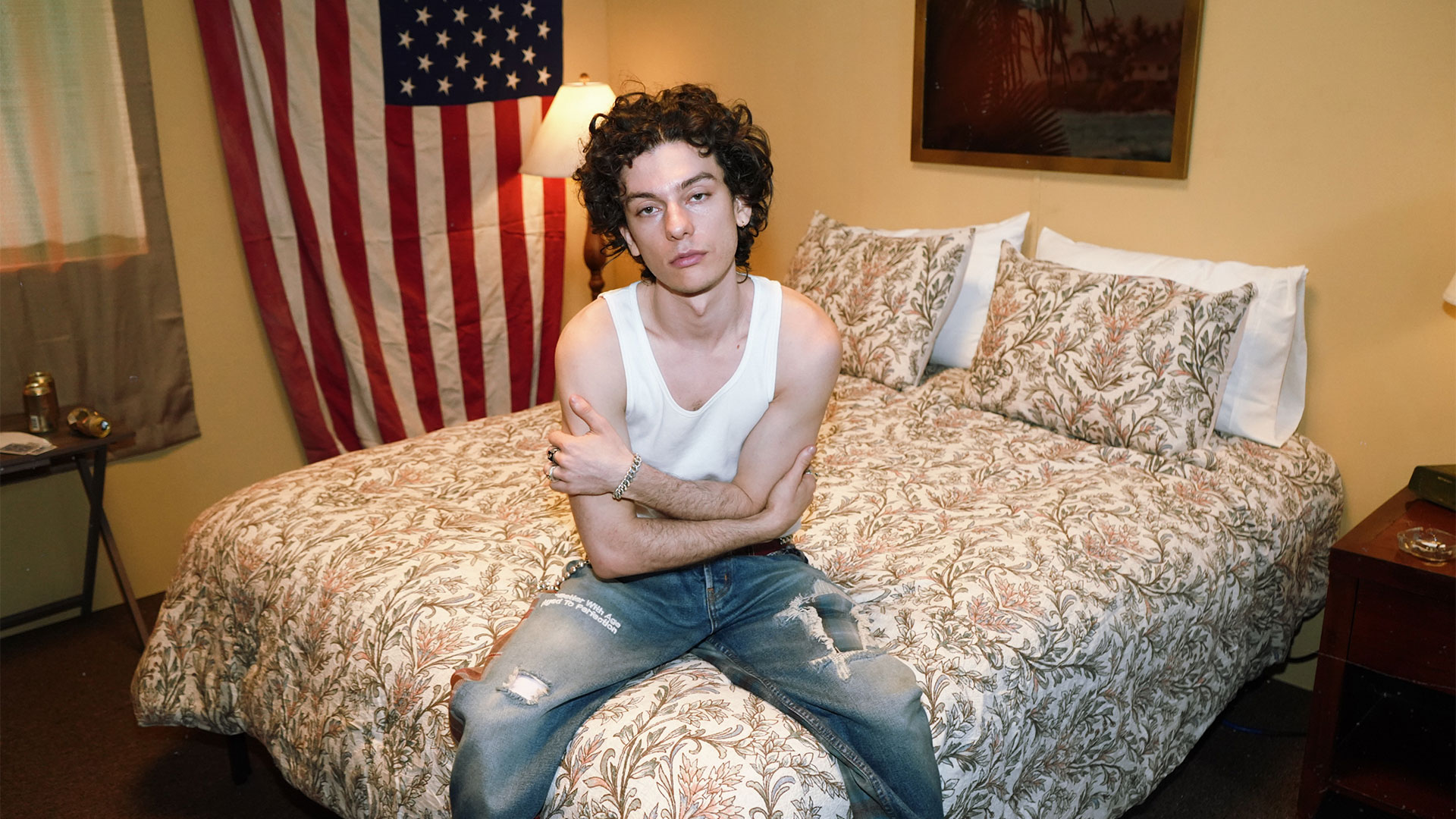
Henry Morris came up in Los Angeles as one half of the indie duo Playyard, producing and writing with his college roommate Saint Levant, including the breakout “Jerusalem Freestyle.” After international touring with Levant he stepped out alone in 2023 with “He Could Never Love You,” then released the albums Jawbreaker in 2024 and Late Bloomer, Early Death in 2025. The move to Giant Music earlier this year brought a sharper, more instinctive approach shaped in part by his ongoing collaboration with Artemas, whose Getting Up to No Good tour he supported across North America before rejoining for the European and UK dates. The catalog has already passed one hundred million streams. Kiss Me Extra Hard, released through Giant Music, is the record that makes the conditions of that growth audible.
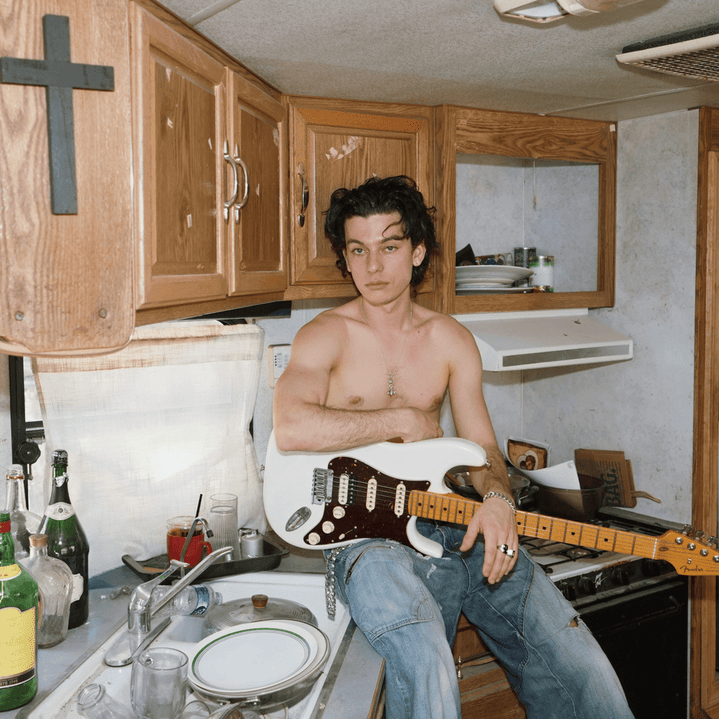
In certain American kitchens and trailers a public assistance card is still pressed flat against a surface to break rock into usable form. The gesture is ordinary, almost domestic, and it leaves a specific residue: plastic scored, powder left in the grooves, the body already waiting for the next hit. Kiss Me Extra Hard treats the beloved the same way. Love is not framed as escape or elevation. It is the substance that remains when every other one has failed, and it must be crushed, measured, and returned to under pressure or the night collapses. Morris has said the album is a summary of painful lessons, that all the drugs, sex, and money in the world do not compare to a moment alone with the woman he loved in complete silence. The songs make that claim concrete by locating the silence inside specific margins: the EBT card in “Yayo,” the alleys between Los Angeles and Long Beach in “West Coast Sun,” the factory wall in “Dove On A Wire.”
The opening “Drugs and Money” sets the equation without metaphor. “Love is like drugs and money, I always need more” arrives over dense, layered synths and a heavy electronic pulse, the bass distorted enough to feel like blood. The voice stays close and breathy until the prayer line “Send me something that’ll never lose, my God,” at which point the arrangement thins and the delivery becomes exposed. The sacred and the chemical are not opposed here. They occupy the same request. “High All The Time (feat. G-Eazy)” extends the same logic into the body. The piano chords sit under thick atmospheric synths while the vocal stays languid and almost anesthetized until the plea “I need you in my blood, take me to the light.” G-Eazy’s verse names the practical symptoms, double texting, the inability to ration the feeling, the line that cannot be drawn between obsession and passion. The production never lifts into clarity. It keeps the listener inside the same room the lyrics refuse to leave.
“Crawling Back To You” makes the return structural. Liquid electric guitars and synth pads create a fog the rhythm section pushes through at a steady, implacable pace. The vocal is soft, almost resigned, delivering “We both know the truth, I’m so bad to you / And you’re no good to me” as plain accounting rather than drama. The chorus lifts only by stacking the same phrase, turning the humiliation of the return into the track’s only available motion. By the time “Yayo” arrives the domestic preparation of the drug has become the relationship’s actual architecture. Orchestral samples sit against a heavy trap rhythm while the voice describes crushing rock with an EBT card, buying a place so the other person goes where they are told, calling a mother to say the tweaker is a keeper. The sample’s cinematic warmth does not soften the control. It makes the control sound like a memory that has already been scored into the plastic.
The middle of the record opens brief, temporary rooms. “Sex with my Ex” and “One Night Stand” move with more forward guitar motion and a lighter density, the kind of space where a single night can still be called a private piece of heaven. The writing does not romanticize the brevity. It simply records the fact that the body will still accept the substitute when the permanent supply is unavailable. “Rather Fight” returns the preference for damage. Morris has described the song as the desire to argue with the person he loved rather than laugh with anyone else. The arrangement keeps the tension close, the vocal climbing only when the refusal of an easier option needs to be stated outright. Happiness elsewhere is not a temptation the track entertains. It is the option already declined.

“West Coast Sun” supplies the most specific geography. From L.A. down to blue Long Beach the buildings are stacked like crooked fangs, junkies sleep in alleys, and a sixteen-year-old narrator meets Maria, a teenage bride already carrying a child and living with an older man who has a mean backhand. Surf-tinged guitars and a round bass create a coastal motion that never resolves. The voice begins distant and spectral, then cracks open on “Oh, love of my life, don’t leave me this way” while the West Coast sun goes down. The desire to run is acknowledged and then postponed. The track does not offer an exit. It offers the exact temperature of waiting inside the situation that will not change.
“My Girlfriend (feat. Ella Boh)” turns the same devotion into a criminal pact. A saturated low end and sharp urban percussion give the track a heavier step while the two voices trade the terms of the bargain: the car, the pawned things, the ring that must not be sold if someone is caught. The line “When I get to heaven, Jesus Christ / Can I bring my girlfriend?” is delivered without irony. The arrangement thins for the confession, then thickens again when the promise of homicide and twenty to life arrives. Ella Boh’s contribution sharpens the sensuality without softening the stakes. The final clean guitar arpeggio feels like the moment after the decision has already been made.
“Dove On A Wire” moves the scene inland to a dirty old town and an old factory wall. A rough acoustic arpeggio opens under analog noise, then the drums and bass enter at a slow, measured pace before electric guitars, organ, and strings expand the regret into something closer to a hymn. The voice stays low and almost spoken through the details of the goodbye, then rises into a cracked, urgent register on “I’ll love you till the day that I die.” The industrial setting is not background. It is the condition that makes the private loss feel structural. When the track strips back to the opening guitar, the residue is still on the wall.
The closing “I Can Be Your Daddy” reveals the earlier excess as a form of care that two people who grew up too fast learned to offer each other. Trip-hop pacing and liquid guitars surround a vocal that moves into fragile falsetto. The lyric states the absence of models outright: “We never learned what lovers do.” The offer to be the missing parent flips immediately into the request for the same protection. Near the end the drums drop and the voice lowers to a close, almost whispered “Hush now, darling, don’t you say a word,” before the full weight returns for the final admission that it hurts. The title of the album is sung here as practical instruction rather than seduction. The pressure required to keep the other person from leaving is the same pressure that prepared every other substance on the record.
Across the eleven tracks the production, handled by Morris with Kevin White and Taylor Ross, maintains a continuous nocturnal density. Synths layer until they fog the edges, bass sits distorted and physical, guitars arrive soaked in reverb when the setting needs coastal or industrial space. The voice never settles into a single register. It stays intimate and breathy for the accounting, then opens into cracked, reverberant urgency when the need exceeds language. Features from G-Eazy and Ella Boh do not shift the center. They supply additional angles on the same refusal to separate the chemical from the emotional. What the album understands is that in these particular margins the partner has become the last remaining site of value. Everything else has already been crushed, spent, or pawned. The kiss that must be extra hard is the final available ritual, and the record does not look away from what that ritual costs.