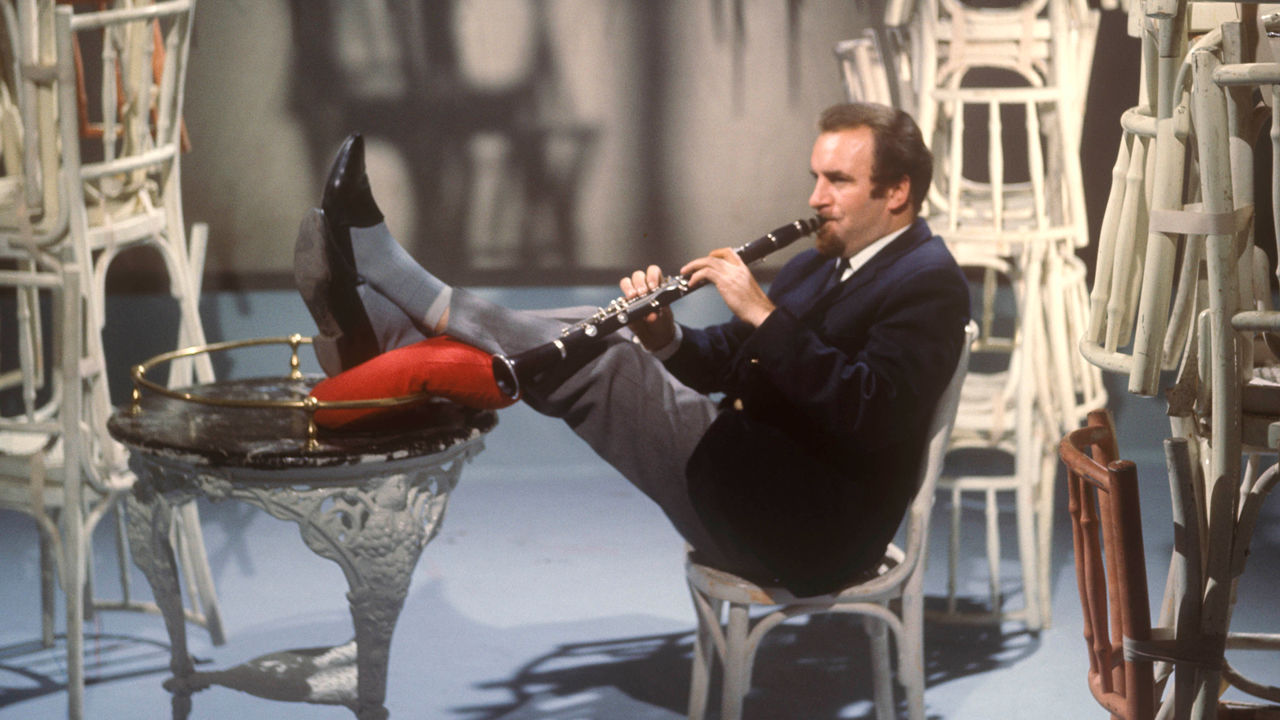
The first transatlantic shot fired by British music wasn’t a rock anthem or a skiffle stomp. It was a spare, unhurried clarinet melody written by a man in a bowler hat. Acker Bilk’s “Stranger on the Shore” reached No. 1 in the United States in 1962, a full two years before The Beatles set foot on American soil. In the UK, it lingered in the charts for 55 weeks. No one was more surprised than the composer himself.
Bilk was born Bernard Stanley Bilk in 1929 in Pensford, Somerset. Music arrived late. He’d lost half a finger in a tobogganing accident and two front teeth in a school fight before he ever touched an instrument. Conscripted and stationed along the Suez Canal, he joined an impromptu army jazz group. “I got hold of a clarinet and off we went,” he told Alex Belfield. “I was 18.”
After his service, he moved through England’s trad jazz circuit, eventually forming the Paramount Jazz Band. Their uniform of striped waistcoats and bowlers, borrowed from a Düsseldorf beer hall residency, became a visual signature. In 1960, their single “Summer Set” — a pun on Somerset — cracked the British top five. Then came the instrumental that no market strategist would have bet on.
“Stranger on the Shore” had no lyrics, no chorus, no teenage pulse. It relied entirely on Bilk’s long, unspooling melody. What it delivered was a quiet, self-contained melancholy that resonated far beyond jazz club regulars. It made him the first British artist to top the Billboard Hot 100 with a self-composed track, a historical footnote often buried under louder names.
Bilk never positioned himself as an invader. He simply wrote a tune for his own instrument, drawing on memories of childhood and, reportedly, a young woman he’d once known. The result outlasted the chart run. Six decades later, the clarinet line remains instantly recognizable — a reminder that the loudest cultural shifts sometimes come from the quietest places.