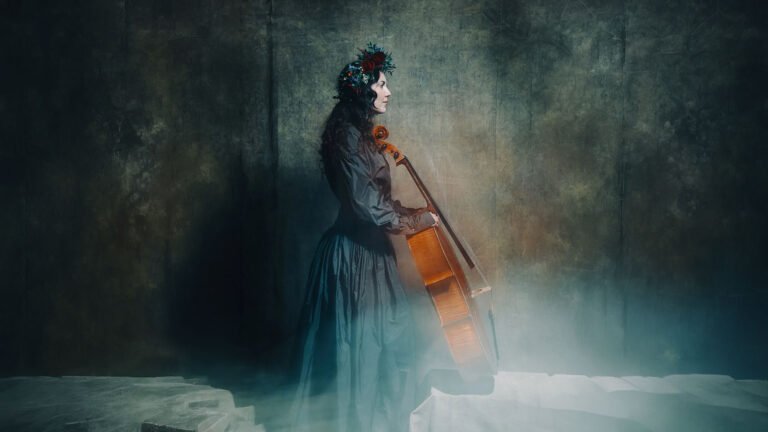
The Polish-born Edinburgh cellist’s debut solo album treats improvisation as a way of living. Memory, migration and inherited song keep changing direction.
The swallow that flies under a roof to announce spring is an old piece of Eastern European weather. In the original Ukrainian Shchedryk, the bird is not festive decoration. It is a messenger of return, abundance and the year turning over. People used to wait for that arrival the way they wait for a letter, or a crossing, or a voice that still knows their name. That image looks small until you sit with it. Then it starts to explain a lot about how memory moves.
Justyna Jablonska was born in Poland and now works from Edinburgh, a cellist who spent years inside other people’s scores before she allowed herself to author the room. She came up through a music school still marked by Soviet discipline, then through the RNCM with Peter Dixon, the Lucerne Festival Academy, private study with Ensemble Intercontemporain cellist Eric-Maria Couturier, and a Carnegie Trust-funded PhD in creative music practice at the Royal Conservatoire of Scotland, completed in 2023. The public record already held serious work. Songs for Cello and Carnatic Violin with Jyotsna Srikanth in 2022. The multimedia solo Lost and Found: A Cellist’s Journey at the Edinburgh Fringe. Songs of the Roma with Simon Thacker in 2024, later picked among Songlines’ top albums of that year. Lockdown is what changed the contract. Freelance dates froze. Interpretation started to feel like a closed door. “I’ve always felt constricted by playing music by other people,” she has said. “It was time to let go of the classical music canon.”
Unforeseen, released 4 September on Alumni Records Glasgow, is the first record that belongs entirely to that decision. Eleven tracks. Cello at the centre. Electronics, field recordings, plucked patterns and voices gathered around it. Dave Lloyd recorded and co-produced the album at Lost Oscillation Studio. Creative Scotland and Chamber Music Scotland funded the work. The same material exists as a sixty-minute live piece, Unforeseen: Improvising Life and Music, with film by Anna Leszczynska and spoken-word direction from Fiona Mackinnon, touring Scottish rooms through September. The premise is exact. Improvising in music and improvising a life after a border are versions of the same attention.
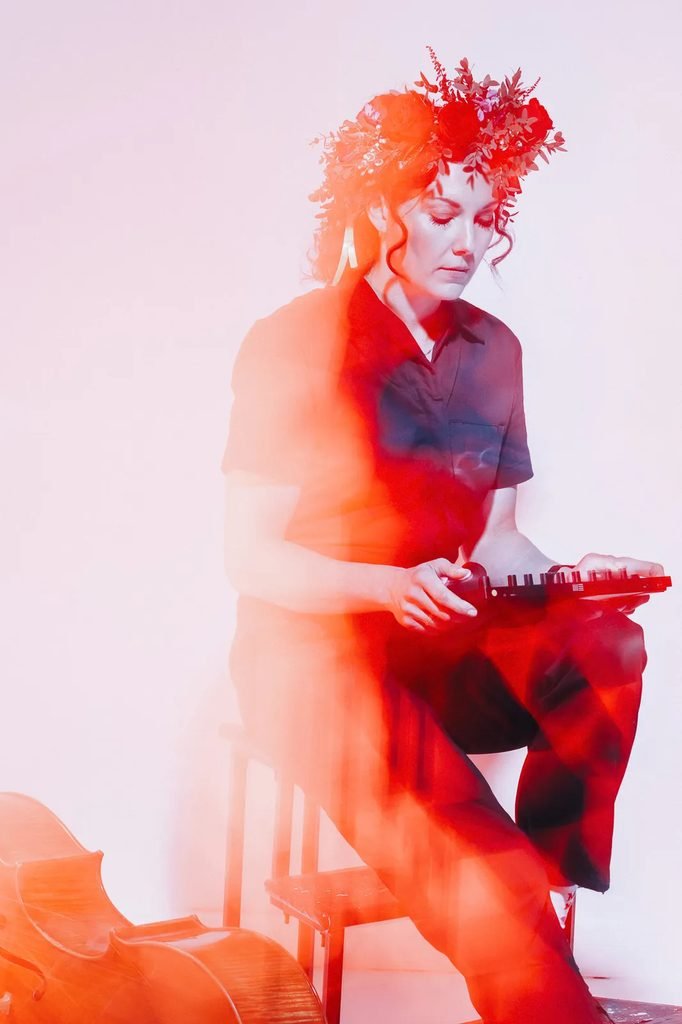
The swallow returns here as method. A migratory bird does not invent a new sky. It reads pressure, light, noise, hunger, and adjusts mid-flight. Jablonska built the album from conversations with Polish, Ukrainian and Roma migrants, from childhood rooms, from lullabies her mother sang, from the radio that once carried both Chopin and whatever the dial refused to name as music. “I guess I grew not to see it as weird or as noise,” she says of that early listening. The record keeps that hospitality. Familiar fragments arrive already altered by distance.
The title track opens in baritone cello, slow and dark, strings gathering around a single line until the harmony thickens into waiting. Nothing detonates. The unforeseen arrives as pressure. Then If You Can Hear This cuts the air with broken electronics and a processed voice repeating a cold instruction. “It’s a test designed to provoke an emotional response.” The phrase sits in the album like a radio drill leaking through a thin wall. After the gravity of the opening, the track feels like interference. That is the point. Migration is full of rooms where the signal is wrong and you still have to answer it.
9 Daughters, with Monika Niemczynowicz, brings birdsong and plucked strings first, then a Slavic vocal line that behaves like a ritual rather than a verse. Sub-bass and muted percussion close around the voice without swallowing it. The Pact, again with Niemczynowicz, turns that folk current darker. Percussion walks in circles. The cello tightens. The singing tells a cautionary tale of a midnight bargain, blood on a threshold, a child who cannot be saved by salt or iron. The language stays Polish. Meaning travels through grain and cadence even before every word is caught.
Between those vocal rooms the instrumental tracks work like weather stations. Levi & Nadia is the most intimate. Children’s voices in a yard, a music-box figure, then strings that darken the air without erasing the game. Wayward finds a quieter pulse, flute-like breath against a dry beat and bass that slips rather than marches. Fabryka goes the other way. Low strings grind and stack until the piece feels industrial, close, unresolved. Procession walks with more dignity, a slow accumulation of lines, until a spoken fragment arrives at the edge of the frame and pins the music to a living mouth. Bloki takes its name from the concrete apartment blocks that still organise so much of Polish and Eastern European daily life. The music refuses the weight of the material. Rapid plucked patterns, almost glassy, keep repeating until geometry becomes feeling. Life inside those buildings was never only grey. It was also kitchens, radios, lullabies leaking through prefabricated walls.
Shchedryk, with Sofiia Fylypiv, is where the swallow finally names itself. The four-note figure that the West later dressed as Carol of the Bells comes back stripped of tinsel. Voice and strings turn the ostinato into a winter rite. The Ukrainian text still speaks of a swallow entering a house to promise a year of plenty. Heard in 2026, after displacement has rewritten so many Eastern European rooms, the promise sounds more fragile and more necessary. Jablonska does not decorate the melody. She lets it stand as inherited weather.
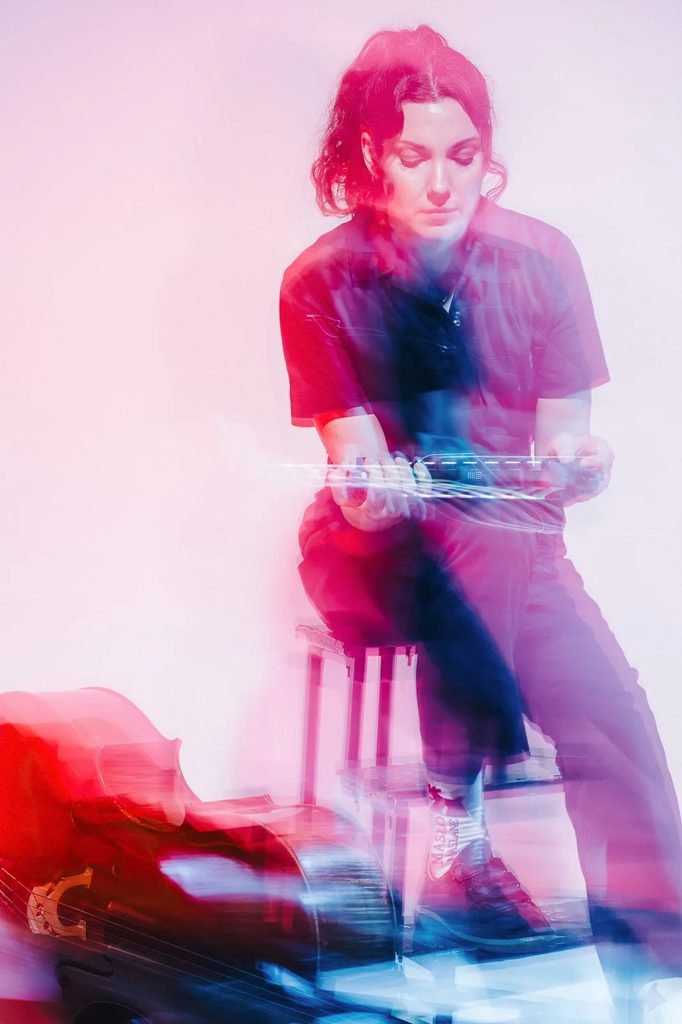
The album closes on Skye Boat Song, the Scottish air associated with a night crossing after defeat. No voice this time. Plucked strings and cello carry the tune like a small craft. After factories, pacts, tests and concrete, the record chooses a lullaby that already belongs to the country Jablonska now lives in. The ending is not triumph. It is a held breath. A boat, a shore, a song that survived by being passed from mouth to instrument.
What gives Unforeseen weight is the precision of that world. The cello remains the instrument with the most human grain, yet Jablonska refuses to treat it as a monument. She lets electronics bruise it. She lets field recordings keep their dirt. She lets other women sing the parts of the story that should not be translated into English first. The album understands atmosphere as structure. It also understands that home is less a building than a set of sounds you can still recognise when the map has moved.
A swallow does not explain the journey. It arrives, announces the season, and leaves the house to deal with what comes next. Jablonska’s record works with the same economy. It listens for the moment when memory changes temperature, then stays with that change until the feeling has a shape.
Follow Justyna Jablonska
Unforeseen is out now on Alumni Records Glasgow.
Follow: Instagram · YouTube · Facebook · Official Site