In paper marbling you float drops of colour onto a thickened bath of water and then use a stylus to draw through them to create the branching patterns. Alum is used to prepare the paper and when the sheet comes into contact with the surface the colours lift in a single, unique transfer. I've watched marblers at work, doing it very slowly, knowing that every breath of air will affect the shape of the veins. The image is held in the bath for a moment and then it's transferred to the paper and the water is left perfectly clear again.
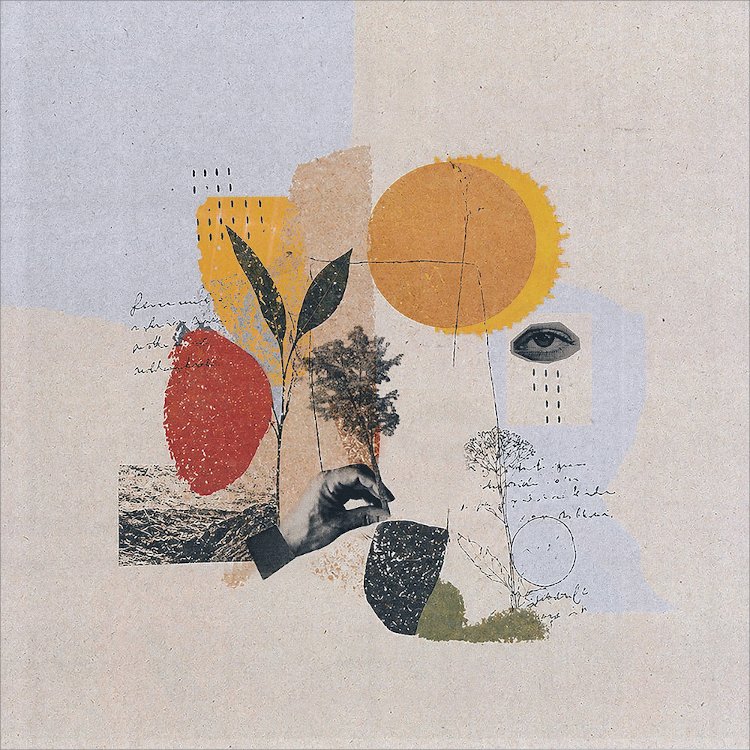
Liz Harris makes music that behaves like that bath. She was born in Marin County and moved to Astoria, Oregon (a river mouth town) after leaving Portland. She's put together two scores for short films about water under her own name into Music For Two Films About Water (kranky, end of November). One of the films is Tanja Engelberts' We Exhale which tracks the Rhone from its Alpine source through to the industrialised areas. The other is Takashi Makino's Constellation which overlays moving paper collages on very faint water imagery. The connection to marbling is very obvious in that both films treat water as a surface which carries colour and movement and Harris' music provides the size, the invisible thickening which allows the images to float.
It's a very small record, completely wordless and I quite like the way it allows the water to do the talking. The music is all field recordings of water, sparse piano and distant bells. Harris has completely put her voice to one side on this one and that is the real bet. You lose the singing which is normally the thing that gives the music its weight, but the scores are very elemental in their simplicity, they're like the residue after the water has drained. I keep coming back to Untitled (from We Exhale) where the piano and the water are absolutely fused together, each note is a drop of water spreading out into the bath. That track is what gives the album its heft.
Untitled (from Constellation) is the thinner piece. Where the first score moves the second just holds still and is thinner. I get that stillness is very much in keeping with Makino's paper collages (which float and overlap with no fixed point), but the track on its own just doesn't have the same pull as the first. The thinness is absolutely appropriate to the stillness of the film's imagery but I keep going back to the first score.
This one's for the listener who likes Liz Harris as Liz Harris and as Grouper (they've got that ambient music on during a long train journey and just watch the scenery go by). If you know Sarah Davachi or Bing & Ruth you're already in the same room. Play it after midnight with your headphones or on a walk along a river when the city has gone quiet. Start with Untitled (from We Exhale) that's the one you'll come back to. Leave the second track alone if you need a voice or a beat as Harris keeps both of those completely out of it here and that's the whole point.
I think about the marbler again when the last water recording stops. They lift the sheet and the colours are set and the bath is clean, and honestly that’s about what Music For Two Films About Water does to me. It’s two long scores, one for the river and one for the paper, and they hang on to that movement for forty minutes so I can hear it. Then it’s gone and I put the first one on again.