As the 2026 edition approaches, LOST Music Festival once again transforms the world’s largest bamboo maze into a space where sound, architecture and attention meet on equal terms.
There are events that ask you to arrive on time and events that ask you to arrive open. LOST Music Festival belongs to the second category. Set within the Labirinto della Masone in Fontanellato, near Parma, the festival does not simply occupy a venue. It activates a landscape. The seven hectares of bamboo pathways, conceived by Franco Maria Ricci and opened in 2015, become both container and collaborator for three days of experimental electronic music and contemporary art.
The 2026 edition runs from 3 to 5 July. In the days leading up to the opening, the sense of anticipation is not only about who will play but about what the space will do to the music and what the music will do to the space. This is the festival’s recurring strength. It treats disorientation as a creative condition rather than an inconvenience.
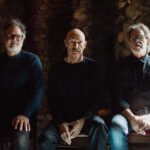
Friday 3 July opens with hybrid and live work that sets a tone of close attention rather than immediate release. Grace & Raffaella share a hybrid live set. Yawning Portal presents an extended version of “Anywhere,” SUUTOO brings “STARFIRE,” and TLF Trio and KeiyaA add further live dimensions. RHR and Kavari close the night with DJ sets that let sound continue to travel through the paths.
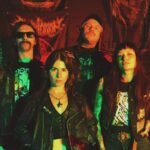
Saturday 4 July broadens the frame. The 20_14 assembly, with Felisha Ledesma, Noa Kurzweil and Rune Kielsgaard, offers a collective live investigation. Prison Religion presents “Psalms,” BV/XT explores its duo language, and MICROPLASTICS unites 96 Back, aya and Jennifer Walton. Ulla appears in hybrid mode, Saint Abdullah & Eomac continue their cross-geographic conversations, and Raisa K, More Eaze and feeo each contribute distinct approaches to texture and form. Special guests Ange Halliwell and Pablo Altar join the programme, while JOKKOO, Kiernan Laveaux and Bobby Beethoven handle DJ duties across the site.
Sunday 5 July moves toward more concentrated statements before its closing sets. Jabu, Dylan Henner and Abosahar each take the stage with work that rewards sustained focus. Heith & Tarawangsawelas present “Duori,” a meeting of distinct sonic traditions. The weekend closes with foodman, Debit’s “Cumbia Rebajada Tribute” and CCL’s “Liquidtime,” three sets that finish the festival on notes of rhythm, memory and forward motion.
The programme reflects the festival’s long-standing interest in artists who operate at the margins of genre and who understand that the environment is not neutral. The Franco Maria Ricci Art Foundation’s involvement keeps visual culture and sonic research in active exchange. Camping on site, with attention to the surrounding biotope and practical services, allows audiences to stay inside the experience rather than moving in and out of it. The result is a temporary community shaped as much by the time between performances as by the performances themselves.
In the wider European calendar, LOST occupies a clear position. It does not compete on scale or star visibility. It competes on the quality of attention it can sustain and on the seriousness with which it treats the relationship between sound and space. For artists, the labyrinth offers a context in which formal risk is supported by the architecture rather than fighting against it. For listeners, it offers the chance to encounter work without the usual filters of expectation and genre.
As the final preparations conclude and the first visitors begin to find their bearings among the bamboo corridors, the festival prepares to do what it has always done. It opens a space where music is not background but the reason for being present. Where getting lost is not a failure of direction but the beginning of a different kind of understanding.
The paths are ready. The sound is about to move through them.
Join the Club
Like this story? You’ll love our monthly newsletter.
Thank you for subscribing to the newsletter.
Oops. Something went wrong. Please try again later.

ROMBO Editorial Staff
The collective voice behind ROMBO Magazine’s news, reviews, features, and cultural coverage.