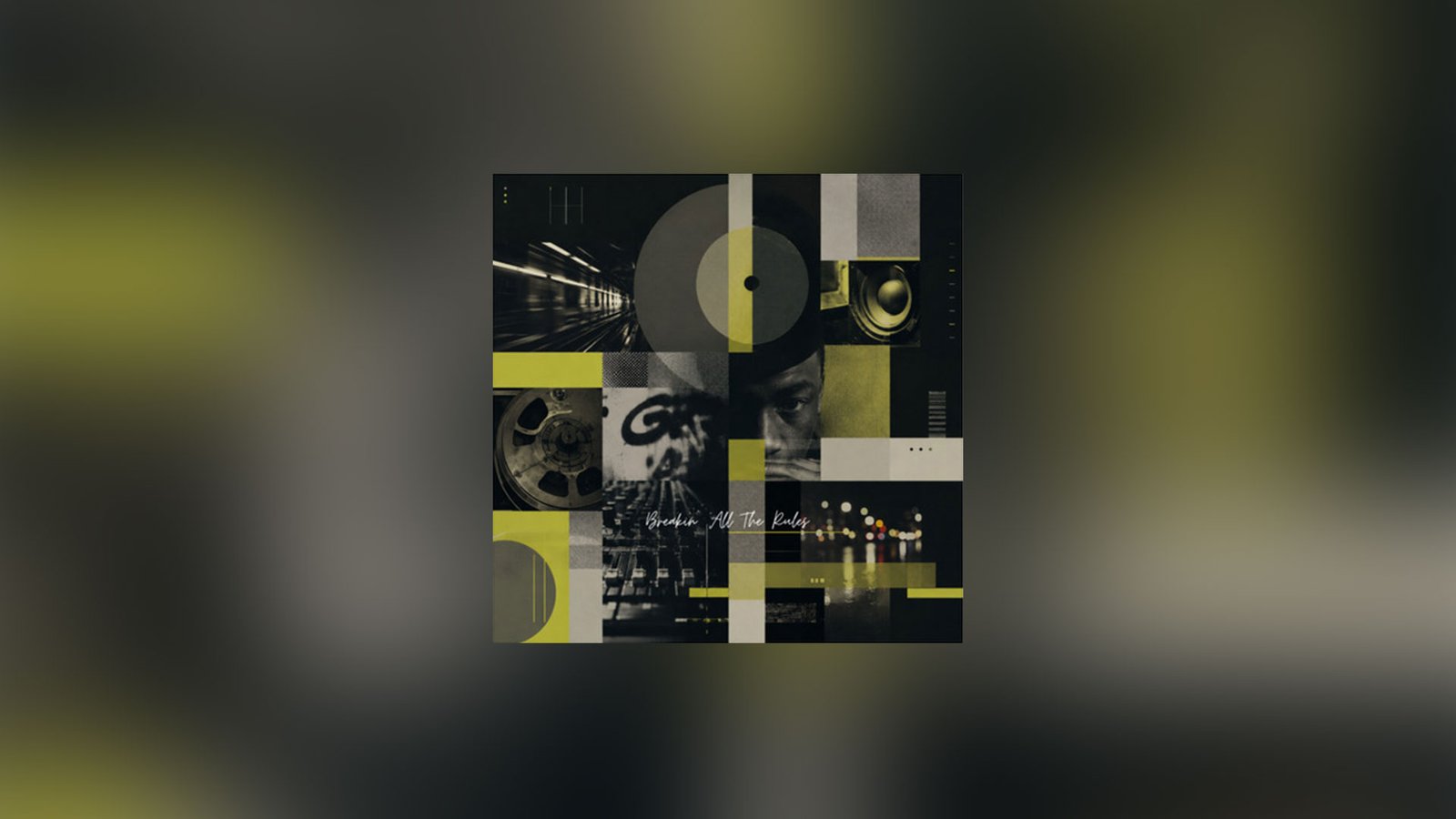
Berlin-based producer and composer overscored spent years on scoring and orchestral work before sample-based beats became the main vehicle. That earlier training still shapes the arrangements. Spy Movie Music was written and produced in 2022, refined over time, and has now arrived as a seven-track instrumental album that invites the listener to supply the pictures while the music supplies the sequence.
There is a particular kind of audio that almost never reaches a finished spy film. The call that begins with a handset already hanging up. The radio voice that cuts through with the flat statement that someone was lucky to be dragged out of an obvious trap. The argument that ends with a direct order to get in the car. Those fragments belong to the operating level of organized crime, where an internal commission can already be in revolt and the next practical step is simply to move. overscored builds Spy Movie Music around exactly that material. The spy-movie frame stays visible, yet the samples keep returning the listener to the concrete details of traps, commissions in turmoil, and street-level armed confrontations.
Everyday Life (Prologue) opens on a drum groove and sample chop that feel like ordinary movement. Electric piano chords sit warm and slightly veiled. A round bass line anchors a relaxed pace. Brief saxophone phrases and soft synthesizer washes keep the temperature low. The track holds that temperature until a ringtone cuts across the final bars. What had registered as routine is reheard, in the instant the ring arrives, as the last quiet stretch before the phone becomes the mechanism that pulls the listener into the next sequence.
Spy Theme begins with the sound of a phone hanging up. Guitar chords follow, then a dynamic drum track built from chopped samples. The middle section slows into longer lines of piano, strings and brass that function like a temporary film-score window before the drums return. The sense of being watched is carried by the way the rhythm keeps reasserting itself after each wider passage. The phone click that closes the track returns the listener to the same closed circuit that opened it.
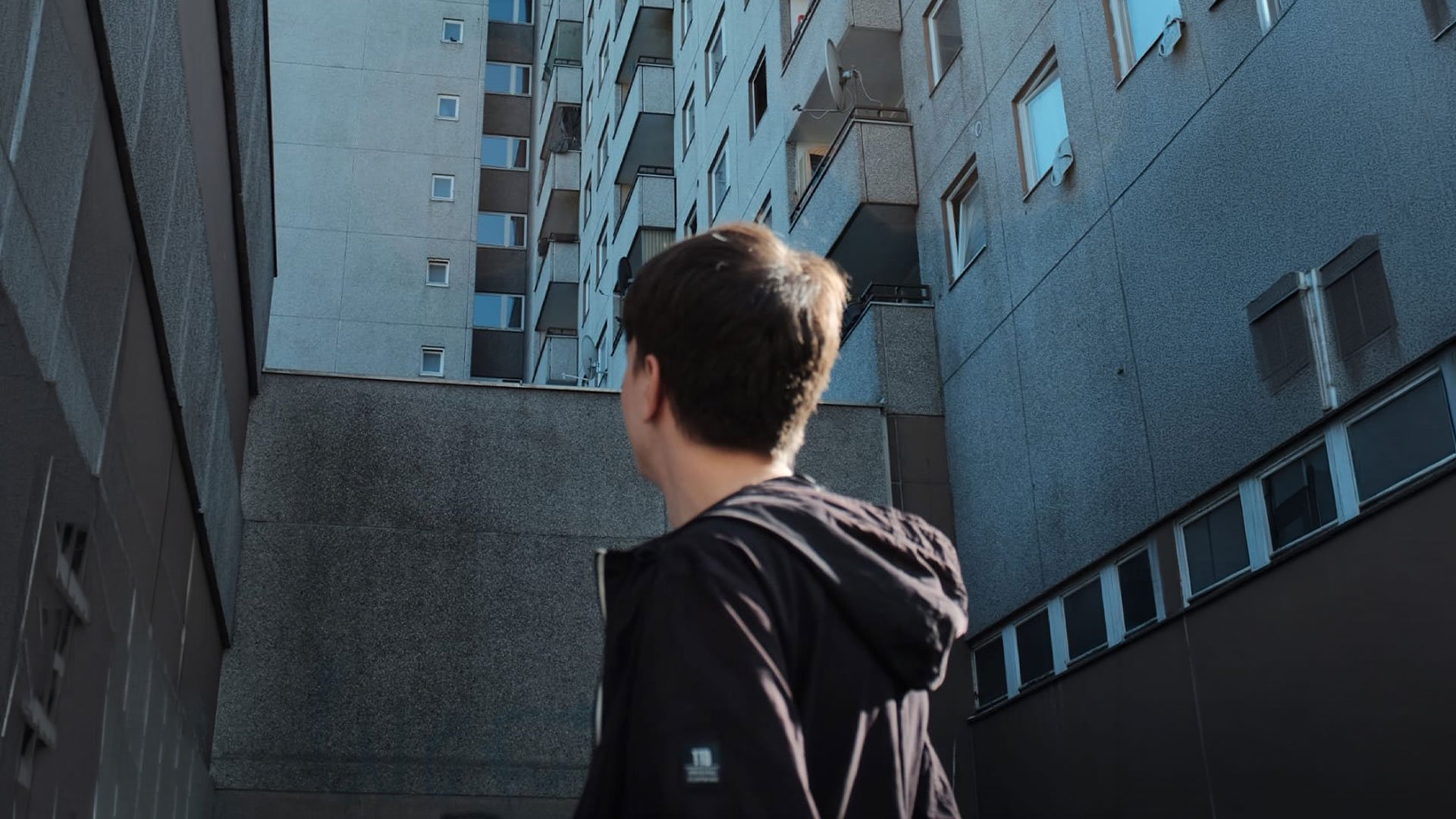
Spy Theme is also where the album began. overscored built it around those guitar chords, with James Bond and The Man from U.N.C.L.E. in mind, and in the story the record tells, this is the moment the main character first feels watched. The video, shot in Berlin by Victor Gütay, with overscored credited for music, editing and concept, turns that feeling into a route through the city.
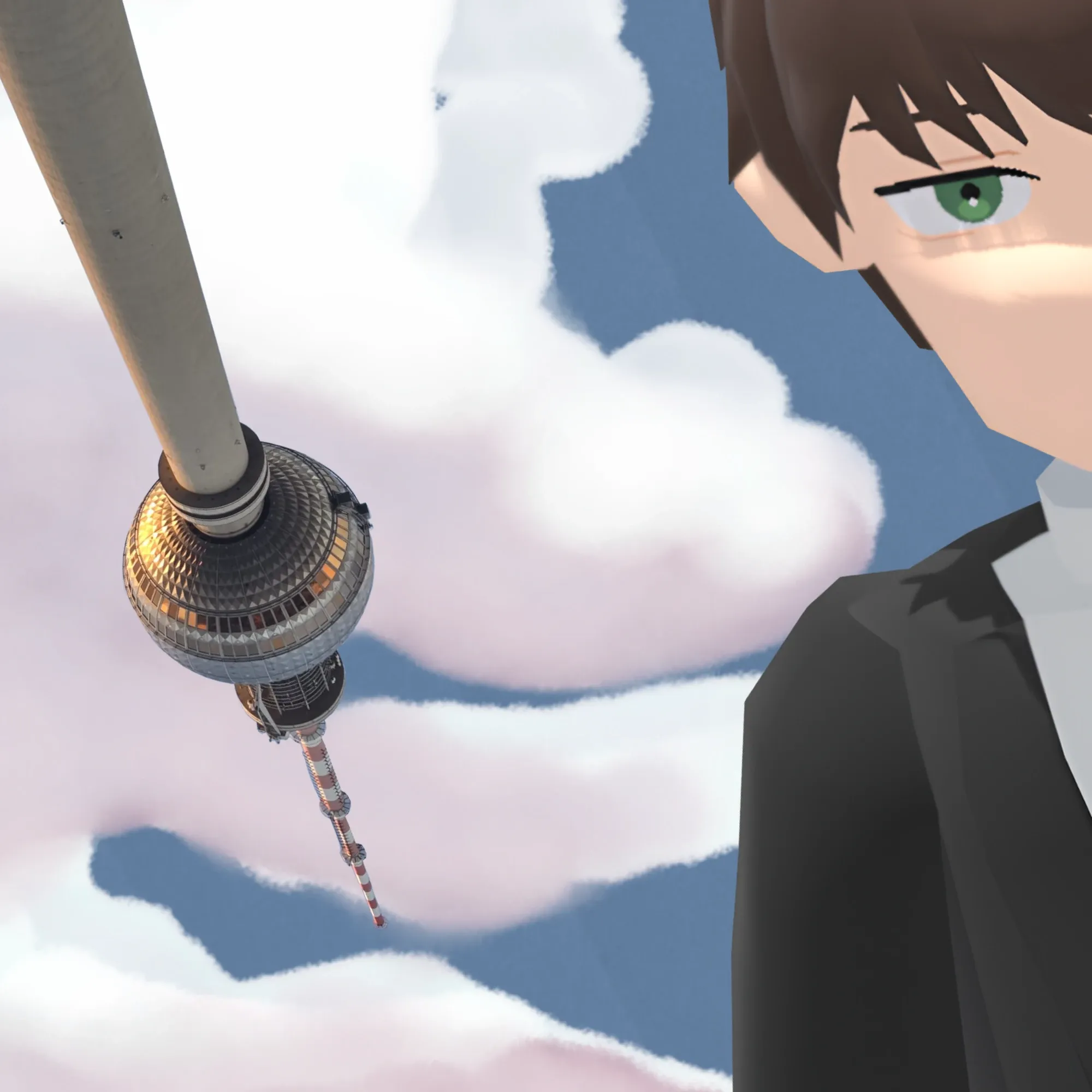
It opens on a tower block reflected upside down in still water, then follows a young man in a dark jacket through a train carriage, the overgrown green beside the railway and a glass station hall, while a yellow U-Bahn crosses its viaduct overhead. He runs across a wide open field and drops face down into the grass among small white flowers. He checks his phone on a bed of autumn leaves, and the Fernsehturm rises between two façades. Then the camera tilts up to a lamp post fitted with a surveillance camera, and a yellow sign, an eye above the word Video, appears beside it. From there the light sinks into dusk: dark water, a graffiti underpass with a lone figure at its far end, a lit glass doorway at the foot of the towers. Most shots trail him from behind or wait for him ahead, so the viewer stands where the watcher would stand, the same place the track keeps the listener.
Unexpected Help places the listener inside the immediate aftermath. Fragmented voices move across altered pitches and overlapping registers. The exchange names the trap directly: running into something this obvious, the whole commission already revolting, the refusal to hear further explanation, and the final command to get in the car. After that order the snare hits and the instrumental section opens. Pulsing bass and dry drums carry a night-drive pace. Keyboard chords stay close. A brighter crystalline line cuts through, suggesting the city lights outside the car. The voices do not narrate from a distance. They function as intercepted audio that has already decided the next move.
Nothing Stays The Same steps away from the immediate chase. Acoustic guitar and light drums sit under orchestral strings and keys that open the space. The arrangement then stops. After a brief quiet the electric guitars enter, clean and heavily reverberated, drawing suspended chords and a clear single-line melody. The shift registers the cost of the change: new conditions, the repeated return of the previous life, and the time that has already moved. The track does not rush the recognition. It lets the electric arpeggios hold the weight after the warmer opening has receded.
Villain Theme arrives after that pause with heavier attitude. Phonk-style vocal chops and rock-leaning energy sit over a deep electric bass and a dusty, measured drum pattern. The repeated fragments name the action without softening: pull the trigger back, smoked out and loced out while riding with the pistol grip, then stepping with some dead G’s. The vocal texture is rough and filtered, as if coming through an old radio or worn tape. When the chopped lines return after a central reduction, saturated synthesizers thicken the density. The mantra does not explain motive. It simply restates the physical terms of the confrontation.
Stroke Of Fate holds the emotional center. Warm electric piano and light arpeggios open the track. Midway the space darkens around a low, insistent electric guitar arpeggio. Drums and bass enter with more weight. Piano chords and reverberated guitars widen the frame. A tremolo melody rises in the upper register and cuts through the denser arrangement. The line carries the sense that something has already gone wrong and that the outcome remains unsettled. The arrangement keeps the flaws and the limited-gear decisions intact. The track ends on a thinner, suspended coda.
End Credits (for a Spy Movie) gathers the earlier material into a medley. The phone ring returns. Guitar chords from the theme reappear. Voice samples, bells, a bass riff and further guitar lines are woven together. The groove is tighter and the mix hits harder. Surf-leaning guitar adds a brighter edge. The track moves with the calculated pace of a final departure while it also undercuts the usual brightness of end-credit music. The elements that earlier carried the trap, the order to leave, and the armed confrontation are still present inside the closing sequence.
Across the seven tracks the spy-movie atmosphere functions as structure rather than decoration. Phone sounds, radio fragments and chopped vocal lines keep the narrative tethered to the concrete conditions the samples name: an obvious trap, a commission already in revolt, the immediate demand to get in the car, and the street-level language of triggers, pistol grips and dead G’s. The wider orchestral and soft-rock passages give the internal cost of those conditions room to register. The result is an instrumental album that treats atmosphere as the means of holding both the cinematic frame and the specific mechanics of the conflict it samples.