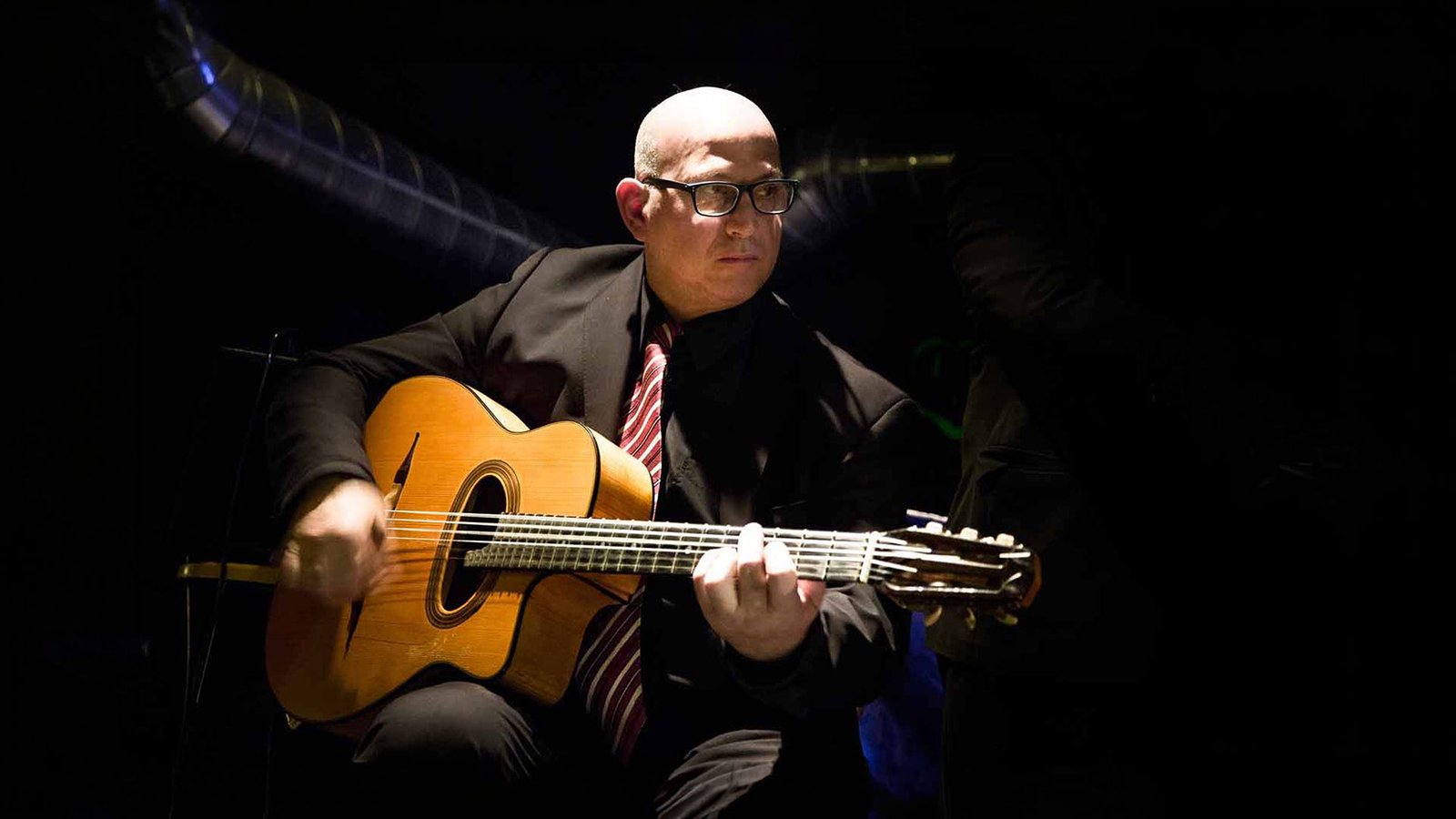
Pyrizein began with a trip and a debt. Adrien Guiot, the band’s singer and founder, spent two months in Sicily with no fixed plan and returned singing in a language that was not his own. The name comes from the ancient Greek form of Pizzi, a village he encountered on the road. None of the members has a direct Italian bloodline. Guiot lives in the Hainaut. The others come from cities across Belgium and northern France. The connection is practical and historical rather than ancestral. From 1946, tens of thousands of Italians, many of them Sicilian, came to work Belgium’s coal mines, often at the cost of their lives. The 1956 Bois du Cazier disaster in Marcinelle killed 262 miners, 136 of them Italian. Singing Rosa Balistreri’s songs in those rooms is the band’s way of acknowledging the unpaid portion of that history.
Balistreri, born into poverty in Licata in 1927, spent her life turning folk song into a tool for people who were not supposed to be heard. Pyrizein, a quintet of Guiot on vocals, Damien Thonnard on electric guitar, Darius Lecharlier on mandolin, Thomas Knockaert on sousaphone and Lowie Pallemaerts on drums, built its self-titled debut around her repertoire. Most of it was recorded live at La Ruche Théâtre in Marcinelle, the Charleroi district where the Bois du Cazier stands, with Pierre Vaiana’s soprano saxophone on the last two songs. The album, out on Chanson Bâtarde, does not treat those songs as museum material. It subjects them to noise, free improvisation and progressive architecture until the original heat becomes available in another country.
The record opens in dryness. In “Signuruzzu chiuviti” a single plucked line holds a rain prayer. The voice asks the little lord to send rain because the small trees are dead of thirst, and to send a good rain without lightning or thunder. When a second voice joins, the petition becomes collective. The arrangement stays nearly empty, matching the field that waits.
“Vurria fari un palazzu” builds the promised palace on the mountain of lover stones, with two windows face to face. Hand percussion and electric guitar drive a long run, then the texture empties to an acoustic line under the window. The hyperbolic gift collapses into the practical accounting of desire.
“Ciuriddi di lu chianu” watches the autumn leaf spin until it hides in a corner. The voice carries the melancholy of something already gone, the space kept small and chamber-like.
“Cu ti lu dissi” turns the fear of abandonment into a public declaration. Who told you I was going to leave you. Better death than this pain. Let’s make peace, my only queen. The band drives it with mandolin and lift, then stops so the voices can finish the peace a cappella.
The center of the album darkens into the social material that defines the band’s presence. “Terra ca nun senti” curses the moment of birth in a land that does not hear, that watches its children die and gives nothing to bring them back. A bandistic march meets heavier rock weight. The voice moves from invective to the sudden maternal hush of “E chianci chi hai, ninna oh”, a lullaby for a wound that will not close. This is the song Balistreri herself carried as an address to Sicily.
“Lu muttu anticu” keeps the ancient saying. Times change, seasons change, but the bread of wheat is always bitter for the one who works by the mouthful under sun and wind. Sousaphone, brushes and mandolin tremolo hold both the hardness of the fields and the night smells of jasmine, mallow and fried bread. A carter passes at vespers, singing under the window.
“Levatillu stu capeddu” refuses the costume. Take off that hat. You are the daughter of master Cicciu, Cirinà, don’t you see it does not suit you. Wooden percussion and jaw harp open a grotesque village procession before electric guitar tears through it. The voice shifts from mockery to a suspended statement.
“Lu povero ’ntonuccio” follows a young man struck by sudden illness. The fiancée begs her mother to come. They reach the first step of the house. Later the mother walks behind the coffin. The last pomp is the burial itself. The arrangement builds from bare polyphony to a full ensemble, turning ritual lament into a long run that still leaves the mother’s steps audible.
In “Buttana di to ma’” the count is exact: twenty-nine years, eleven months and twenty-nine days in the den, without having done a thousandth of the damage. All the friends were infamous, happy when they took him chained. The saxophone answers the shout with its own free flight. When the band stops, the naked promise to settle accounts lands before the rhythm returns.
The album closes with “Vitti ’na crozza”. The voice finds a skull on a tower. It answers with great pain: I died without the toll of bells. Make me this bed, for the worms have eaten me all. Sparse resonances and saxophone lines strip the old melody of its festive lightness. The “Ia la lai” becomes a bare lament before the last heat leaves the room.
Pyrizein understands that Balistreri’s songs were already a form of extraction. She pulled speech from people who were not supposed to be heard. The quintet continues that work under a second pressure, on Belgian soil that still carries the memory of Italian names on a miners’ list. The dignity of the last is not softened. It is made denser, and the unpaid debt is carried forward for anyone still willing to hear it.