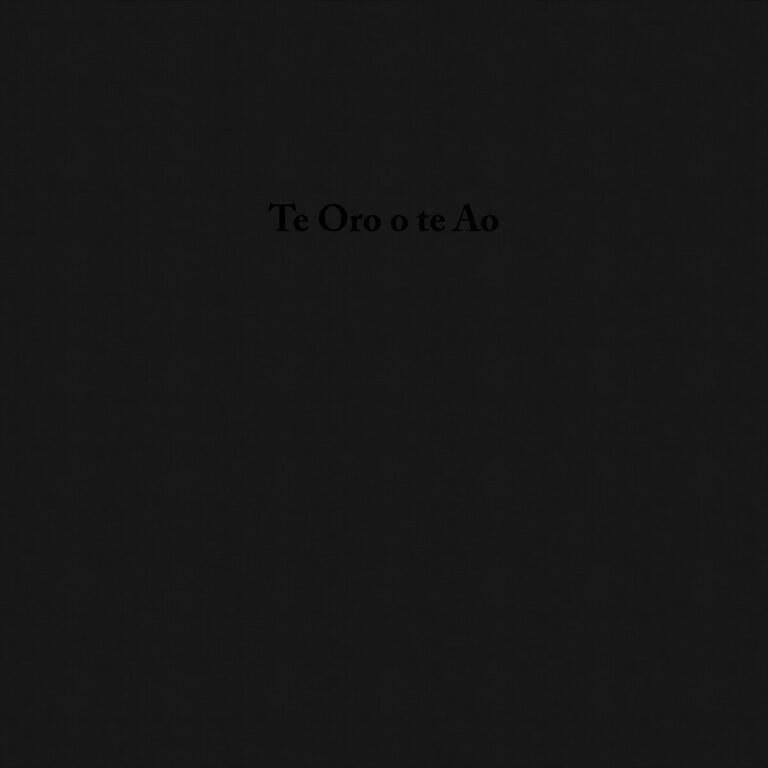
The New Zealand sound artist builds an album around Māori cosmology and a climate warning, packaged in black type on a black cover.
Rachel Shearer’s Te Oro a te Ao carries black type on a black background, a design decision that honors Hinenuitepō, the Māori goddess of night and death, and functions as a climate warning. It is a rare gesture on an album cover, and a purposeful one: the record asks to be heard before it is seen.
The title translates as the resounding of the world. Shearer works from whakapapa, the Māori understanding that all of nature, time included, is connected, and shapes the album as a translation of that idea into sound.
The opening piece, “Waha,” features Cathy Livermore. The word carries two meanings, gate and voice, and the track works as an entry point to the record and to something beyond it. It starts a cappella, accumulates layers, takes on dirt, dust and rock, and thickens into a drone, the individual voice absorbed without losing its force.
At the center sits the two-part “Pounamu Becoming Crystal.” The first section traces the movement and strength of water, opening as mist and turning into torrent, drawing on subterranean volcanic activity, tectonic shifts and land slippages. It softens before it ends.
The second part, subtitled “Wiriwiri,” or to tremble, honors the dance of Tānerore, the visible shimmer of hot air rising from the ground. Rumbling gives way to white noise: processed cicadas, their volume climbing with temperature.
The closing “Ao,” a word that can mean sunrise, clouds or world, is a quiet guitar coda. Invitation, experience, farewell.
Join the Club
Like this story? You’ll love our monthly newsletter.
Thank you for subscribing to the newsletter.
Oops. Something went wrong. Please try again later.

ROMBO Editorial Staff
The collective voice behind ROMBO Magazine’s news, reviews, features, and cultural coverage.