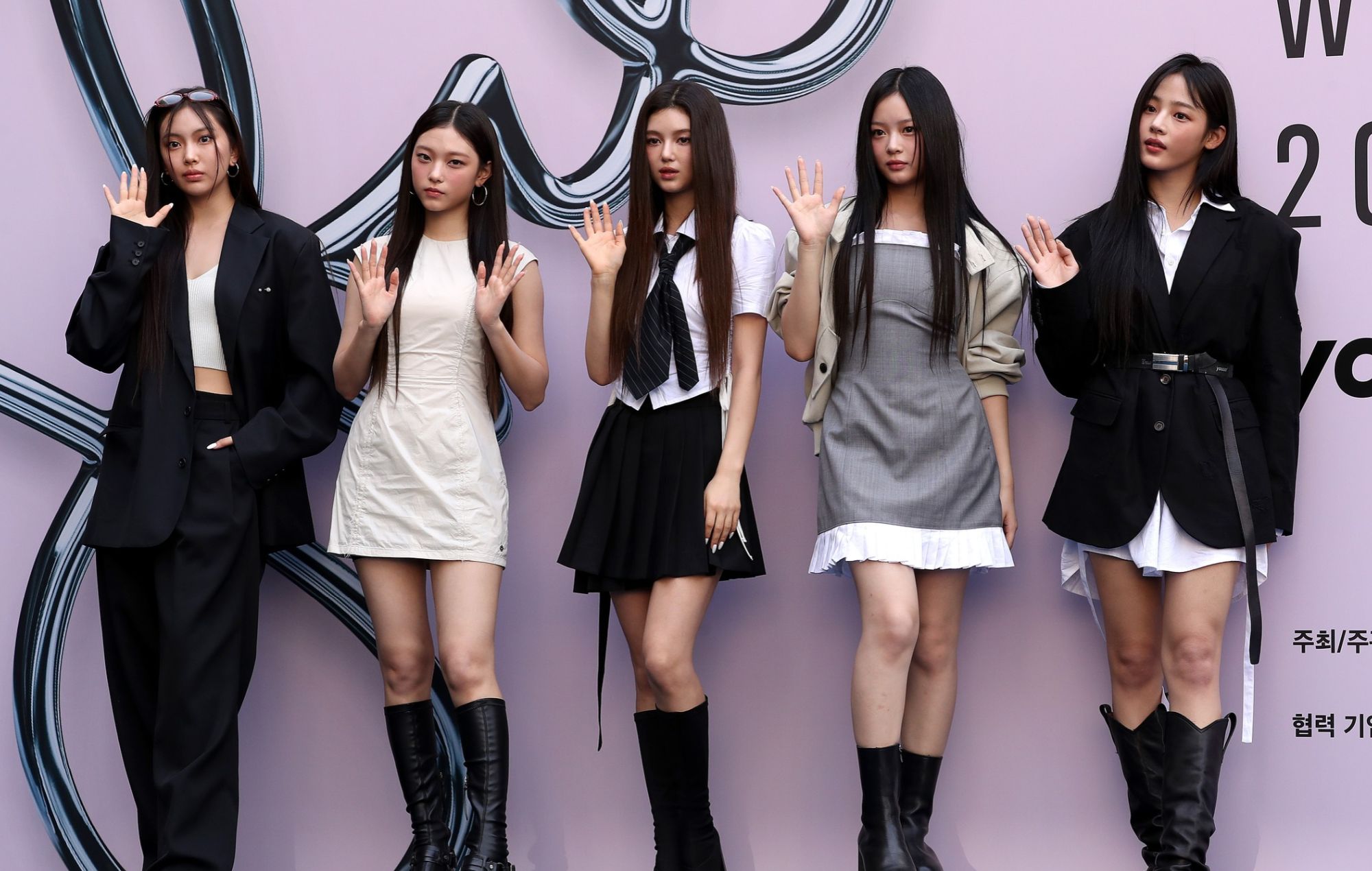
Contracts signed by the five members of NewJeans when they were between 14 and 17 left out a section of the Korean government's standard K-pop contract template, according to an investigation published by The New York Times. The omitted language would have barred a label from requiring a minor "to engage in excessive physical exposure or overly sexually suggestive expression." Also absent, the report says, was the template's guarantee of young performers' "physical and mental health, right to education, personality rights, and rights to sleep, rest, and free choice."
The agreements, signed in 2022 with ADOR and its parent HYBE, reportedly carried conduct clauses barring "inappropriate romantic relationships" and an "insincere attitude," alongside steep exit penalties. They run until 2029, and the terms described extend the label's hold past that date: the right to keep using and licensing the members' identities, including AI-generated voice clones and chatbots, indefinitely. The singers would still be paid, but would not control how their faces and voices are used.
HYBE disputed the framing. In statements to the outlet, representatives said the company upholds child-protection law, that the contracts were negotiated with legal counsel and covered by a government-standard supplementary agreement for minors, and that it "do[es] not even recommend cosmetic surgery or procedures against an individual's wishes." HYBE further responded that the leaked agreements "are being used as a means to attack the K-pop industry."
The report lands in the middle of a dispute ROMBO has followed closely. NewJeans announced their departure from ADOR in 2024, citing broken trust and, in member Hanni's account, "deliberate miscommunications and manipulation." ADOR answered that "a unilateral claim that trust has been broken does not constitute valid grounds for termination of a contract," and in December sued member Danielle, a family member and the group's producer for damages and a contract penalty, seeking $30million. In October 2025 the Seoul Central District Court rejected the members' appeal to terminate, binding them to ADOR until 2029. Danielle, who has said she "fought till the end" to stay with the group, shared a demo snippet this spring while the case continued.
The clause worth holding onto is the one about sleep. It sits in a government template for a reason, and its removal from a contract signed by teenagers is the kind of detail that turns an industry argument into a labor question. The AI provision points the same way, toward a version of an artist that outlasts the artist's own consent. Both are now on the record, attached to one of the biggest groups in the format, with four years left on the clock.