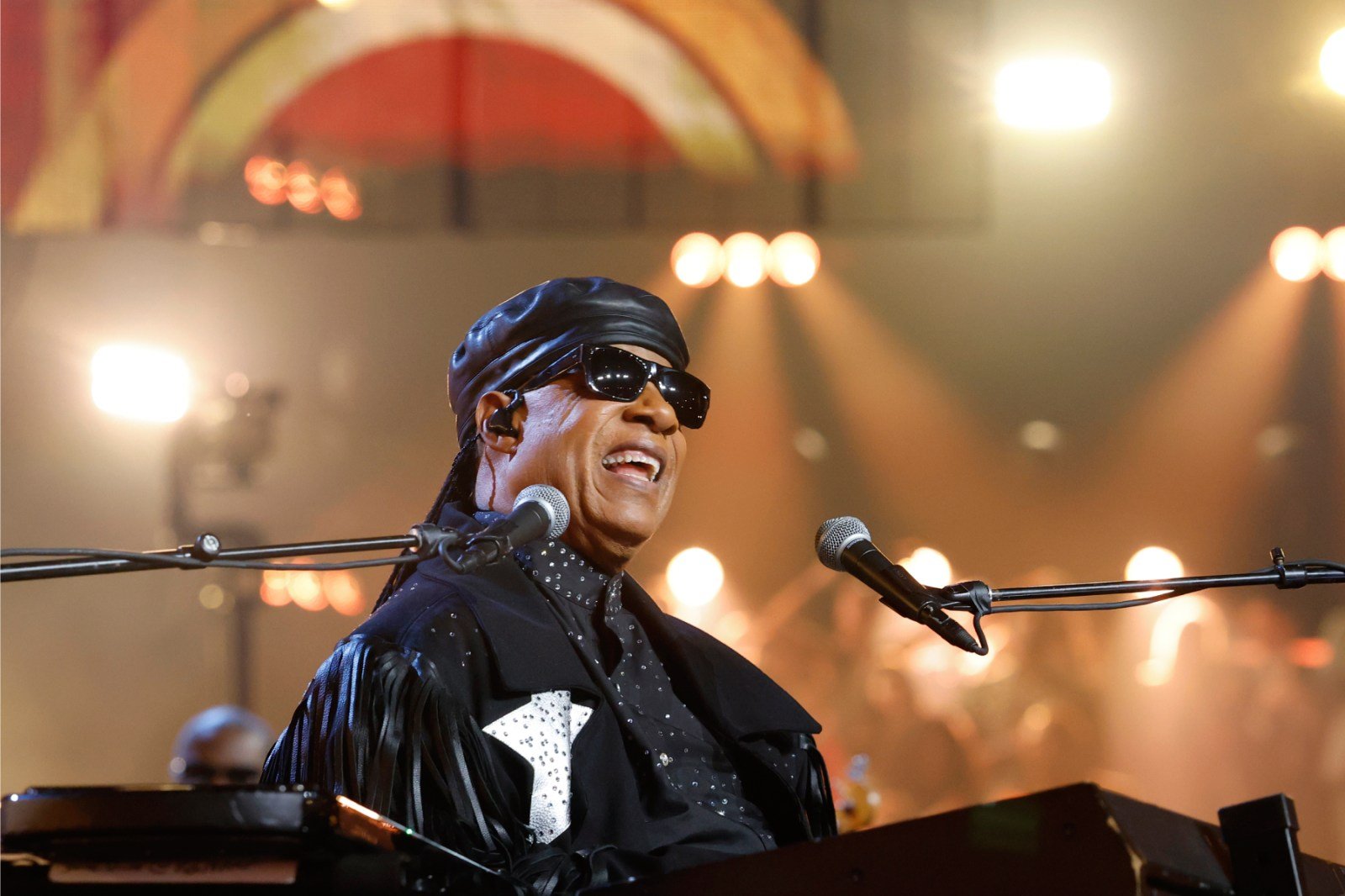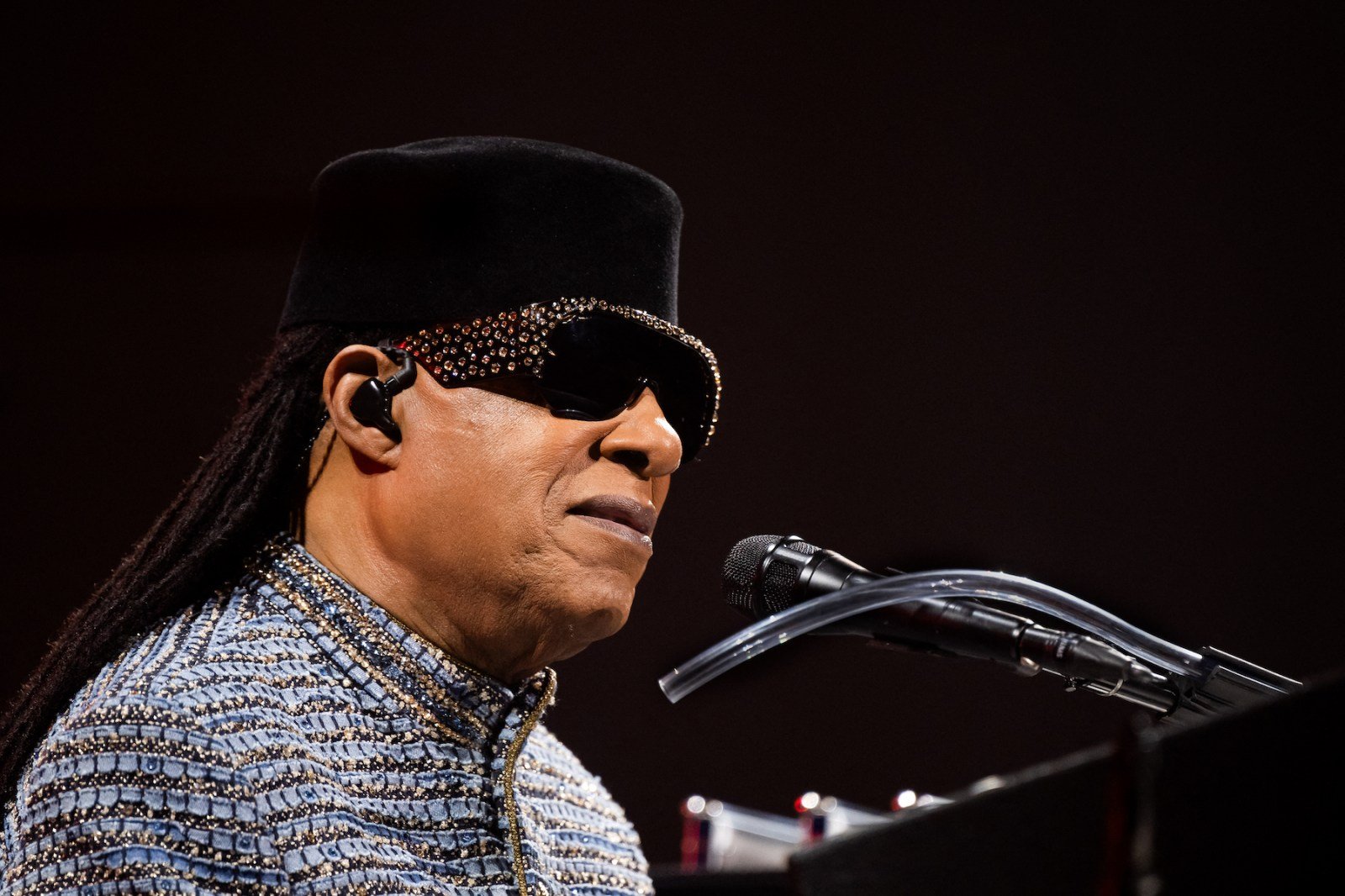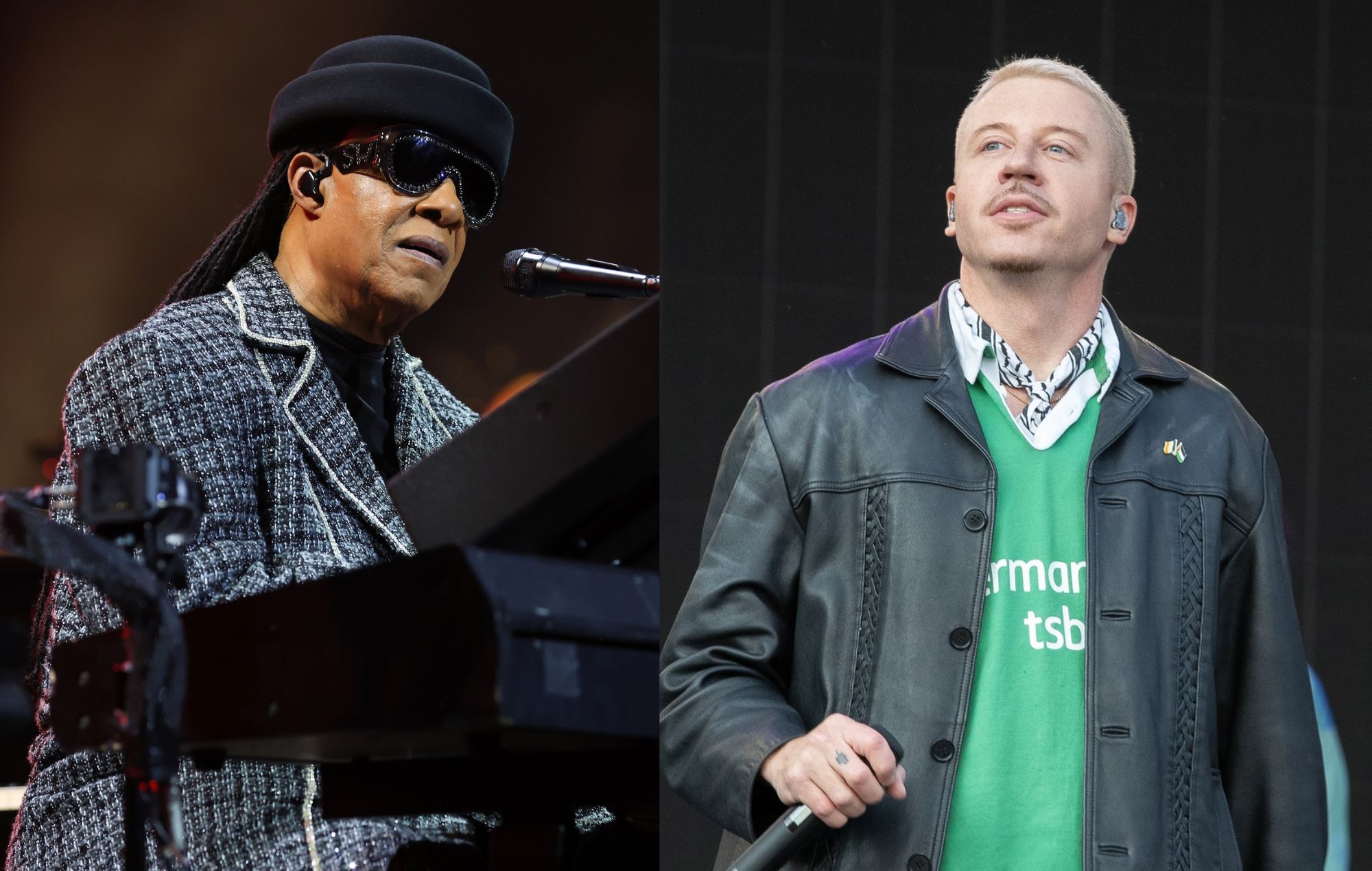
Stevie Wonder closed his Songs in the Key of Life anniversary tour at Glasgow's OVO Hydro on Wednesday, and before the set had settled he turned the arena into a pulpit. After opening with "Love's in Need of Love Today" and "Have a Talk With God," he told the crowd that he and his daughter Aisha Morris, a backing vocalist that night, had been discussing Macklemore, who was removed from Ed Sheeran's tour earlier this year after calling for a free Palestine on stage.
"As with all of us that are artists, musicians, people feel this way," Wonder said. "We want wars to stop everywhere. We want every person in life to be protected from the destruction of war." Then, to cheers: "Ban me as you want. I'm only speaking the words that are given to me by the most high, our God. Let's bring peace to the world."
The date gave the speech its edge. November 11 is Remembrance Day, and a 24-song set built on a 1976 record about childhood, faith and civic life landed differently in an arena where the country had spent the day counting its dead. Wonder has spent the year in public motion: the anniversary tour announced in September, a lawsuit over his Hollywood Hills home running alongside it, and a promised first album in two decades, Through the Eyes of Wonder, still unbuilt in public.
Macklemore's removal followed Robert Kraft, who owns Gillette Stadium and the New England Patriots, calling the rapper's remarks "deeply offensive and hurtful to the Jewish community." Since then a long list of artists and public figures have sided with Macklemore, Sheeran's band and other support acts withdrew, and Macklemore donated his $1 million tour earnings to organizations supporting Palestinians before announcing a Free Palestine Tour with Hozier, Kneecap, Aurora, Greta Thunberg and Paloma Faith on the bill.
Wonder's intervention is the rare one from his generation of Motown artists, and it comes with a specific cost attached: he put his own name forward for the ban and let the risk land on him. What to listen for in the footage is the pause before "ban me," and how quickly the cheer arrives. A man who has spent fifty years writing about love as a public force tested the room, and the room answered. The tour is over. The sentence stands.