Glasgow’s most prolific psychedelic pop duo treat the 1960s like a household object that never got unplugged. Medication is their fifth album, their second of 2026, and a record that keeps reaching for the same glow.
There is a lava lamp still for sale in 2026. Not as a museum piece. As a working object. Mathmos still pours the wax in Poole. Charity shops in the West End still put the cheap copies in the window. Student flats still keep one on a windowsill because the blob in the glass does a job no playlist can. It changes the temperature of a room without asking you to believe in a decade. That is a useful way to look at The Buttons.
They come from Glasgow. David Walsh writes the songs, plays the parts, and produces the records. Steph is the other half of the duo. The project started the day after they saw The Lemonheads in Edinburgh, then sat down in a flat with a rule that still shows: keep it simple, do not overthink it. A long pause through the pandemic put the songs on ice. Then Walsh built a home studio and sent Norham Street out in 2022, fifteen old ideas rebuilt into a first album. Technicolor followed in 2024. Neon Mind arrived in June 2025. Noise landed on 10 February 2026. Medication, out 4 September, is the fifth studio album and the second this year. That pace is part of the identity. This is a band that treats recording like a daily habit rather than an event.
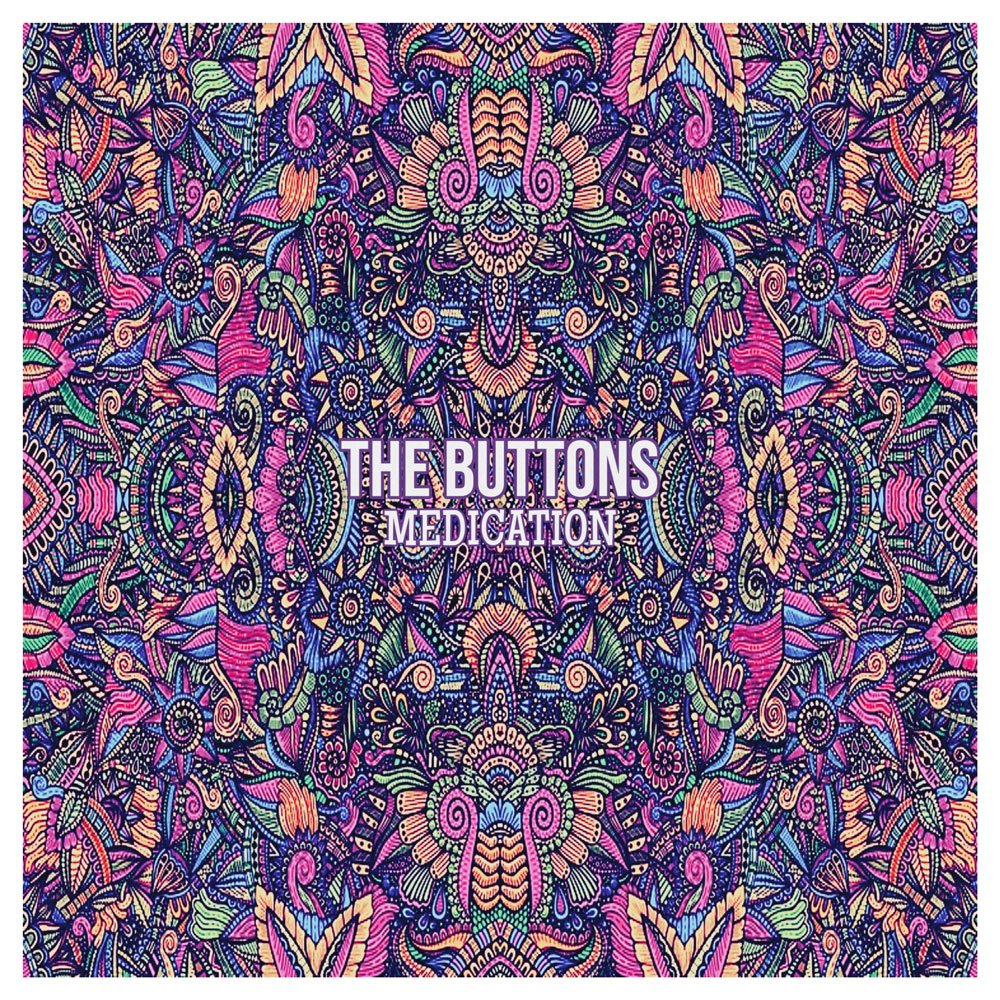
The cover of Medication looks like paisley exploding in every direction. That pattern has a Scottish address. Paisley mills once turned Kashmiri teardrops into an industry, then into tablecloths, then into the cheap print that hippie shirts borrowed and never gave back. The motif survived by becoming furniture. Medication works in the same spirit. Walsh has talked about wanting a psychedelic pop record built from three-chord songs, catchy melodies, and guitars soaked in effects. The Brian Jonestown Massacre sits in the reference pile. So do The Beatles and The Mamas & The Papas. The record was cut at The Loft Studio in Glasgow, self-produced, with layered 12-string electric and acoustic guitars, tremolo, tambourines, stacked harmonies, and Mellotron on more than one track. The 1960s are not a costume here. They are a lamp that someone in a Glasgow loft refused to switch off.
Colours opens with patience. A long instrumental stretch, more than a minute, lets a round bass and a straight drum pattern settle before the guitar draws a circular line with a slight overdrive on it. When the vocal arrives the arrangement thins out. Reverb puts space around a voice that sounds close and a little stranded. “All around me is unknown” is a small sentence that the mix takes seriously. The chorus lifts without breaking the frame. Guitars widen. The questions stay plain. Can you see the colours running. Can you feel the rain. The song has a rock spine and a pop memory, and it sets the album’s first temperature: restlessness held inside a clean structure.
Lava Lamp turns the room brighter. The bass gets bouncy. The drums tighten. The guitars shine in that early-2000s British indie way that still knows how to run. The title is not decoration. The arrangement keeps folding on itself the way wax folds in glass, verse into chorus into the same glowing loop. Love here is a pulse and a trip. “You’re pulsing through my veins like a bomb” is a line that would collapse in a heavier mix. Walsh keeps it light enough to move. Dig It Out! is the one the press keeps pointing at, and it earns the attention. A vintage keyboard figure sits on a dance-leaning rhythm section. The vocal is clipped in the verses, then opens into a hook that wants to be sung in a pub before it wants to be analysed. The lyric is about someone trying to unlock an inner room and maybe lying about why. Near the end the song talks about building “foundations for a wall of sound.” It is a cute citation and a real production note. The Buttons like density. They also like a chorus you can hold.
She Plays A Tambourine is the moment the record puts on weight. Distorted guitars sit low and circular. The drums hit with a heavier tread. The tambourine named in the title cuts through that wall with a thin, bright shake, which is the smartest arrangement idea on the album. A small acoustic object against a thick electric one. The lyric treats the instrument as habit and high, wired to a metronome, jangling all night. Voodoo slides into a darker pop pocket, syncopated guitar, a firmer bass, synths that bloom in the chorus. Spells, tarot, potions. The writing stays playful enough that the occult talk does not harden into theatre. Psychedelic Sunshine is where the pace finally loosens. Delay and reverb turn the guitars liquid. The vocal floats. Melting rain, swirling satellite, a long instrumental fade that lets the song dissolve instead of landing on a slogan.
The Acid Test brings the current back. Distorted guitar, a driving bass, a chorus that quotes the old Leary line without pretending the band just invented it. “Can we pass the acid test?” works as a hook because the music already sounds like a trial run. (Maybe) I’ve Still Got Time is colder and more mechanical, an obsessive guitar line against dense keys and a bass that does not relax. The lyric is about shedding a skin before the second wave arrives. Hope sits in the title and doubt sits in the parentheses. Hippy Chick is the softest turn, acoustic strum, a light jangle, a remembered girl with a flower crown at twenty-one. Nostalgia is the obvious risk. The vocal keeps it close enough that the song feels like a photograph left on a table rather than a costume drama. Then the title track empties the room. Medication drops the guitar push and the tight beat. Ambient keys, a thin electronic pulse, a voice talking to an only friend who cuts him short and makes him feel tall. Bloom gone, tune gone. “I have made a decision to write my prescription.” The last minutes are the comedown the album has been heading toward without announcing it.
What gives Medication weight is the control inside the restlessness. Ten tracks, about thirty-eight minutes, and a lot of scenery changes. Post-punk opening, sunshine pop, dance-leaning single, heavier riff, occult chorus, delayed psych, acoustic souvenir, then an ambient close. A distracted listen could hear a pile of moods. A closer one hears the same hand on the wheel. Walsh writes in hooks even when the clothes change. The rhythm section, whether live-feeling or machine-tight, keeps the body in the songs. Harmonies do real work. The Mellotron and the 12-string are not souvenirs. They are the grain of the record. The limit is the same as the method. Two albums in one year means the ideas arrive fast. Some of the 60s language is inherited rather than discovered. “Turn on, tune in, drop out” has been printed on too many posters to feel dangerous. The album is sharper when it talks about colour, time, and self-prescription than when it reaches for the official psychedelic props.
Still, the closing track earns the title. After all that shimmer, Medication leaves you with a quieter claim: the dose might have to come from the person taking it. The Buttons play The Rum Shack in Glasgow on 17 April 2027. Until then the record sits there like that lamp in the window. Old technology. Still warm. Still doing a simple job with more presence than the slogan around it.
Follow The Buttons
Medication is out now.
Listen: Spotify · Bandcamp · SoundCloud · Elastic Stage