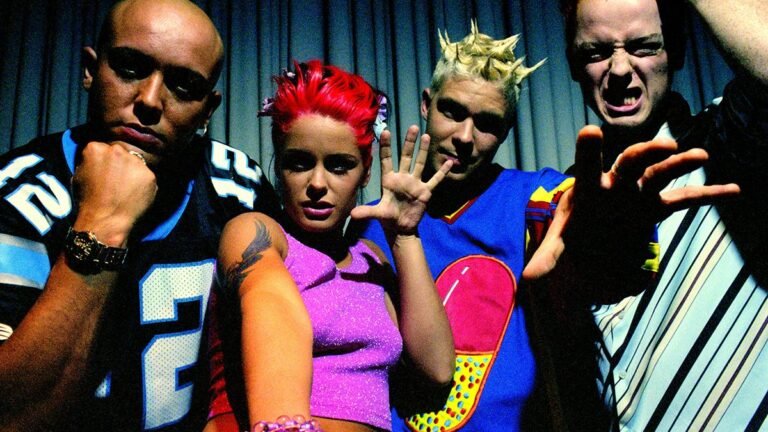
The 1997 global hit was engineered as a piece of disposable pop, a fact its creators understood completely.
The story of Aqua’s “Barbie Girl” is often told as a fluke, a novelty accident that somehow topped charts worldwide. That framing misses the point entirely. The track was a calculated product, built by songwriters who embraced their role as manufacturers of the inconsequential.
In a recent interview, band members revealed they used the working title “Burger King” to protect the concept. This wasn’t just secrecy. It was a recognition that the core idea, the fusion of a toy brand with a sugary Eurodance beat, was their only valuable asset. They understood the song’s function before a note was recorded.
The production is airless and synthetic by design. The keyboard lines are plasticine. The beat has a relentless, mechanical bounce. Lene Nystrøm’s vocal, pitched into cartoonish helium territory, delivers lines like “I’m a blond bimbo girl in a fantasy world” with a winking, vacant cheer. It is a perfect simulation of empty pop, which is what made it so potent and, to Mattel, so legally problematic.
Aqua’s statement, “We never had the urge to be credible, it’s just not us,” is the key to the song’s endurance. They were not outsiders accidentally stumbling into success. They were insiders operating with clear intent, removing any pretense of artistic depth to focus purely on hook and image. This honesty separated them from peers straining for authenticity.
“Barbie Girl” succeeded because it was a pure, unconflicted commodity. It presented its commercial ambition as the joke, letting everyone in on the gag while still compelling them to dance. Its legacy isn’t that of a guilty pleasure, but of a pop artifact that was, in its own way, completely authentic to its purpose.
Join the Club
Like this story? You’ll love our monthly newsletter.
Thank you for subscribing to the newsletter.
Oops. Something went wrong. Please try again later.

ROMBO Editorial Staff
The collective voice behind ROMBO Magazine’s news, reviews, features, and cultural coverage.