Recording a picked acoustic guitar is not the same battle as an electric. There’s no clean DI signal to fall back on—only a microphone, a room, and the player’s stillness. The differences that make a take usable are small, and they’re almost never fixed in the mix.
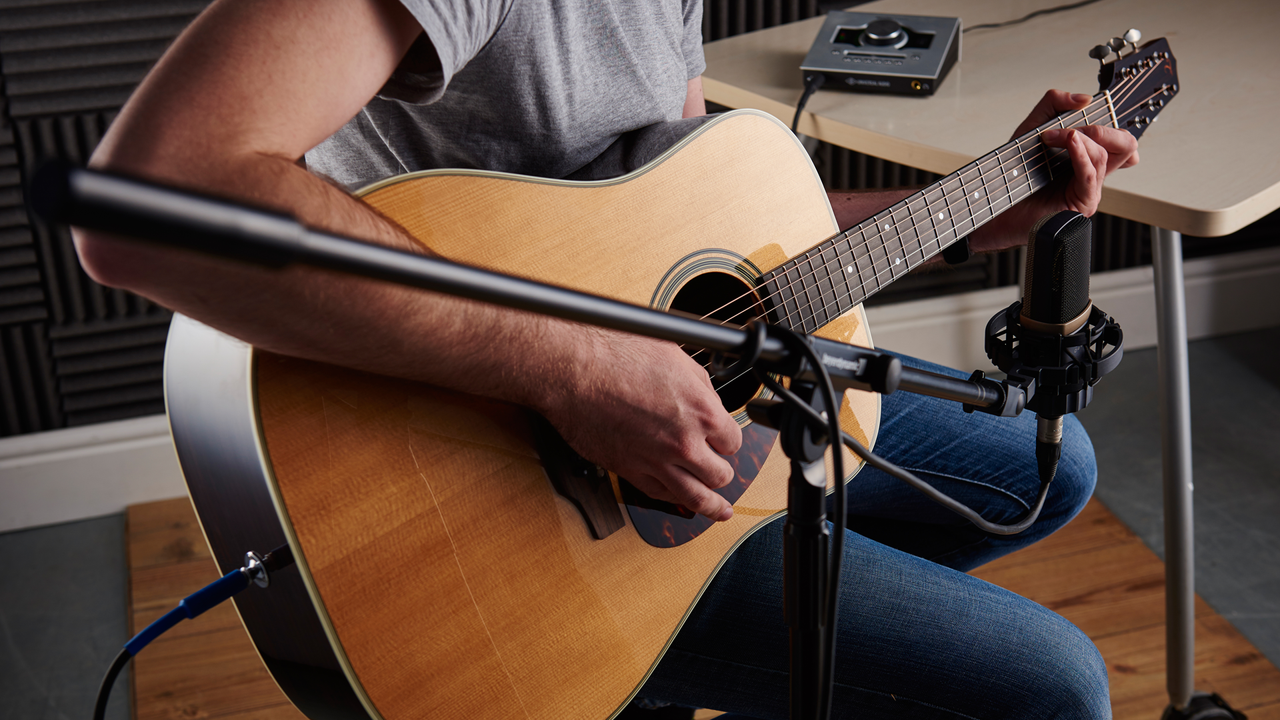
A small or large capsule cardioid condenser is the standard for good reason. Point it not at the sound hole but where the neck meets the body, starting about 30 cm out. That position steadies the tone and avoids the boomy, hollow wobble that the hole produces. A high-gain preamp is necessary because fingerpicking is quiet, but that only works if the space is silent. No windows open, no fridge hum, no watch brushing the body.
Distance shapes more than volume. At a meter, the room intrudes—sometimes for the better, giving the recording a sense of place. Move closer and the space disappears, leaving a dry signal that can be treated later. Angle the mic slightly toward the bass strings to darken the sound, or toward the treble side for more edge. These are not big moves, but they change what the microphone captures at the source.
The real discipline is stillness. A creaking strap or a shifting knee can ruin a delicate passage faster than any mistake in the fingers. The player needs to stay fixed for the entire session, because reseating for a second take rarely matches the first. That’s not a matter of talent—it’s a matter of physics. Jewelry comes off. The chair doesn’t squeak. And you don’t stop until all the takes are done.