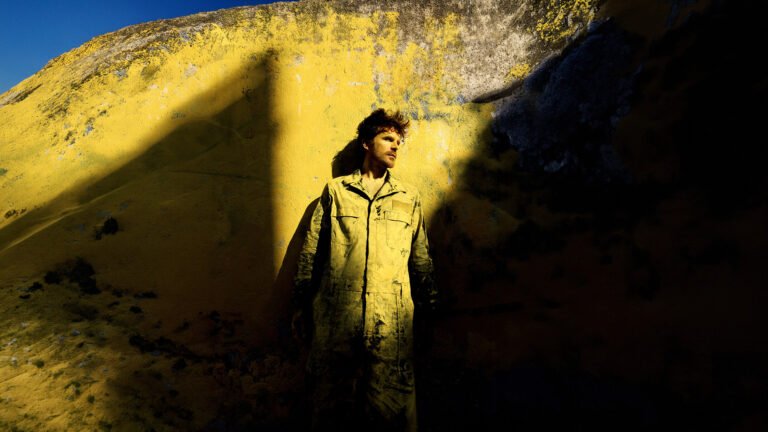
Denmark sings in Danish for the first time in five years, Lithuania fires off six languages, and Italy revives Neapolitan as 25 countries compete tonight.
The Wiener Stadthalle in Vienna hosts the Eurovision 2026 final this Saturday with a roster that keeps circling a single idea: release through rhythm or unequivocal romance. Denmark’s Søren Torpegaard Lund, Cyprus’ Antigoni and Italy’s Sal Da Vinci all search for it, but with tactics that pull the long-running contest into notably distinct cultural territory.
After five consecutive English-language entries, Denmark sent Lund with “Før Vi Går Hjem,” a hedonistic cut that tries to bottle the sticky urgency of a nightclub at 3 a.m. A hammering bass line runs underneath lyrics that torch the possibility of restraint: “We let the night stand in flames and forgetting ourselves / Holding onto each other until we burn to death.” Denmark’s three previous wins, the most recent in 2013, lend the switch back to Danish a calculated weight rather than a nostalgic gesture.
Lithuania, a country that has never won, arrives with Lion Ceccah’s “Sólo Quiero Más.” The song opens with a Lithuanian verse, leans on English and Spanish for the chorus, then folds in German, Italian and French during the final stretch. The message is communal resilience: “Even if we’re living in a mad world / Even if we’re standing as the sky falls.” Ceccah’s performance treats language-switching as an argument for togetherness rather than a technical flourish.
Italy’s Sal Da Vinci chose the opposite route, narrowing the focus to Neapolitan alongside Italian for “Per Sempre Sì.” It is the first time the Romance language has
Join the Club
Like this story? You’ll love our monthly newsletter.
Thank you for subscribing to the newsletter.
Oops. Something went wrong. Please try again later.

ROMBO Editorial Staff
The collective voice behind ROMBO Magazine’s news, reviews, features, and cultural coverage.