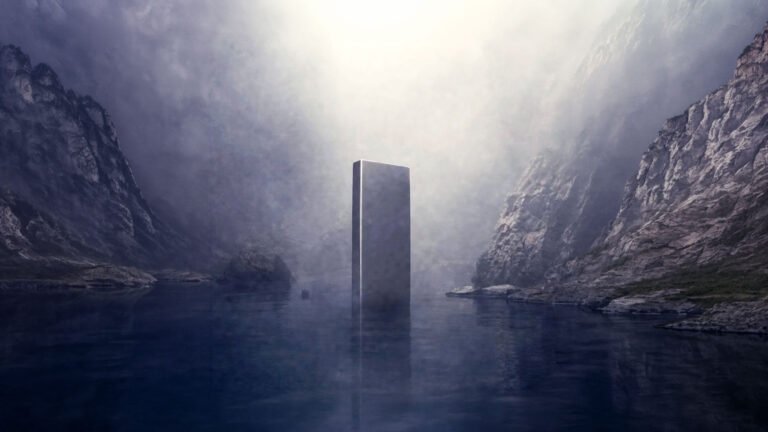
Jeff McIlwain’s tenth Lusine album pulls back from song structures to foreground motion, texture, and the kind of ambient music that demands attention.
Jeff McIlwain’s tenth album as Lusine arrives after a detour. Last year’s “Long Light” was song-forward and collaborative. “Melting Days,” out now on Ghostly International, returns to the ambient territory that has shadowed his catalog since the early 2000s—minimalist, textural, and shaped by a restlessness that keeps it from slipping into the back of the room.
McIlwain describes the album as being assembled more like a film than a record, and that logic surfaces in the way its pieces unfurl. Loops build, withdraw, and reconfigure. The album doesn’t settle. Tracks like “Pendulum,” with its submerged 4/4 pulse and gauzy arpeggios, reveal new layers on repeated listens, a quality McIlwain has refined over two decades. “All Clear” accelerates melody stabs against distorted pads, static, and hypnotic movement.
The production credits underline its texture: mastering by Rafael Anton Irisarri, saxophone by Bryan Manzo framing the opener and closer, percussion from Trent Moorman laced through several pieces. The reference points McIlwain offers—Susumu Yokota’s “Sakura,” the mid-2000s output of Mountains—point toward an emotional register defined by transition rather than calm.
McIlwain has always occupied a liminal space between beat-driven electronics and ambient drift. On “Melting Days,” the rhythmic restraint is deliberate, the sounds active, the mood uneasy in the way grief can be.
Join the Club
Like this story? You’ll love our monthly newsletter.
Thank you for subscribing to the newsletter.
Oops. Something went wrong. Please try again later.

ROMBO Editorial Staff
The collective voice behind ROMBO Magazine’s news, reviews, features, and cultural coverage.