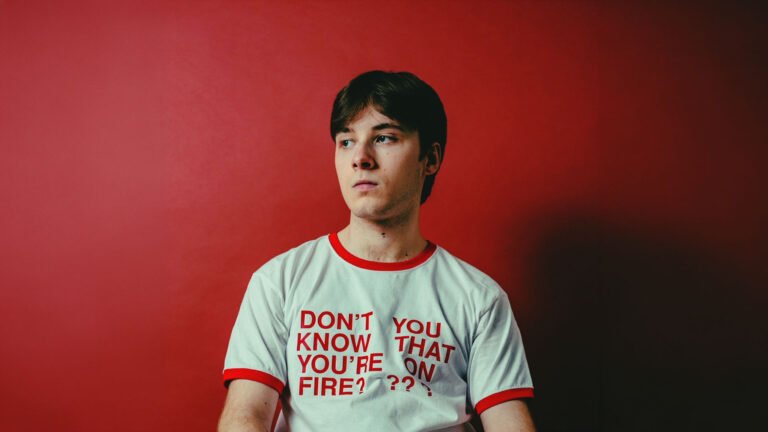
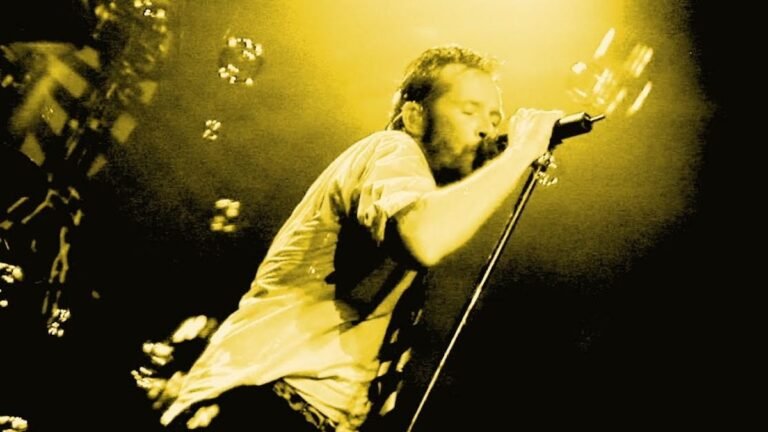
The Cyprus-based project of Aleph closes a two-year descent with three tracks that keep the wound in view. A conversation about the rooms built since 2024, the grain of the voice, and what happens when the fall finally points somewhere.
Most buildings hide a stairwell nobody uses. Concrete, a strip of light, a painted line that only matters if the lift dies. You walk past the door for years. The space is ready. The event has not arrived.
Watch Me Die Inside write from that door.
Aleph, based in Cyprus, has spent the last two years treating the project as a closed system. The name does not behave like a band. The records do not behave like calling cards. What you get instead is a sequence of short, tightly framed releases, each one holding a psychological state long enough for its shape to show. The first public rooms opened at the end of 2024 with ALEPH. NNN, The Fabricator, Diffracted And Connected. A corridor. A single object at the far end. In 2025 the temperature dropped and the sentences got longer. ALEPH II moved through Echoes From The Past, Séance and Do You Know That. ALEPH III let the voice stay inside the wound: Hope Dies Last But It Dies, In Constant Vacillation, When Even My Inner Demons Cry. Around those chapters sat smaller, stranger objects. There Is Nothing Behind The Horizon. What is love. A remix that took the despair of Hope Dies Last and ran it through someone else’s circuitry.
Then the work changed scale. 2026 became the Infinity Fall years. First the body of the descent. Then the mind turning on itself. Now Infinity Fall III, three tracks and a little over nine minutes: Uneasy, Boring, the title piece. Piano left exposed. Rhythm used as enclosure. A vocal line that starts raw and then has to survive the production closing in. The EP does not spend its time explaining how to feel better. It spends it looking at the rooms people build so they do not have to feel much at all.
Uneasy begins in distrust. Boring takes the dead air of routine and hardens it until repetition has weight. The title track refuses to pick a single costume, a knotty piano figure folding into a heavier contemporary frame and never quite sitting still. If there is a lift in the last movement, it is earned the hard way. The scar stays visible. Direction arrives without a wipe-clean ending.
That unused stairwell is useful here because this is the first time the painted line shows. The earlier records sent you down. Infinity Fall III does not pretend the floors below have vanished. It just makes the fall readable.
In Conversation with Watch Me Die Inside
We spoke with Aleph about the system built since 2024, the grain of the singing, and what Infinity Fall III does once the descent has nowhere left to hide.
- Watch Me Die Inside does not present itself as a conventional band, and you stay largely out of the frame. What does that distance protect, and what does working from Cyprus give the music that a more public biography would take away?
Distance protects two things: the private person from becoming material, and the work from being solved by biography. Once a face becomes the dominant image, every Fragment risks being reduced to evidence from one individual life; the listener can locate the wound elsewhere and remain untouched. I stay largely outside the frame so that the room is not already occupied when the Witness enters.
Cyprus gives that room a severe contradiction: merciless light, exposed stone, salt, and an island horizon that appears limitless while constantly reminding you of edges. The light here is almost forensic. It does not soften darkness; it gives darkness a contour. A more public biography would provide coordinates. The island gives the work a threshold from which to observe itself.
- ALEPH arrived at the end of 2024. ALEPH II and ALEPH III followed in 2025. If those first records were rooms you had to build before anyone else walked in, what were you teaching the project to do?
The first room taught the system to see. ALEPH I established fracture, fabrication, and the principle that observation changes what is observed. ALEPH II removed the system’s alibis: false healers, borrowed symbols, social performance, and the temptation to confuse consolation with truth. ALEPH III asked whether form could rise from fracture without pretending that the fracture had healed.
Across those Autopsies, I was teaching Watch Me Die Inside to hold melody and abrasion within the same architecture, to implicate the Witness, and to preserve contradictory evidence rather than resolve it for convenience. Before anyone else entered, the rooms had to understand three operations: reveal, examine, and leave the damage intact.
- There Is Nothing Behind The Horizon and What is love sit outside the numbered chapters. Why did those tracks need to exist on their own, and what did they let you try that the larger releases could not hold?
They are two unnumbered breaches.
There Is Nothing Behind The Horizon required no surrounding architecture because its gesture is absolute: it reaches the promised line and finds neither Eden nor an explanatory beyond. It removes the promised future and asks whether agency can survive without transcendence.
What is love moves in the opposite direction. It takes a universally familiar piece of cultural memory and forces it through the pressure of Watch Me Die Inside until recognition becomes estrangement. One Fragment empties the future; the other contaminates something the listener believes they already remember.
The numbered releases require each Fragment to serve a larger Autopsy. These two needed to remain sovereign—open wounds rather than chapters.
- Infinity Fall I and II sent the listener down. Infinity Fall III is where the cycle turns. What did you refuse to resolve in the first two chapters so this one could close the fall without wiping it away?
In Infinity Fall I, I refused to extinguish the final spark—but I also refused to call it rescue. In Infinity Fall II, I withheld the consoling exit entirely: the cages remained active, thoughts remained blades, and salvation receded as soon as it was named.
Those chapters had to preserve the unresolved fact of damage. Had they healed their own wounds, the ascent of Infinity Fall III would have been cosmetic.
The finale closes the fall by changing its vector, not its history. The scars remain; shame is what is abandoned. “Rise” is therefore not motivational language. It is a counter-order issued from inside the mechanism of descent. The wound does not disappear. It becomes the axis from which direction is finally possible.
- Uneasy, Boring, Infinity Fall III. Three titles, nine minutes, no spare air. Where did the writing start, and what is each track doing to the one that follows?
The writing began with a sequence of conditions rather than a riff: alarm, anaesthesia, counter-order.
Uneasy occupies the nervous system before language can organise it. The body detects the fault first—pulse, broken trust, breath held tight, glass beneath every step. Boring follows as a dangerous false peace: silken chains, tedious calm, comfort becoming confinement. Its decision to court chaos is an act of refusal, but not yet an act of liberation.
Infinity Fall III inherits that released force and gives it direction. Uneasy makes the calm of Boring feel sinister. Boring prevents the command to rise from becoming empty triumph. The final Fragment carries the evidence of both.
Each track contaminates the one that follows. None of them is permitted to reset the room.
- Boring carries a melodic grain that calls up Sonny Moore’s solo work, and behind that the sharper early voice of From First to Last. Have you lived with that catalogue as a singer? Which voices actually taught you how to hold a line when the arrangement starts to close in?
That comparison is illuminating because it identifies a genuine fault line: vulnerability and abrasion occupying the same breath. But I resist turning an audible resemblance into a false autobiography. Boring was not constructed as a citation, and recognition after the fact is not the same as creative origin.
The voices that taught me most are not a public roll call so much as a discipline: voices capable of preserving intention under extreme density, without confusing volume with conviction or damage with truth.
When an arrangement begins to close in, Watch Me Die Inside does not try to sing above it. I reduce the melody to its essential contour—breath, consonant, tension—and keep the voice inside the pressure. The grain is not decoration. It is the evidence that the line survived.
- The images around this release keep returning to one object in a dark room, a bent body of light with no caption. What is that object doing that a portrait could not, and what do you need from someone who stays with it?
That object is the Artifact: a luminous, bent geometry held at the threshold between collapse and reconfiguration. It is neither a logo nor an answer. It is the Autopsy made visible, with the three phases of the cycle converging at a single point of rupture.
A portrait would return the work to biography. It would allow the viewer to assign the fall to one face and leave the condition safely contained within another person. The Artifact removes that escape. Without a face—or even a caption—to consume, the gaze has to remain with the condition itself.
I ask only that someone stay long enough for looking to become testimony, until what first appears damaged begins to disclose a trajectory. At that point, they are no longer merely observing it. They have become the Witness.
- Someone finds Watch Me Die Inside through Infinity Fall III and then walks backward through ALEPH. What should still be in the room after the last bar, and where does the work go now that the painted line on the stairwell is visible?
There should be residual light—but never cleansing light. There should also be the suspicion that the listener was never outside the room, and that the act of witnessing altered what was being witnessed.
Walking backward through ALEPH should reveal that the system had been rehearsing this recognition from the beginning: truths were fabricated, observation changed matter, healers became mechanisms, hope proved mortal, and depth occasionally disclosed itself as a ladder.
The painted line is not an exit sign. It is a trace—a measurement proving that direction exists without promising where it leads. The work now turns towards consequence: what becomes of a self once collapse is visible, yet ordinary function is still demanded?
The next room cannot be named before it has earned its architecture. For now, the line remains: not a route out, but evidence that the fall has changed direction.
Follow Watch Me Die Inside
Infinity Fall III is out now.
Listen: Spotify · Apple Music
Join the Club
Like this story? You’ll love our monthly newsletter.
Thank you for subscribing to the newsletter.
Oops. Something went wrong. Please try again later.

ROMBO Editorial Staff
The collective voice behind ROMBO Magazine’s news, reviews, features, and cultural coverage.