Written before the lockdown rooms, recorded inside them, then left to sit while life got loud again, the Sydney songwriter’s debut EP finally gathers five tracks that treat love as something you develop slowly, frame by frame.
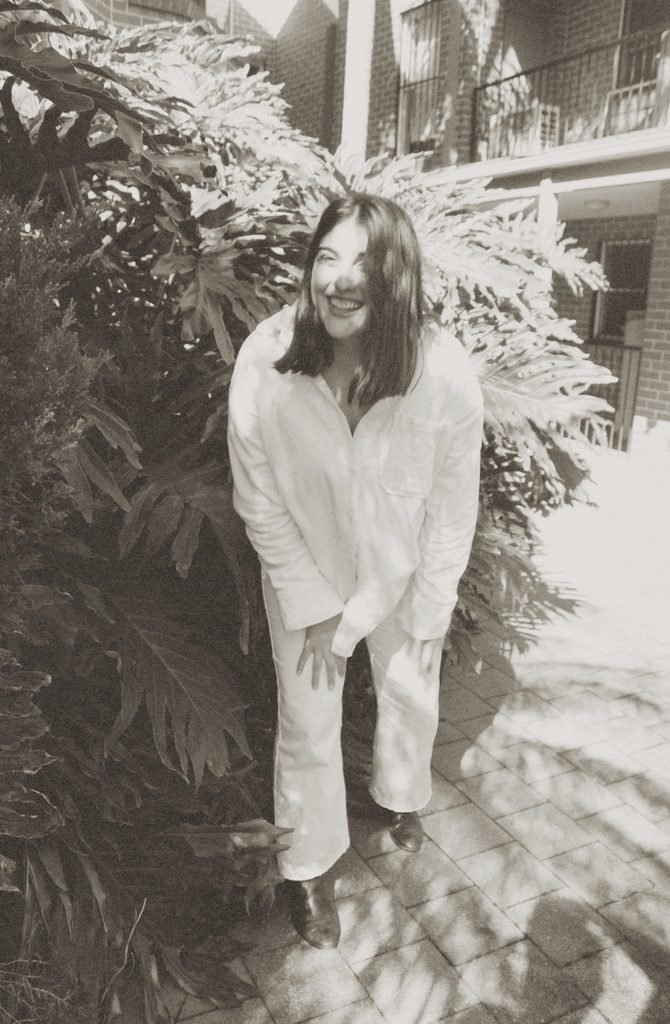
In a darkroom, the first thing you get is not the photograph. You get the contact sheet. A grid of frames, same size, same light, no hero shot yet. You lean in and decide which moment can survive the enlarger. Vanessa Moussa’s self-titled debut EP lives in that same interval. Nine black and white portraits already sit on the sleeve like proofs. The record behind them works the same way. It is a first print of material she started before Covid, cut remotely in the lockdown months, then carried through teaching, co-writes, vocal sessions for other people, and the ordinary density of a life that kept moving while the songs waited.
Moussa is a Sydney vocalist, songwriter, and vocal producer. For years the work happened in other rooms. She wrote and sang across New South Wales, showed up at Bluesfest and the Tamworth Country Music Festival, and moved through collaborations tied to Electric Sun Records, Paramount Productions, local names such as Aimès Music, and Budapest songwriter Adàm Goyla. Earlier solo marks exist if you look. Roadless in 2021. Rebound as a single in 2022. Unfold in April 2025. The self-titled EP is the first time those private temperatures sit in one sequence. Indie folk and alternative blues are the stated coordinates. What you actually hear is a voice that knows how to occupy a small room and still leave a bruise.
The contact sheet is a useful picture because this record is not a single mood. It is five exposures of the same person at different distances from the same wound. Rebound opens in medias res. Walking alone, certain she will not see her, then caught by a silent fight she never agreed to join. The hook is circular on purpose. “You got me good” keeps returning like a thought that will not leave the body. The writing is sharp about timing. One second of looking away. Fooling around to make a rebound. Rules that change mid-conversation. Moussa places the vocal right on the beat, slightly sassy, slightly stung, closer to contemporary alt-pop and R&B pacing than to festival folk. The song earns its place as opener because it refuses a soft landing. You are already inside the damage before the EP has introduced itself.
Nothing But Good is the longer stare. Mid-tempo, heavier in the chest, built on that line about feeling the beat beneath her feet while trying not to let someone else’s view form her own coast. The title is an accusation dressed as a compliment the other person keeps giving themselves. She cannot comprehend the feeling. He really does believe he does nothing but good. That is the whole weather system. Leading on, holding onto years that no longer hold, going numb, calling the other naive for letting her fall. The production stays close. No grand arrangement has to prove the point. The voice carries the weight, and the repetition of “so foolish” starts to sound less like insult and more like exhaustion. Inside the EP, this is the track that turns an event into a pattern.
Then the sheet changes grain. Unfold is the longest cut at nearly five minutes, and it is the one that needs that time. Clean electric guitar, reverb, a night-room intimacy that later opens into a slower, heavier drum. The lyric keeps asking not to be left guessing, not to be left cold, to let the truth go and let it unfold. Moussa turns the tables for a second and watches the other person leave, then admits the elusive ways she already knows in herself. The plea is almost ceremonial when the drums arrive. “To you I’m wondering if I’m just a name / But to me I’m simply giving all I am to this.” That couplet is the centre of the record. It is also where the vocal production background matters. She knows how much air a line needs. She does not crowd the ask.
Come To Be is the frame that brightens without pretending the earlier ones did not happen. Honesty arrives when it is least expected. The writing looks at someone who has flourished into the person standing there now, and the voice follows. After two songs of calculation and one song of begging for clarity, the warmth here is structural. It gives the EP a second climate. The arrangement wants lift, a wider sky, the sense of time moving too quickly once it finally becomes kind. You can hear why it sits as the most played track. It is the print you might choose for the wall. The record is smarter for not starting there.
The bonus, A Little Note To You, lasts two minutes and behaves like the leftover frame at the bottom of the sheet. A crowded room. Hands offered. All eyes on one person who only saw the two of them. She does not take the dance. She leaves early because goodbye felt more dangerous than absence. The note is an apology with no courtroom in it. Fear of abandonment dressed up as self-protection, then recognised too late. Placed last, it complicates the sunrise of Come To Be. Hope is allowed. So is the memory of the hand she did not take. Moussa has said these five tracks hold ten years of stories, from new love to heartbreak, hope to regret. The bonus is the regret that still fits on a scrap of paper.
What gives the EP weight is the delay itself. These songs were written when the feeling was close, recorded when the country was shut, then held while she kept working on other voices. That wait could have sanded everything into memoir. It did not. The language stays specific. Silent fights. Changed clues. Framing that tears a room apart. A name versus a whole self. A dance refused. The production, cut in isolation, still sounds like rooms rather than templates. Sometimes the groove leans urban. Sometimes the guitar is almost empty. The voice is the constant, soulful without costume, close enough that the small cracks do the editorial work.
A contact sheet is honest because it shows the frames you would rather hide next to the ones you would enlarge. Vanessa Moussa’s debut understands that. Rebound still stings. Nothing But Good still argues. Unfold still asks. Come To Be still opens a window. A Little Note To You still walks out of the party. Together they make a short, coherent picture of a songwriter who spent a long time serving other people’s songs and has now printed her own. The sheet is out. The choice of which frame becomes the next chapter is hers.
Follow Vanessa Moussa
Vanessa Moussa is out now.
Listen: Spotify