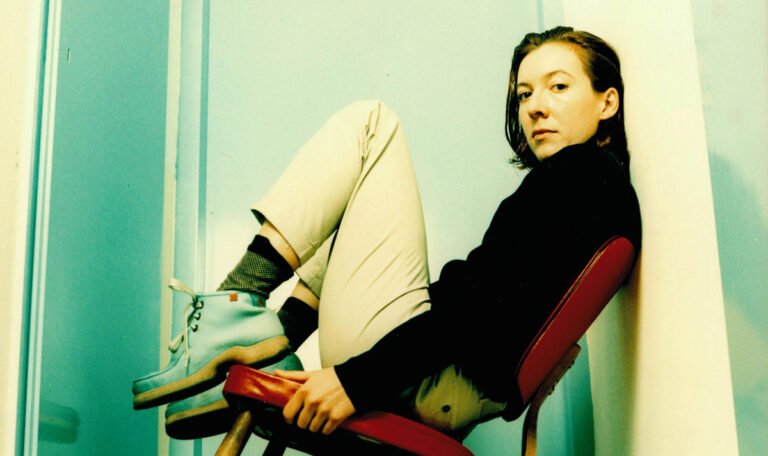
Elisabeth Esselink turned the stock of a tiny Amsterdam secondhand shop into a distinct sample-collage language. The method still explains why Solex sounds unlike most late-’90s experimental pop.
Elisabeth Esselink began Solex with a practical arrangement. She ran a small used CD shop in Amsterdam — “really tiny, just 15 square meters” — and built a studio in the basement. The shop supplied the raw material. The basement supplied the context.
Esselink bought an eight-track recorder and a sampler at auction, then moved between the two floors. “Robert was working in the store, and I was in the basement working in the studio,” she recalls. “Every now and then, I went upstairs to get some more CDs to sample from, and then I went back down to the basement.” The resulting 1998 debut reached Matador Records through a stroke of timing: Esselink sent a demo cassette just as the label moved offices, and hers was the first tape in the new building, so it got a serious listen.
Solex’s early work sits alongside Cibo Matto, Cornelius, Stereo Total, and Jon Spencer Blues Explosion as part of a late-’90s moment when collage methods pushed pop’s outer limits. Tracks like “Solex Feels Lucky” use a sawing fiddle, a trumpet line, and a locomotive rhythm to build something between rock and sampled exotica. Esselink cites Beck and the Beastie Boys as inspirations, and her work shares an ear for cartoon bounce with Dutch electronic composers Tom Dissevelt and Kid Baltan. The shop may be gone, but the discipline it forced — fixed gear, constant source material, no distance between commerce and creation — remains central to what made Solex distinct.
Join the Club
Like this story? You’ll love our monthly newsletter.
Thank you for subscribing to the newsletter.
Oops. Something went wrong. Please try again later.

ROMBO Editorial Staff
The collective voice behind ROMBO Magazine’s news, reviews, features, and cultural coverage.