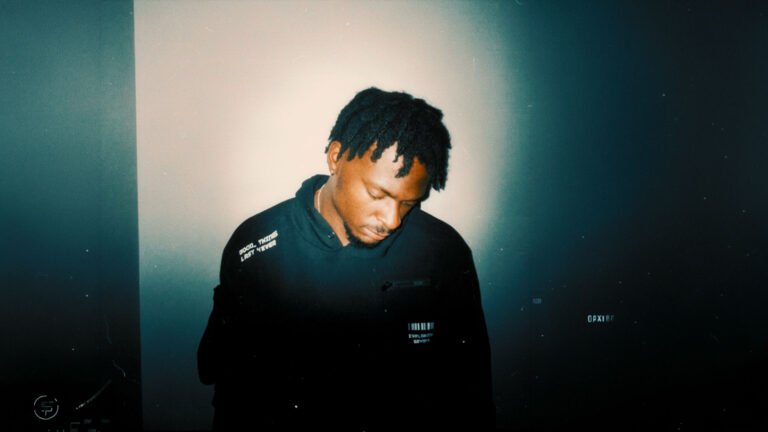
H.3.a.I’s The Fear Of Missing Out is a thirteen-track record of isolation, faith, and hard-won polish, written after time that did not belong to him.
H.3.a.I works out of New Orleans and styles the name a few ways at once. On streaming he often appears as H.3.A.L. On Instagram he is simply heal, with NOLA in the bio. The music sits in the dark-trap lane that still carries XXXTentacion and Ski Mask in its bloodstream, with smaller traces of Lil Wayne, Uzi, and Freeway. He has said the record lived in his head since the earlier project BORN AGAIN. He has also said he made it after getting out, with time and a vision before he even knew which beats would hold the verses. Producers around him include wtfbennie, Bogi, GuapStarKappa, and Falak. He mixed the album himself and tore up his old plugin list to chase a voice that sounded closer to the one he heard in the room. The Fear Of Missing Out arrived on 7 November 2025 as an original album. Thirteen tracks. A long sit.
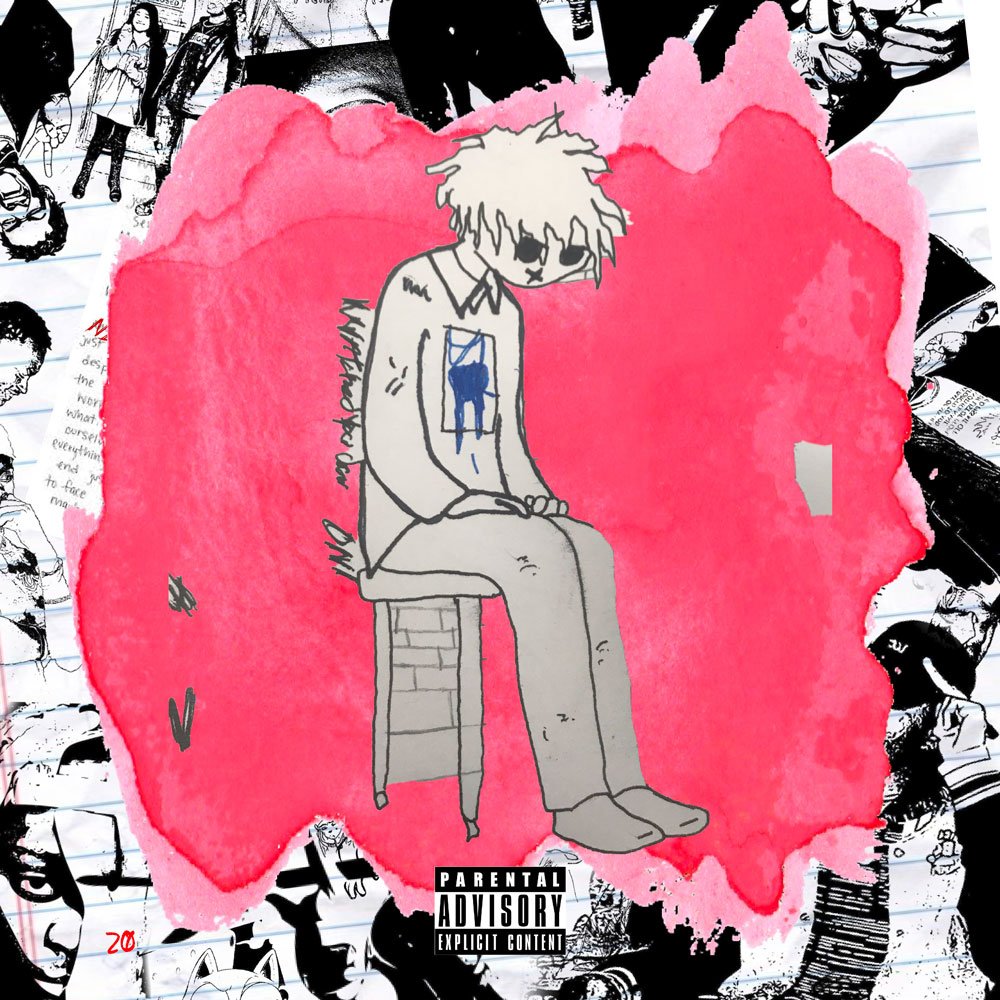
Think of the cheap composition notebook. Blue lines, thin paper, the kind a school hands you because it is official and costs almost nothing. That paper is how American childhood learns to account for itself. Dates in the margin. Sentences that have to fit the ruling. The cover of this album puts a slumped figure on a pink stain over that same lined sheet, collage faces crowding the edges, a parental advisory stamp holding the bottom like a warning label on homework. The image looks throwaway until you stay with it. After a stretch of confiscated time, the cheapest paper becomes architecture. You write because the room will not keep the hours for you. You write because if you do not put a price on the day, someone else will.
That is the FOMO here. Not the 2004 marketing panic about missing a party. Not the feed that kept moving while you were offline. The fear is continuity. The fear is that the person who went in and the person who came out will fail to recognize each other. New Orleans knows how to make belonging public. Second lines turn grief into a moving crowd. Bounce turns a block into a call and response. This record walks the other direction. It keeps choosing the empty chair.
“A Call For Action” opens like a manifesto written in a hurry and then repeated until it hardens. Plan A, no Plan B. Glasses and the money he is getting paid, the two objects he wants from the world when he dies. The beat is cloudy trap, 808s low, hi-hats off the grid, the voice almost spoken, autotune used as outline rather than costume. He addresses people locked down and people who cannot make rent in the same breath. He also throws a line at the industry’s appetite for stolen swagger. The mood is already watchful. Home alone, looking over his back.
Then the album shoves the tempo. “Lost My Step” is the first true surge, a tight, defensive run about work rate, loyalty, and the feeling that stopping means being passed. He cooks, he collects, he takes the dogs with him if the ship goes down. Some of the writing is inherited street furniture, guns and speed and private payback. What holds is the pressure in the delivery, that sense of a man trying to outrun a clock he does not trust. “DATEINCELINE,” the track he has flagged as flow-state work, goes darker and heavier. Hollywood becomes a metaphor for people who sit above everyone else. Celine becomes a date and a brand and a punchline against a sofa his kids still need. The chorus loops until luxury and threat occupy the same bar. It is one of the album’s most finished pieces, and also one of its most closed. You are in the room. The door is not interesting to him.
The middle stretch changes temperature. “Slasher Movies” softens the drum picture and turns the title into a false lead. The horror is ordinary. Pride in the way, family stress, a talk with Christ about keeping the dice in motion. “TRUST IN THE LORD” leans on a warm vocal loop and a slow bass, the word we repeated until it sounds like liturgy and like a person trying to convince himself he is not alone. “Poster Board” stays in that night register, antisocial by design, a circle shrunk to a dot. “HERMESS” is thinner and more fried, the voice flattened on purpose, sadness up to the ceiling, lean in the cup as a way to stay in the building. These tracks share atmosphere so completely that they start to blur. That blur is part of the meaning. It is also a limit. The album asks for patience and does not always repay it with a new shape.
“Last Flower” is the cut that proves he can leave the cloud when he wants to. Dusty boom bap, jazz sample, vinyl crackle, a scratch that nods toward an older East Coast grammar. The writing tightens. He is the center of a flower pulling bugs. Yesterday’s price is not today’s price, said until it becomes policy. In a project full of mood, this is the sentence with the most adult weight. It sounds like someone who has been offered the old deal and declined it.
From there the record keeps withdrawing. “Foe or Enemy” treats every relationship as a closed case. Friend or foe, still the enemy. Labels want a signature he will not settle for. The Matrix line is familiar, almost too ready, yet it fits the claustrophobia. “Free My Soul (One Blunt)” is the wound the album has been circling. A long female vocal sample, gospel-adjacent, then a verse about a mother talking through a dead sibling, a father gone before the son arrived, a twenty-one-year-old already asking who will care at fifty. The writing is raw enough to feel unedited. That is its force and its risk. “THEMETOTHESIS” drops the rap almost entirely for pads, drones, and a whisper close to the mic. Theme and thesis, or a mind rearranging its own letters. Some listeners will hear nerve. Others will hear a sketch that wanted to be a song and chose fog instead. “Violent Dreams” puts the aggression back on, lucid nightmares, movies being shot in the street, a body that no longer feels counted as human. Then “Thank You Snake” closes on a thank-you that is also an indictment. A woman’s sample keeps offering love and heart. A spoken line about wasted potential crushes the spirit. Day ones take the saber. The last human sentence is small and bitter. Cause you snake me. The sample keeps singing anyway.
What gives the album presence is the way it spends its energy. It starts with muscle and ends with residue. The polish H.3.a.I wanted is audible in the vocal focus and in the cleaner edges of the early singles. The rawness he refused to abandon is audible everywhere else, in the loops that overstay, in the threats that feel copied from a shared folder, in the faith talk that arrives without a sermon’s confidence. He is twenty-one, twenty-two in the lyrics, already tired of faces, already asking God to look at the picture. New Orleans rap has often made community into sound. This one makes withdrawal into structure.
The notebook stays in your head after the last sample fades. Lined paper does not forgive. It only waits for the next line. The Fear Of Missing Out is H.3.a.I filling those lines before the room can take them back. The fear in the title is real. So is the cost of writing it down.
Follow H.3.a.I
The Fear Of Missing Out is out now.
Listen: Spotify · SoundCloud · YouTube
Follow: Instagram · YouTube · SoundCloud