Three live songs from a Texas-raised Portland songwriter who moved houses, changed instruments, and kept the one piece of paper that still had his name on it.
In a lot of American kitchens there is a drawer that outlasts the house. Mortgage papers go. Insurance folders go. The hospital bills eat the rest. What stays is often a vehicle title, folded twice, with a name still printed in the owner line. Jason Lenyer Buchanan understands that kind of leftover document. Raised in Southeast Texas, formed in church rooms and then in Cheyenne, now writing from Portland, he has spent the last few years putting family, faith, and relocation into songs that refuse to float above the furniture. Crooked Rivers arrived in 2023 after the move from Houston to Wyoming. Under a Thumbnail Moon followed in 2025 with the same Nashville circle around him. Lazarus, a three-song EP on Lone Mountain Records, is the first release since he crossed into Oregon, and the first set he wrote from the piano.
He played Easyfolk Fest’s opening night at Portland’s Winningstad Theatre on the same date the EP came out, 18 September 2026. That coincidence is neat. The work underneath it is heavier. Buchanan came up leading music in churches, studied piano and guitar with the seriousness of someone who thought those rooms would hold, then watched the rooms choose sides. He built a catalog on guitar with producer Joel Rousseau and engineer Dan Davis at The Owl Studio in Nashville. For Lazarus he sat down at Craig Dockery’s Fender Rhodes, let Hammond organ take the air, and cut each song live with the band in two or three takes. Scott Mulvahill is on bass. Josh Seurkamp is on drums. Nate Leath’s fiddle walks through the opener. Rousseau adds electric guitar on the closer. What you hear is the room answering back.
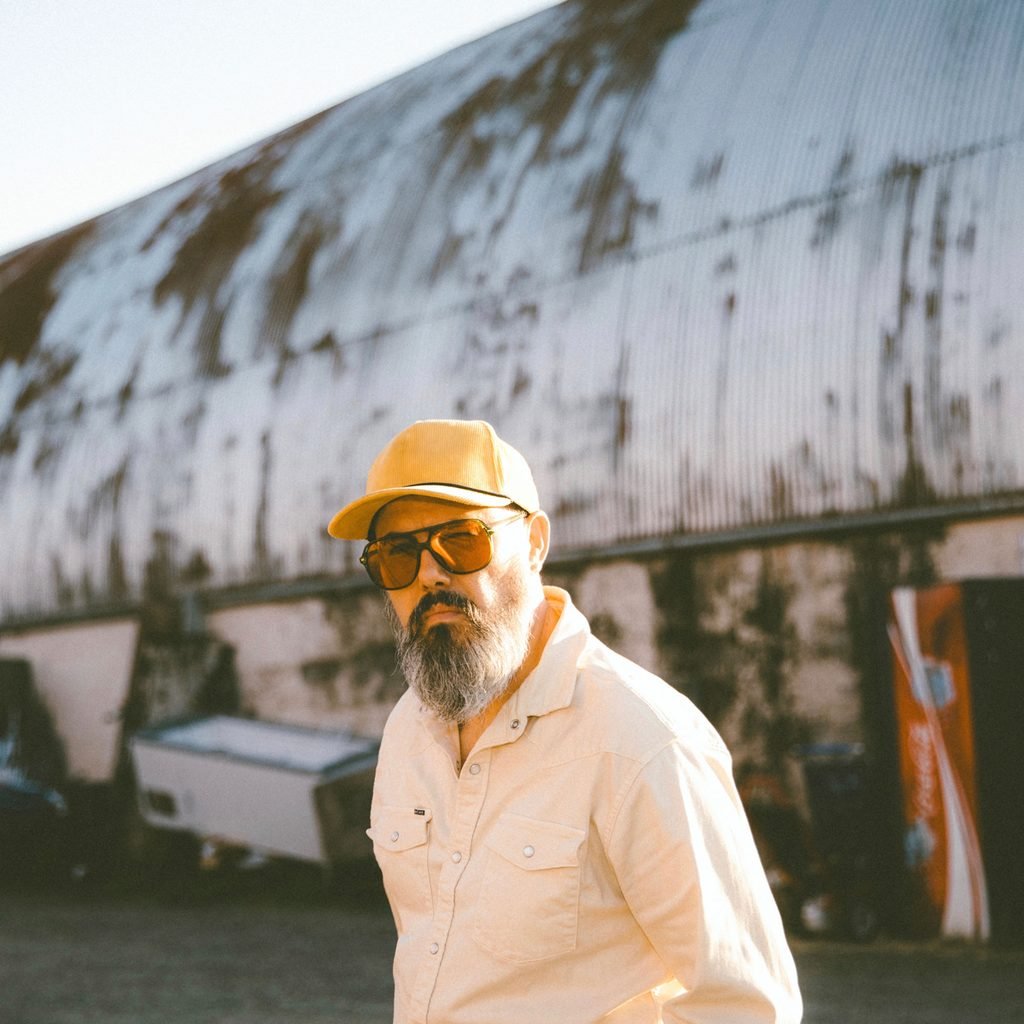
Here is the thought that would not leave while the EP played. America is full of titles that survive the building. A truck stays in the family after the house is sold. A stage name stays after the person underneath it has gone missing. A church keeps the deed to a resurrection story after it has stopped meeting the people standing in the lot. Lazarus is three of those papers, read aloud in order.
Somewhere in Between opens on a blinking light, a painted sunset, a ghost town, and an 8-track turned louder than gossip. A girl packs at night and drives until morning with nobody there to watch her cry. Buchanan’s voice sits warm and unforced over piano movement and a rhythm section that arrives like company rather than decoration. Leath’s fiddle gives the melody a little weather. The chorus is plain on purpose. She is no fairy princess, only a homecoming queen who still cannot say who she will be. Fifteen years later the same woman is walking through flashbulbs, sold out of compassion, unrecognizable even to herself. Then the song does the rare thing and lets her live long enough to hold a newborn. Jet black hair like her father. A grandmother’s rockaby in the room. The title line does not resolve. It just keeps being true at every age. The production stays clean enough for the story to remain visible. That restraint is the point. Fame here is a temporary stamp on a name that keeps changing owners.
The title track takes the paper to church. Lazarus begins with a fact the Gospel already admitted. The world is full of pain. Even Jesus cried. Buchanan writes the rest in the present tense of sirens and folded hands. Anger in the streets. A church choosing sides. Pastors sleeping through the noise while migrants run and hide. The questions come in a cadence that still remembers the sanctuary. Will there be a resurrection if there is justice after death. Will the first become the last. Will the huddled masses’ yearning sound like victory, and will the lesson break the chains of bigotry. Dockery’s organ and the live rhythm section give those lines body without turning them into a sermon with a bow on it. The most cutting image is smaller than the protest. The pain of watching someone lose who they used to be. One day they might return, and they will still be Lazarus to the person waiting. That is the private hinge inside a public song. Resurrection, in this telling, is not a special effect. It is a test the institution keeps failing at the door.
This Old Truck brings the title home and puts it in a glove box. A heavy Chevy, Wyoming plates, a faded Texas flag on the front, a rebuilt V8 that makes the neighbors shake their heads. Seats busted. The smell of years, gasoline, and chew. Father and son driving slow across West Texas with the windows down, then later sitting together with almost nothing left to say except the weather, until the truck comes up and the old man smiles. Buchanan and Rousseau share the writing here, and Rousseau’s electric guitar gives the chorus its lift. The last verse is the one that holds. The title is in the son’s name. The house had to go. Healthcare ate what they had saved. Now the father lives with him, because that is how they were raised. The song does not dress that fact up. It just keeps the motor running. By the final chorus the truck means more with every passing mile, to both of them.
Taken as a short set, Lazarus has a clear temperature. It is Americana with gospel memory in the grain, cut live so the pacing stays human. The opener traces a life that keeps arriving between identities. The middle song asks whether a holy story still works when the church has already picked a team. The closer keeps the one object that still carries two men after the paperwork of a household collapsed. Piano, Rhodes, and organ are not a costume change. They give Buchanan more air for the sentences, and the band uses that air instead of crowding it. Dockery said the masters sounded like people actually making music together. That is audible. So is the larger body of work sitting behind these three tracks. Somewhere in Between, the full-length recorded in the same sessions, is due in early 2027. This EP is the leading edge of that record, and it already knows what it is holding.
What gives Lazarus weight is the precision of its leftovers. A name that will not sit still. A resurrection that will not stay in the pulpit. A title in the kitchen drawer, still legal, still driven, still smelling like the years that made it.
Follow Jason Lenyer Buchanan
Lazarus is out now.
Follow: Instagram · YouTube · Facebook · Official Site