On Strange Animals, Ashley Ray Simon writes a page for a bestiary with no moral, then lets the specimen get away up the Mississippi.
Trinity College once had a rule against dogs in student rooms and no rule at all against bears. Lord Byron, told he could not keep a hound, acquired a tame bear and let Cambridge live with the loophole. The story has been polished for two centuries, which is usually what happens when an animal is asked to stand for a moral. Ashley Ray Simon seems to have had the book open for a different reason. On Strange Animals he picks up a microphone with Byron in the other hand, sings the thing once, and leaves the statute unwritten.
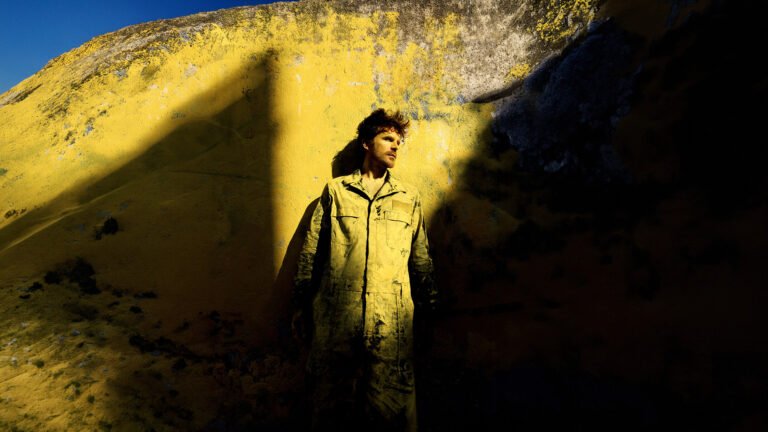
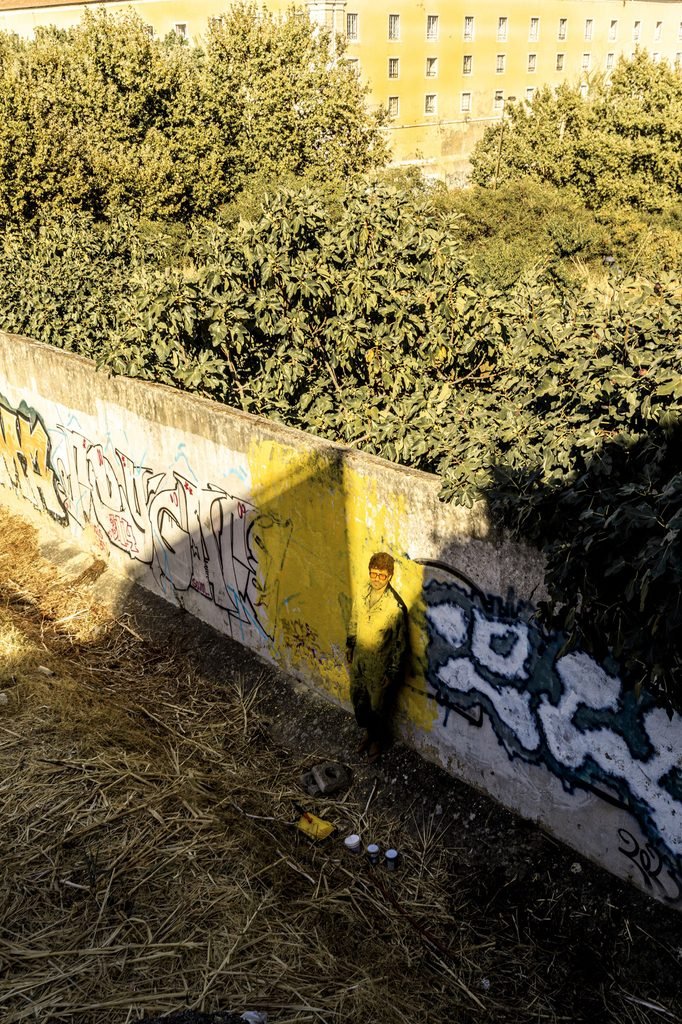
Simon is a British artist based in Portugal, with a childhood on Jersey and years spent in New Zealand, South Africa and Australia still audible in the way his records travel. The chapters are distinct. How Well Do You Know This Place, his debut EP, was cut live and analog with Rohin Brown, no click, the voice pushed against weathered guitar. Vaya Con Dios came out of a real storm at sea. Terra Santa, recorded in Prague with Matt Johnson on drums and Rob Calder on bass, opened the room into dusty full-band colour. pagan roman daydream, made with producer Moses van den Bogaerde in a Cornish studio you can only reach by boat, turned the same instinct toward heartbreak and left-field pop. Strange Animals is the next room, billed as Volume I of a larger project under the same name, made again with van den Bogaerde, with multi-instrumentalist Derrick J. Hines and a visual world by Jamie Preisz unfolding beside the music.
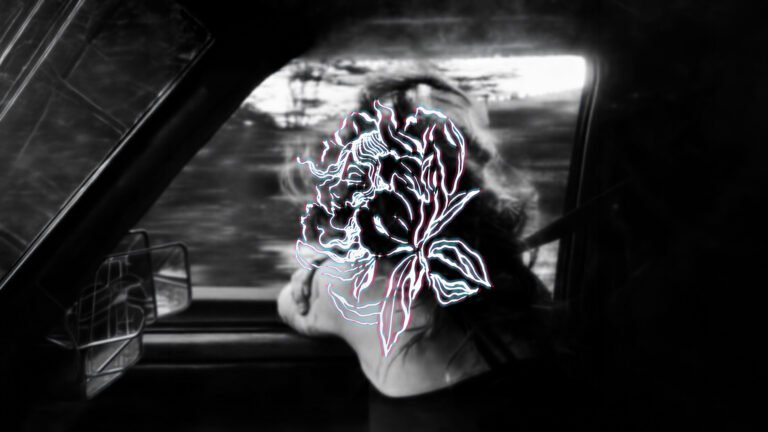
The method matters because you can hear it. Simon has described the track as a jam that was not interrupted: his guitar, van den Bogaerde on an unquantized DrumBrute, then a playback and a single vocal pass. Most of what remains is that first performance, edited down rather than rebuilt. He sang a trumpet line as a placeholder and kept the voice. The cover behaves the same way. A heat-mapped animal, magenta into acid yellow, has a black mark dragged across the muzzle, less a logo than a hand that tried to name the thing and lost the pen.
What the song actually does is quieter than that origin story suggests. It opens in a small winter room. Acoustic figures sit close, the pulse drifts rather than locks, and the voice stays confidential, almost at speaking distance, opening only a little when the refrain arrives. “There’s a strange animal / Makes a move, stops its nature / Then a roll / In the penitent snow.” Penitent is a church word laid on weather. The creature rolls in it and is gone. “And it got away, and it got away.” A soft hummed answer sits under the line, as if someone in the room is agreeing without wanting to be counted.
Then the geography goes strange. “Up the Mississippi River / All the way / Down the Mississippi River / All the way.” A man whose life has been islands, coasts and boat access is suddenly inland, on a river that the lyric runs in both directions. The “yeah” responses give the refrain air, the way a memory gets a second voice when it is told late. A second verse pins the night: “Cold night, back in mid-November / Bad day, down the mountain top.” The animal has already left. The singer is still on the slope.
Structurally the track circles. Narrative verse, hypnotic river refrain, a held instrumental pause, then the same road again. That circle is where the atmosphere lives, and it is also where the record thins. The sections barely change temperature. The voice does not climb. The drums, off the grid on purpose, never quite become an event. When the last line arrives, “What then, I do not know,” the tape stops. There is no crest, no turn of the arrangement to meet the question. In a song this committed to first-take instinct, the cut can feel honest. The creature was never going to wait for a coda. It can also feel like the one place the edit was too severe, a melody halted before it had anywhere left to go.
The references in the surrounding copy, Nick Drake, Little Dragon, Chet Faker, are useful only as neighbours. Drake is in the closeness of the guitar and the refusal to explain the image. The drum machine and the soft rhythmic sway sit nearer the other two, though Simon’s version is grainier, less arranged for comfort. What holds the single together is older than the playlist logic. Beauty and destruction, instinct and grace, a nostalgia for attention that had not yet been split into tabs. He has said the wider project carries that last feeling. On this track it arrives as a practical choice. One jam. One book. One pass at the mic. A trumpet that was never a trumpet.
Strange Animals does not catch the animal. It records the roll in the snow, the river going both ways, and the moment the trail ends. The bear at Cambridge became a story because someone eventually wrote the rule around it. Simon leaves the gap open, which is the charm of the single and the limit of it. You believe the creature got away. You also notice that the song lets it go a bar too soon.
Follow Ashley Ray Simon
Strange Animals is out now.
Listen: Spotify · Apple Music · Deezer · Tidal
Follow: Instagram · Facebook · Official Site