Between New York and London, the cinematic pop artist returns to a monument built on the Yamuna and finds the private cost of making love last.
IRONA works between New York and London as a cinematic pop artist whose music treats sound as canvas and words as paint. Her background crosses design, the arts, healthcare and multiple cultures, and her recent singles move freely between intimate piano and cello, darker art-pop edges, and rhythmic global textures. GLORIOUS directed earnings toward animal welfare. Jack, Let’s Go for a Walk leaned on cello. WOZA KUM and Don’t Go pushed other temperatures. Marble White arrives as a quieter, more architectural single, the kind that asks the listener to stay with a single image long enough for its weight to register.
Geologists who study the Makrana marble used for the Taj Mahal note that the stone is not simply white. Under shifting light it can appear pink at dawn, pure white at midday, golden at sunset, and cool blue under the moon. The same rock is the product of an older transformation: limestone laid down in an ancient basin and later metamorphosed under heat and pressure into denser, semi-translucent calcite. Those mineral veins that catch the eye are not decoration. They are traces of the material’s own history, lines left by time and pressure. IRONA takes that fact and places a human story inside it.
The single is built around the specific act of devotion that produced the monument. In the early seventeenth century, Mughal emperor Shah Jahan commissioned the Taj Mahal on the banks of the Yamuna at Agra as a mausoleum for his wife Mumtaz Mahal. The press notes and the lyrics treat that construction as more than architecture. They treat it as the moment when private love is given public, lasting form. “Love has no shape until it mirrors you” opens the track almost under the breath, suspended in near-silence. The line names the problem: feeling alone has no outline until it is answered by another person and then given material shape. “By the quiet Yamuna, love found its home” places the story in its actual geography. The river is not scenery. It is the site where the work of building begins.
What follows is the patient labor of that building. “Stone by stone, drop by drop, bound by every knot, we shaped our fate. Thread by thread, breath by breath, we became eternity.” The verbs stay small and cumulative. There is no sudden revelation. The fate is shaped by repeated, careful actions, the same way the marble itself was cut, carried, and set. When the arrangement opens, a close plucked arpeggio holds the first measures close to the body. Reverb then widens the space, the way sound moves under a high dome. Atmospheric synths and a measured low percussion enter without hurry. In the middle section a solo string phrase carries a slight eastern inflection, not as quotation of a tradition but as a tonal memory of the place the lyric has already named. The production stays in service of the pacing. It never rushes the accumulation.
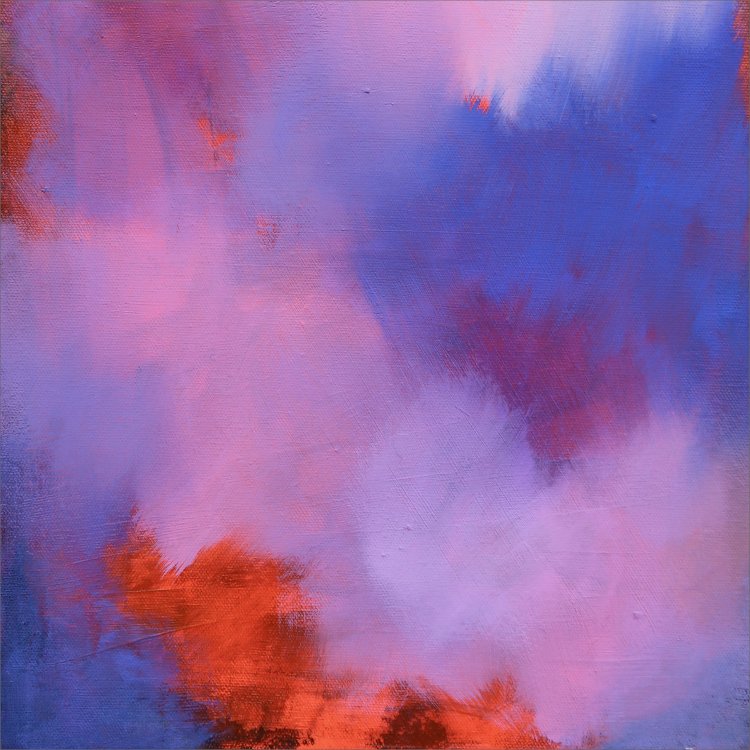
The central image is the one the title only hints at. “Through Marble White flows Crimson Life” is repeated so the contrast can sit. The white stone is the pure, lasting surface. The crimson is the blood, the tears, the cost that went into making the surface possible. IRONA treats the veins of the marble as vessels that still carry that human expenditure. The monument is not cold because it is stone. It is warm because the stone was shaped by a devotion that accepted the work. Later the voice opens into a fuller, more luminous register on “Wherever time may lead, I’ll still be there. Beyond the night, beyond the years, in Marble White.” The promise is not abstract. It is tied to the material that outlasts the night and the years. Then the track reduces again. “Hand in hand, soul to soul, only you and me” is delivered as a near-confidence, almost private, before the instrumental dialogue takes over. The return to the opening whisper closes the circle. The public monument and the private bond remain in the same frame.
Marble White does not treat the Taj Mahal as a romantic postcard. It treats the building as evidence of what is required once love moves past the first recognition. Feeling is not enough. The song keeps returning to the courage, the patience, the repeated small acts that turn a private bond into something that can still be read centuries later. The voice moves between suspension and full tone according to whether the lyric is naming the absence of form or the completed promise. The arrangement follows the same logic, holding space until the weight of the construction can be felt. The work behind the track follows a similar logic of patient shaping. AI-assisted tools formed part of the production, while the lyrics and creative direction stayed with IRONA, supported by further human arrangement and development. The tools extend the hand rather than replace the decision. In a moment when most love songs stop at the spark, IRONA stays with the longer work of making the feeling hold. The marble still stands on the Yamuna. The single listens for the life that was placed inside it.
Follow IRONA
Marble White is out now.
Listen: Spotify
Follow: Instagram · YouTube · Official Site · Facebook · X · TikTok
Join the Club
Like this story? You’ll love our monthly newsletter.
Thank you for subscribing to the newsletter.
Oops. Something went wrong. Please try again later.

ROMBO Editorial Staff
The collective voice behind ROMBO Magazine’s news, reviews, features, and cultural coverage.