The London artist on the collaboration that shaped his debut single, the difference between the cabaret room and the studio, and the decision to leave the language of prohibition inside a song about desire.
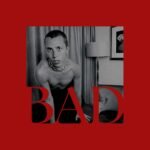
MAZZARA has spent the last year moving between cabaret rooms in East London and the studio. The London artist works inside the city’s queer arts circuit, where the stage and the recorded track are not treated as separate rooms. In September 2025 he met producer Kevin Shoemaker at a networking event. They began working together the following week. BAD, released on 28 August 2026, is the first recorded result of that partnership. The single sits in contemporary Pop-R&B, with a low physical pulse, close harmonies, and a vocal that moves between speech, whisper and falsetto. It carries early-2000s detail without treating it as costume. We had the chance to write a full review of BAD. If you missed it, it’s here. In the conversation that follows, MAZZARA talks about the conditions under which the song was written, what changed once Shoemaker gave him room to keep the riskier vocal choices, and how the language of “I know I shouldn’t” continues to function once the decision to stay has already been made.
In Conversation with MAZZARA
BAD was written in August 2025 during a Sunday afternoon that was supposed to be a date. How much of that original urgency is still audible in the finished track, and what did the studio process with Kevin Shoemaker ask you to keep or let go of?
It’s funny but we actually didn’t have the bridge or the harmonies and adlibs until like December or January, I think. The lyrics are a bit raw, it’s the original lyrics and I guess in a way it shows, haha. I did write a revisioned version later, but ended up forgetting about it and kept the version super raw and unedited. I don’t mind, I remember reading somewhere that the forgotten things are what makes a song rock n roll. I think it was a movie. Well, it makes me feel better about the imperfections. So I guess in a way, that’s where you could still hear the urgency. But in the studio we focused more on the message I was trying to deliver, rather than overpolishing.
You have said the collaboration felt different from previous production relationships, particularly around the space given to breaths, moans and less conventional vocal choices. What did that freedom actually look like day to day, and where did you still pull back?
Honestly the vibe was very much chill and collaborative. Kevin put me at ease from the get go. And he made it pretty clear that we both had the same level of decisional power. Whereas in some past collaborations, I felt like the producers just kinda wanted to do their own thing or impose their sound. But I wanted to stay true to my vision, and Kevin gets it. We would sit down, talk through the idea we wanted to develop and then build it together. So the freedom just felt natural, cause he put me at ease and respected my vision. I didn’t feel like I had to pull back because there was no need for me to edit myself or suppress my creativity. I’m tryna find my sound and he gave me the space to do it. I think that’s how all collaborations should be.
The early 2000s references are present, but they do not sit on the surface as direct homage. How did you and Kevin decide which of those textures belonged in the track and which would have turned it into something more costume-like?
Honestly, we didn’t even worry about that or like overthink it. We weren’t sitting in the studio with a checklist trying to reconstruct another person’s sound. The song is just 100% me. And sure, there are specific songs and sounds from that era that have always inspired me, which is why those elements are present. But when we were in the studio, we just chased what felt right in the moment. And so because we were focusing on making something authentic to my own story rather than trying to recreate someone else’s, it never felt like putting on a costume.
You perform cabaret regularly and organised a showcase at Jaguar Shoes two days after the release with Jaye Sanchez and Sodra Matic. Does the recorded version of BAD ask for a different kind of attention than the version you can do in a room with those performers?
Oh, absolutely! For starters, I never realized how much breath control the song requires towards the end, while dancing and entertaining. So I have to tweak things a little. There’s also some adlibs and riffs that I like more than others, so I tried to make a live version that could incorporate those. Also the live version feels like it gives a whole new life to the lyrics, it makes it more real.
The lyric keeps the language of prohibition (“I know I shouldn’t want this”, “crossing a line”) rather than removing it once the desire is claimed. What does that retained tension do for you inside the finished song?
Because it’s trying to reflect a real emotional journey, or at least my journey when unlearning shame and reclaiming desire. And that’s ultimately a process that takes time. It starts from a place of not knowing, while still very much desiring it. So keeping those phrases like “I know I shouldn’t want this” or the “crossing a line” bit was an intentional choice to capture that exact thrilling moment right before you surrender to pleasure. It holds onto the thrill of breaking rules and breaking out of the “goodygoody” archetype, before it explodes at the end of the song. I think that that friction is exactly what gives the song its heat and emotional honesty and contrast also within its storytelling arc, that starts from a place of hesitation but ends from a place of full reclamation of that desire.
You have described aiming for 70-80% rather than perfection, with the rest left as “rock n roll”. Where did that approach show up most clearly in the making of BAD, and what did you deliberately leave unfinished?
I guess you never really know when a song is truly done or at its absolute endpoint. It’s easy to get stuck in overthinking about all the ways it could be better. What should I remove? Or is anything missing? But if you keep that mindset, you’re never gonna release it. So giving myself that 70-80% satisfaction threshold keeps me committed, happy with my work and humble enough not to chase unrealistic perfection. And I had to claim that approach everywhere in the track. It was my first single after all, so nerves were at a high. I was mostly nervous about some of the lyrics and I was scared that some bits of the main melody didn’t have enough oomph to them. But I’m happy about the result. Probably if I could redo it now, I’m sure some things would be different. You know, it’s a learning curve. But how else are you gonna learn?
The track is written from a position that treats the reclaiming of desire as something that can be stated directly. When you listen back now, which moment in the arrangement feels closest to that statement, and which moment still feels private?
The song starts from a very private position with “I know I shouldn’t want this”. The first verse is still very much describing a desire that hasn’t fully materialized tangibly just yet. But by the second verse, the fantasy starts to develop into a real physical encounter: “Walked right up to me, got me losing sleep. Hold me hostage in between your sheets”. It moves into describing a more intimate moment. But the moment that feels closest to a direct reclamation is exactly at the end, from the bridge into the end of the chorus. The “I got it the way you want it” section and the subsequent chorus with all the different ad libs and harmonies is exactly where pleasure is being embodied and manifested.
After the release you said on Instagram that you were happy simply to be taking a step forward. Looking at BAD now, what does that step look like to you, and what does the next one need to be?
That first step was about finally doing the thing I love the most (music) without worrying about who’s gonna listen, who’s gonna like it or who’s gonna judge it. I’m here to make my music and I’m just genuinely happy to be doing that on my own terms. Looking ahead, I want my next step to be an even louder reclamation of what I feel my purpose is as an artist, which is ultimately to empower and liberate people, and you do that by you being your authentic self first.
Follow MAZZARA
BAD is out now.
Listen: Spotify