Some time in the 1940s, on a walk in the English countryside, a young couple called Iona and Peter Opie caught themselves reciting a rhyme from their childhood: ladybird, ladybird, fly away home, your house is on fire and your children are gone. They wondered where it came from, and the question took over their lives. The Oxford Dictionary of Nursery Rhymes came out in 1951, and in 1959 The Lore and Language of Schoolchildren, built from the contributions of about five thousand children at seventy state schools. The book was written against a complaint of the time, that mass media had killed the games children played among themselves. The Opies went and listened, and found the playground as alive as it had ever been.
I have always loved that the rhyme which started it all is a small horror. Children have never needed adults to tell them the world is frightening. They sing it to each other, in the bounciest tune they can find, over and over, until the fear turns into a game. I kept thinking about that playground with PEACE + WAR on, because it is the closest thing I have heard in years to two adults who never quite left it.
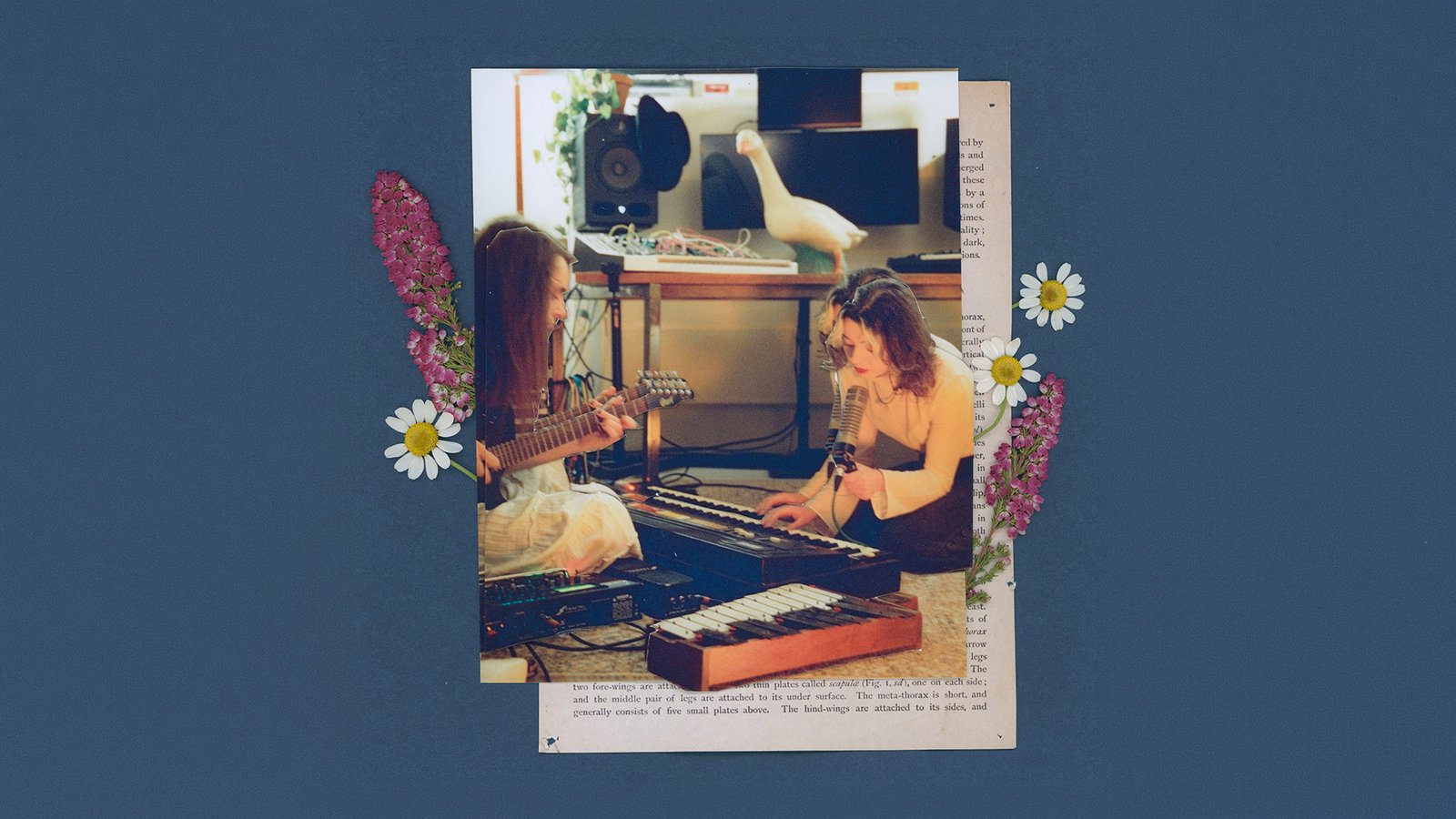
Bassvictim are Maria Manow, a singer from Poland, and Ike Clateman, a producer born in Brooklyn, and they work out of London. The new album runs to nineteen tracks and nearly an hour, their fourth release in two years, after 31 tracks put out since last January and Forever, recorded last year in Norway. They have called the band off at least twice, and reports describe the relationship between them as turbulent. From the outside it looks like chaos. From the playground it looks like break time: nobody plans the games, nobody finishes them, and the bell could ring at any moment, so you play as many as you can.
The songs work the way the ladybird rhyme works. On Happysad, a song about mania, Manow sings “The weight on my shoulders is getting too heavy” in a high, breathy voice over a four-on-the-floor kick built for a club at its happiest. I Don’t Know opens on a couple moving in and buying furniture, and the break-up that follows is chanted like a skipping game, its title looped until it means nothing and everything. Mummy Daddy, a cheerful song about thankfulness and pleasing your parents, repeats “I’m so happy and I’m alright” until the reassurance sounds like something you say to yourself in the dark. I find that thrilling, and I think it is the most honest thing about them. This is how a lot of people talk about their worst days now: quickly, loudly, with the joke already loaded.
Some of these games come from a Polish childhood. On Jagódki (Blueberries) the doubled voices sing “Idziemy na jagody”, we’re going for blueberries, over a stomping club beat, and Czerwone Jabłuszko is named after a little red apple. Manow sings in Polish on Summer Song too, a run of adjectives for the happiness of the sun coming back. And the oldest playground game of all, war, runs through the whole record. Girl Wars is a chant for the right to scream and shout, War Song gets guitars and stomps from DJ E, and the single, White Flag, is named for the surrender every war game ends with, until someone shouts that it is time to start again.
The best moments are the ones where the game stops for a second. On God I Wonder two voices trade places, one barked at full speed and one floating above it, asking why someone would want to make the singer cry. Endings starts with breathless pleas for an ordinary evening, “tell me what’s for dinner”, and then the beat drops away into wide, held pads, like the moment the noise of the yard thins out and you hear one kid crying in a corner. I think it is the best thing on the album. The guest verse on 7 works from the other side of the fence: Fimiguerrero’s dry, clipped flow cuts through the bit-crushed arpeggios like an older kid who has already seen the street, and the hardest story on the record arrives in its plainest voice.
So who is it for? If Treats by Sleigh Bells or the first Crystal Castles album still make you want to break something, this is your record. If you love Charli xcx at her most blown out and wish she would lose control more often, Bassvictim lose it for her. If you need an album to behave, leave this one alone, and even if you don’t, ignore the running order the first time. Start with Happysad, Endings, God I Wonder, Mummy Daddy and Jagódki (Blueberries), then wander.
Nineteen games is a lot for one break, and if I could change one thing I would send a handful of them home. I would start with the two pieces without words, No. 33 piano and Charred Glass, which sound like the pause while everyone decides what to play next. Who Told You lurches and stutters at someone who expected the singer to go crazy, Wake Up asks where home is and admits it does not know, and Go Faster and You Know How It Feels run past in the crowd. I suspect Bassvictim would hate the idea, and I understand why: on a playground, nobody gets to decide in advance which game was the one that mattered.
The album ends with The End, all electronics and no beat, and Bassvictim kept Manow’s mistakes and frustrated sighs in the takes. The Opies would have understood. They wrote rhymes down as children actually sang them on the day, because in a playground the version you hear is the only one there is.