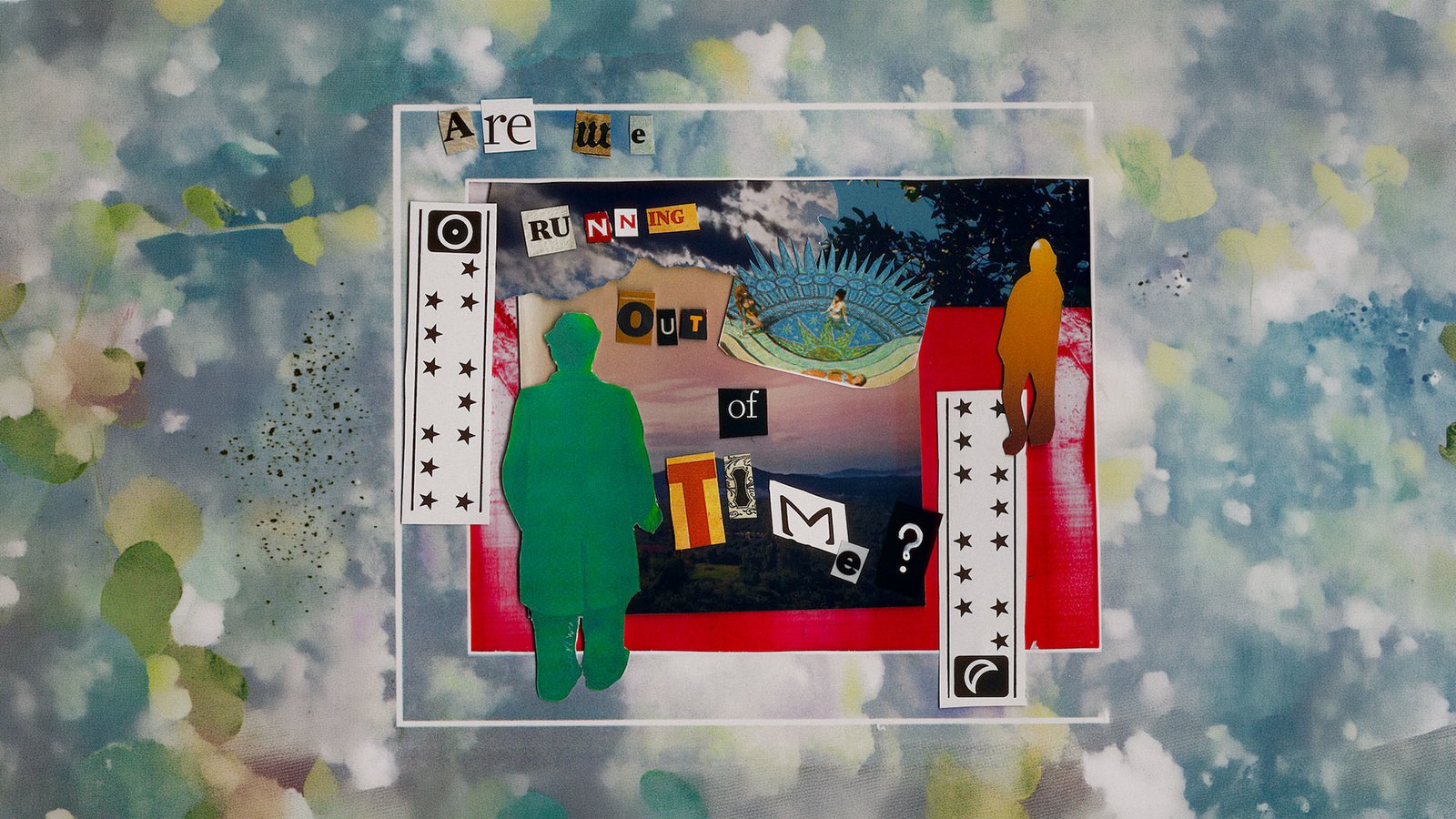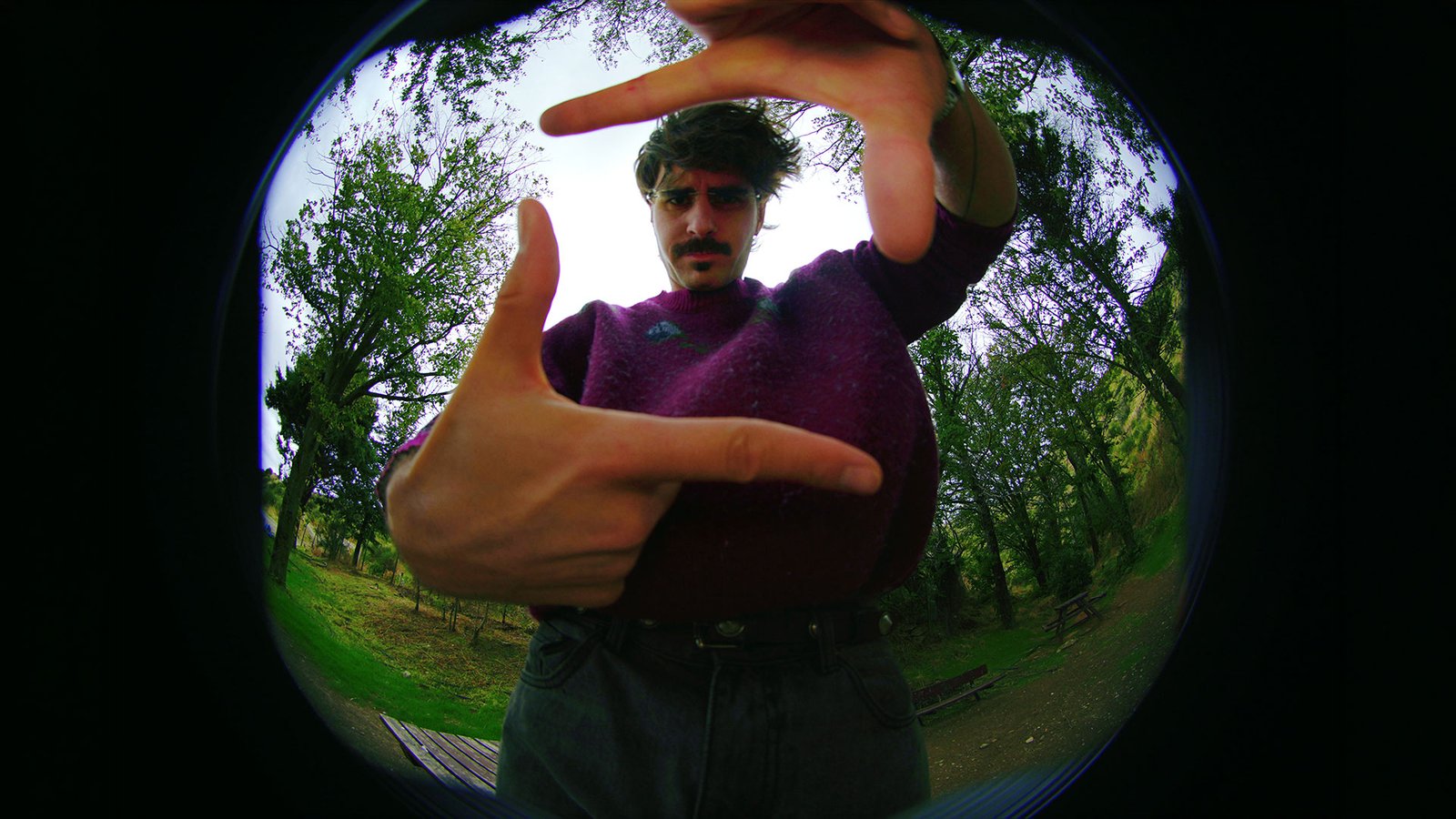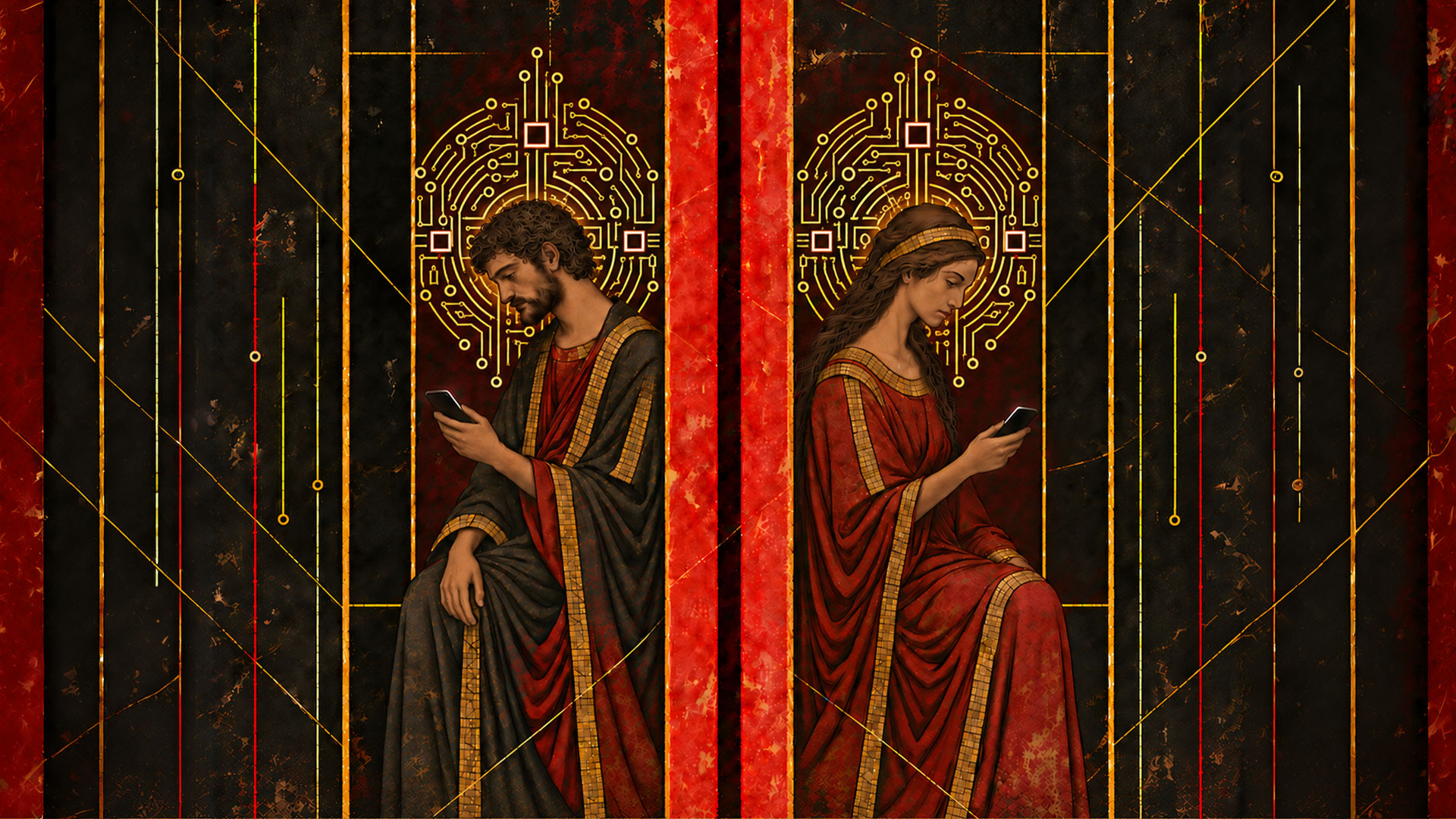
Chamelleont is the solo project of an Athens-based artist who spent twenty years away from the stage before returning to music. The songs on Dead Lines began as phone recordings made during the daily commute, then shaped at home in a bedroom studio with a Gretsch guitar, a Røde microphone and careful direction of AI-generated arrangements. All lyrics, vocals and melodies stay human. The album arrived after four months of daily work, sequenced as a single arc that moves from questions of identity through the decay of truth and into the forms certainty can take once uncertainty has been refused.
In the optics of a chameleon the skin does not invent a new animal. It rearranges the crystals that scatter light so the creature can remain itself while the world registers a different surface. Dead Lines opens on the same observation. They Knew It In Sicily states the old lesson outright. A human is a simple object with mirrors all around, the track says, ready to take the role of slave, saint or clown depending on the context it is given. They knew it in Sicily, changing skin, staying the same, and they learned it everywhere. The arrangement begins with a thin synthetic arpeggio, then opens into walls of distorted guitar and electronic pressure before collapsing back to the same sparse motif, as if the surface has shifted and nothing underneath has moved.
The rest of the record measures what that stability costs. Return The Item treats a life as something borrowed that must be presented at the counter and handed back. Them songs of innocence and experience become just pages in a book. Houses that were once homes turn into empty halls. The smell of the kitchen of my mother still follows me home, the lyric admits, even as the debts are laid on the table and set down. Coin Toss Kiss starts with a swipe from the left and a gallery in white and grey, then watches the coin spin until it is caught in a fist. We will decide this, the song claims, moving from the cold of the screen into a shared choice. Damn Modern Life places the problem inside the medium itself. When I read you without hearing you, the words can be used like a knife. The blame moves from me to you to us until modern life is named as the obstacle that keeps the moment from arriving.
Deadlines watches the same delay inside a relationship. Questions arrive with the wrong mood. Truth is left aside and it decays. The word entropy hangs in the air before the title fractures into dead lines, the voice splitting and echoing as the synthesizers slide out of tune. A Singularity turns the night drive into a closed circuit. Cars are nothing but mirrors. Houses are nothing but prisons. The moon keeps sneering above. The realization arrives that the condition is shared. I'm in it. We all in it. From this point the album turns the problem of uncertainty on its head and tests what happens when certainty is insisted upon instead.
The World Is A Sphere, Fucker refuses conversion with physics and logic and a superior brain, then insists the planet is round exactly as wanted. The certainty itself becomes a creed that will burn the doubter in a two-dimensional hell. Places We Lived In? asks whether the chemistry and the currents were real when the feelings and the together were not. The special place built only of words and images was inhabited, yet the together remains unreal. Trickle Down reduces the economic promise to a set of rules. If you want to take your part, stay below and bow. The martial pulse and acid synth make the crawl toward the center sound like both invitation and order. Apocalypse In Words stirs a pot of curses and aims an extra-orbital laser at the forehead. Strings and guitars swell into theatrical accusation, then the instruments drop away and the voices are left exposed on the reptilian threat.
Alexander closes at the historical edge. They say that Alexander the Great, when he stopped before the mighty Ganges, looked back at all he did and wished he could start again. The track asks whether it is better to dream or to achieve, then places the listener in the same position, storing the future at the back in an hourglass that cannot rotate. The final question, repeated as the guitars thin to clean arpeggios, is simply have you reached yet? Dead Lines does not answer. It leaves the weight of the question in the room, the cost of every certainty measured against the possibility that died the moment it was obtained.