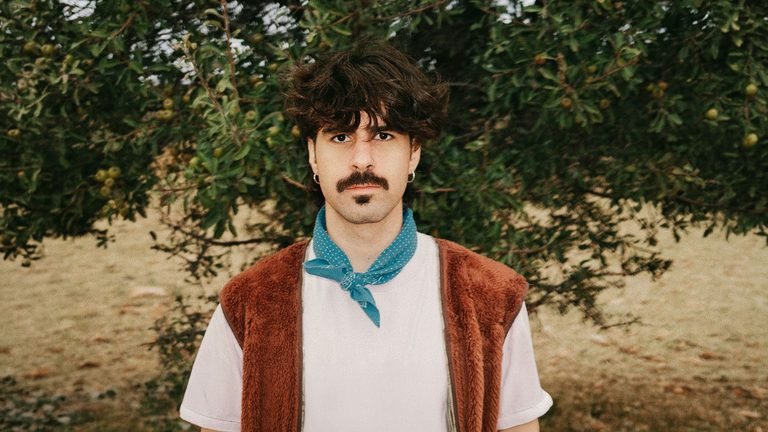
Sotto James on the shared drive, the trees, and the question that stays open on Are We Running Out Of Time?.
A few days ago we published a review of Are We Running Out Of Time?. The piece followed the Athens songwriter through the ordinary motion of a shared drive and the quiet recognition that the time inside the car is already limited. The conversation that follows sits a little further along the same road. The single is out. The count has started. What remains is how the song was built once that recognition had entered the room.
There is a small practical difference between the driver’s seat and the passenger’s. The person at the wheel must keep the next stretch of road in view. The person beside them can let the eye wander. Trees blur and clear. Light shifts. A face turns. The frame is always slightly delayed, slightly to the side of the main action. Are We Running Out Of Time?, written, performed and produced by Sotto James, mixed by Dimitris Kalamaras at Dudu Loft and mastered by Yiannis Christodoulatos at Sweetspot, is written from that delayed seat. The song does not try to steer. It notices what becomes visible once the hands are free and the question has already been asked.
The recording treats that delay as structure. It opens thin and suspended, then gathers, drops into near-silence, and returns with more weight. The pulse stays measured. Synthetic layers and reverb keep the room wide while the voice moves from a close register into longer, more open lines. The repeated question never resolves. By the end the arrangement thins again and the sound itself appears to run out, leaving the title hanging in the space that follows. The passenger’s view does not close the distance. It simply keeps the window open long enough for the details to register.
In Conversation with Sotto James
We spoke with Sotto James about the shared drive, the delayed frame of the passenger seat, and how Are We Running Out Of Time? holds presence against the fact that time is already moving.
- The song opens with the sense that something is approaching yet still just out of frame. “Coming / It’s coming / It’s right around the bend.” Where did that image of the bend arrive from, and how early in the writing did it lock into place?
It’s a mix of a couple different ways my brain works when writing. The first being, before I know the words I’m about to use, I usually know their phonetic shape. In the first voice memo, where I’m messing around with my keyboard and mumbling to myself, the first attempt at a verse had non-words that sounded like “uh- ing, uh-ing”, and by the second time “Coming, it’s coming” just left my mouth. Those were the first lyrics I kept on that song. The second is that I have synesthesia, so there is some form of visual which accompanies pretty much all of the sounds I hear, thoughts I have, emotions I feel. As I started becoming more and more aware of time’s passage over myself and my family, especially in the beginning, the feeling was very similar to being pursued by something unseen, slow moving, yet unstoppable. Like it could be anywhere, in the most unsuspecting of places, at any time.
- You have described the track as written with your father in mind, yet not from a single loss or dramatic event. How did the quieter recognition that the relationship is bound by time first show up in the writing?
The writing was on the walls from the beginning, the song was always going to be about my dad. The last 5 years we’ve had a few heart-related scares, and those were the first time I became so aware that my parents are, in fact, growing older. I admit, my relationship with my father was troubled up until then, and this realization is what drove me to begin building a deliberate connection with him. My dad had me later on in his life. He is 82 now, and I am 28. We had just made a last minute return from a faraway father-son trip because my dad was feeling unexpectedly unwell (I guess don’t hit the Tokyo bar strip if you haven’t had a drink in 30 years. No regrets though.) but it did shake me up enough to make me realize I’m not the one trying to keep up anymore. He is.
- “Counting trees as we pass them by” sits at the centre of the ordinary moment. Was that line already present when the song began, or did it surface once the car and the window were already in the frame?
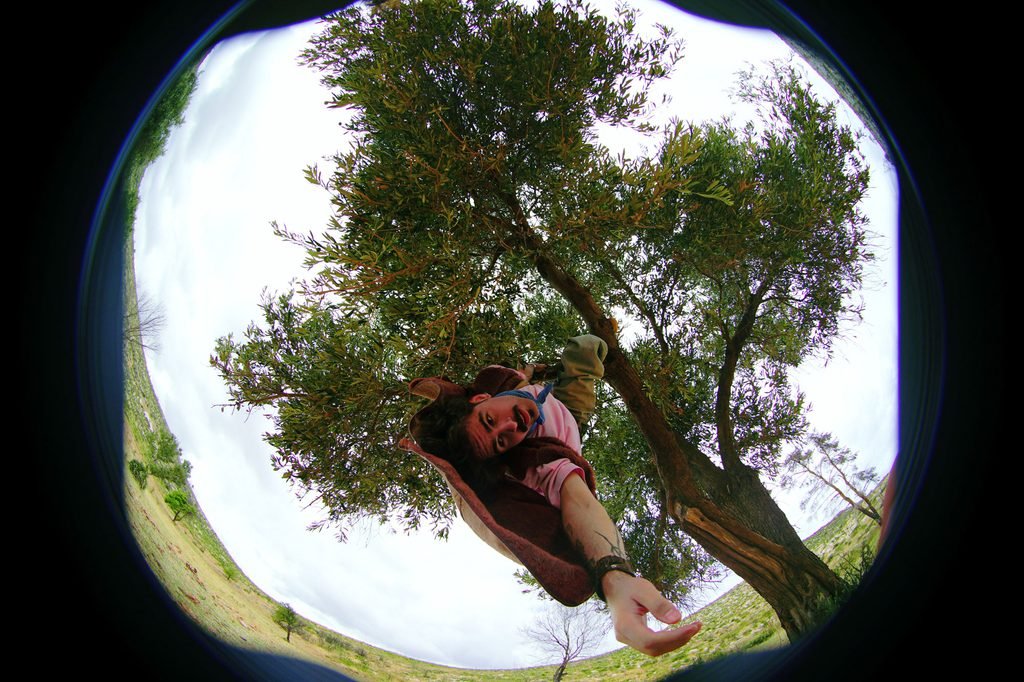
It’s funny that you connected the passing trees with a car, despite none being mentioned (in this song at least) but yeah, the visual connection is pretty spot on. I always go on long drives with my dad; it’s our most usual quality time together. We’ll put on music and talk about whatever, or sometimes just sit and take in the sounds and sights of our trip. The passing trees, roadsigns, light poles, are a constant element. Staring at them is a soothing feeling that almost affirms that we are both here now. Helps with the “not thinking too much”… The window in the sky I’ll admit wasn’t so much a car window as much as one more place where the looming feeling of time can stalk, remaining, yet, out of reach.
- The arrangement repeatedly advances and retreats rather than building in a single direction. How conscious was that shape in the production, and what did it allow the vocal to do that a straighter build might have closed off?
After our trip, dad got a call that an old 90s Yamaha synthesizer he took in for repairs was finished. It had been in the shop, forgotten for years, and he’d gotten a replacement so he gifted the old one to me. The opening line of the song was the first thing I wrote on that synth, on the “poly synth” setting (while trying to replicate Loathe’s Is It Really You? by the way). As you can probably tell, this song was based heavily around that synth. Even the drums are entirely off it. I didn’t want anything more polished. That synth is limited, weathered, imperfect. But it’s my dad’s and now it’s mine, just like so many things (corporeal and non). We are finite, our time is too, and any attempt of ours to speak to the depths of our sentiments feels short-falling, so we must speak loudly and often. Sonically I am doing what I’ve been doing regardless: using any and all of my small, paltry ways to try and express this boundless emotion.
- The line “Every time I see your face / I am staring back at mine” complicates the relationship. How did that reflection enter the lyric, and what did it change about the way the song understands inheritance?
I’d argue it makes the relationship shatteringly clearer. I remember doing a lot of work to try and figure out why I’ve always been so hard on my father. There was a lot of guilt connected to this behavior, and the decision to connect came well before the ability to do so. At some point the realization came like some reverse-kafkaesque revelation and shook me to my core. I spoke it to him in a single phrase: “I punish you for all the ways in which we are weak alike.” The journey of accepting and forgiving your father, especially as a man, is tantamount to accepting and forgiving yourself. The punishment goes both ways, the resentment goes both ways, and in trying to understand and love the man who came before you, you will discover just as much about yourself, whether you are prepared to or not.
- The review noted the way the song measures remaining time through ordinary motion. From inside the writing, what felt most difficult to protect once that recognition was already in the room?
I don’t think “protect” is the word I’d go for. Because that would suggest time and loss are something to weather instead of simply experiencing. As much as I consciously can, I don’t aim to be protected from life, just to be able to face whatever comes up whenever it does. I think my music in general attempts to lay me bare in front of uncomfortable truths and inescapable emotions, because the truest way in which I have blossomed is through embracing them as opposed to trying to swim against them. That awareness must be practiced, and these truths and emotions are to be sought out through very ordinary motions, because the ordinary is often a great hiding spot.
- The final section withdraws into a fragile passage before the fuller arrangement returns, then the whole thing recedes. What were you protecting by letting the sound run out rather than resolving the question?
In my mind, the ending of the song acts kind of as an ellipsis. This isn’t the end of the story, but there is nothing more to say. The questions have been posed to the point where an answer is no longer pursued. They have been suffered, fought against, and ultimately accepted. What remains is to live with them, and derive from them the kind of living we wish to carry out. The song fades but is not over. We are here in the meantime.
- “I will be there at your side” lands as a commitment to what can still be held. How do you hear that line now that the song is finished, and what does presence look like once the count has already started?
My songs tend to hit me well after I am done with them. I work to put out a message, express a thought or emotion. When my work has finished and there is nothing else to do but listen, the final person the songs have to address is me. When enough time has passed, and I am unsuspecting and open to listen, I find that I always interpret the songs differently from the person who wrote them. In Cold Fingers I wrote a love song and heard back a malnourished and isolated man giving all his light to a fleeting instance. In Talisman I wrote a song about being abused by a greedy lover and found that the greed was my own, and the abuse was self inflicted. It’s like quantum correspondence between myself and I from two very different points in time. Now that everything has been said and done, I am seeing that the effort has been there all along, and all of the time until that effort finally began to come to fruition has not been spent idling. It’s just how long it took to get here. Presence is just about the only thing we can control while everything else moves in the frenzy. Time is irrelevant as a countdown when it can instead be recognized as a privilege.
Follow Sotto James
Are We Running Out Of Time? is out now.
Listen: Spotify
Follow: Instagram · YouTube · Official Site