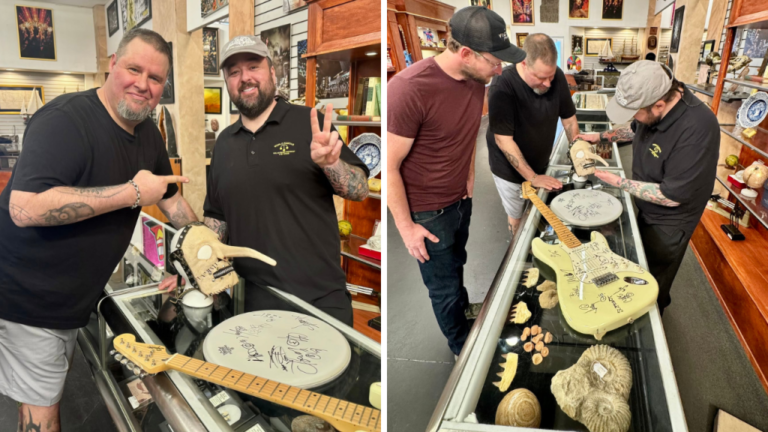
Appearing on Pawn Stars, the former Slipknot percussionist inspected a mask attributed to him and concluded it looked too clean for stage use.
Chris Fehn spent years behind a mask in Slipknot, which makes him an unusually well-placed authenticator of his own stage props. On Pawn Stars, the percussionist examined a mask attributed to him and reached a verdict that undercut the item’s presumed history: it was, in his words, too nice to have been worn live.
The observation is small, but it says something about how the memorabilia market treats the tools of a masked band. Slipknot’s masks arrive already loaded with value: numbered eras, designed to be replaced, tied to specific album cycles. Once they leave the band’s hands, they become objects to be verified, priced and displayed. A mask with visible wear tells a story a cleaner one cannot.
Fehn is in a strange position in that exchange. Few people can assess a Slipknot mask with more authority than the man who wore one, and fewer still have reason to doubt an object’s own legend. His assessment is not a rejection of the piece so much as a correction to it: an item can be genuine and still not be what a seller hopes it is.
For a band whose identity depends on concealment, the residue matters more than the design. Fehn’s remark lands because it restores a bit of the stage to the conversation, and takes some of it away.
Join the Club
Like this story? You’ll love our monthly newsletter.
Thank you for subscribing to the newsletter.
Oops. Something went wrong. Please try again later.

ROMBO Editorial Staff
The collective voice behind ROMBO Magazine’s news, reviews, features, and cultural coverage.