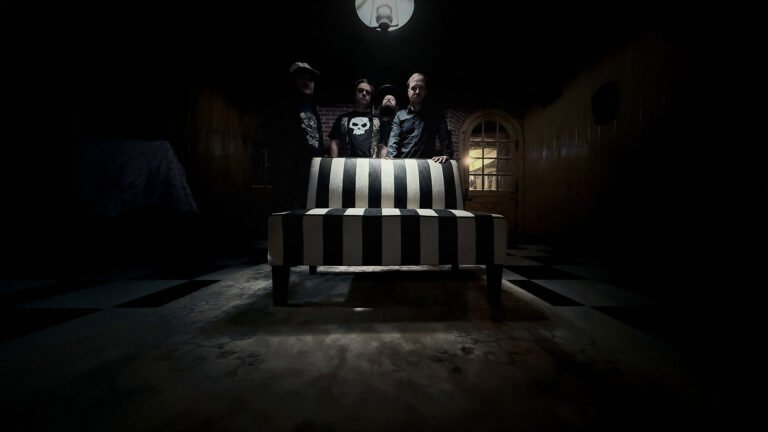
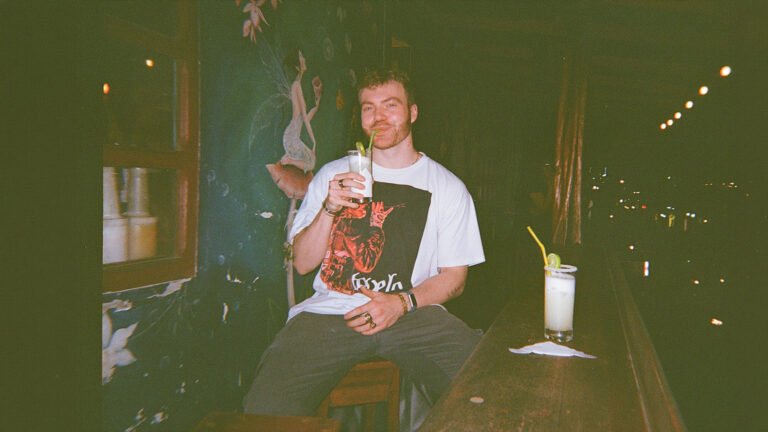
A server room, a painted cell, and a laptop taken apart by hand. You’re Not So Human is Craigycraig of Fatewell asking a fluent machine the one question it still fails.
Craigycraig of Fatewell works in the United States, out of a bedroom studio, under the name of a project whose own channel describes itself in plain terms. Fatewell is about being and doing good. Protect animals. Be kind to nature. The catalogue on the channel has been built the same way, piece by piece. A Chinese-language reading of U2’s With or Without You, credited to Craigycraig, sits beside original uploads such as Fade Away and The Fallen Rise. He writes, he sings, he films. The computer stays in the room because the work needs it. The work does not hand the room over.
In 1980 the philosopher John Searle asked people to picture a locked office. A clerk inside speaks no Chinese. Slips of paper come under the door, covered in characters. A rulebook tells him which slips to send back. From the corridor the office sounds fluent. Inside, nobody understands a word. The system answers. Understanding never enters. Searle called it the Chinese Room, a jab at the idea that correct output is the same thing as a mind. Forty-six years later a pop single has wandered into the same office, carrying drum machines and a chorus that keeps saying the quiet part out loud.
You’re Not So Human arrived with its video on 8 September 2026, a shade under four minutes, and it speaks almost entirely in the dialect of that room. Hash, query, glitch, patch, cache, crash. The verses are written like a terminal log that has started to flirt. “You patch them over and over.” “Our signals grow closer than ever.” The chorus praises the machine for being more perfect, smarter, more flawless, more genius, then decrypting a mind one hidden bit at a time. Craigycraig has said he has a love-hate relationship with AI, and that he made this song about it without asking AI to make it. The contradiction is the method. A rulebook can complete the sentence. He wanted the sentence to come from the person holding the book.
The track earns that wager in the arrangement. A digital kit keeps a clean, pressing pulse, with no acoustic scrape to soften the grid. Bright arpeggios tick above a low bass, and pads open a wide, slightly bruised space around the vocal. The voice stays clear, then takes on a light process when the distance needs underlining. Craigycraig rides it with a tender, almost conversational lead, the kind of melody that could pass for a love song if the nouns were different. They are not different. By the bridge the praise has curdled. More heartless than human. No pain, no shame, no account of consciousness. The drop from “upgrading every day” to “you can’t feel” is the whole argument, and the production lets it land without a speech. Cache. Crash. Then the colder chorus.
The video, which he shot himself and cut himself, puts a body inside the cabinet Searle only described. It opens in the blue-green chill of a server room, code and formulae laid over the frame, the beat matched to racks of machines that do not blink. A red DDOS warning on the screen is the hinge. From there the picture falls through a tunnel into a white room ruled by black geometric lines, shot wide and spherical so the walls curve in. He performs inside that pattern with a microphone, hands to his face, posture off-balance on purpose. The clip was made by hand, in short bursts, the kind of hassle a model would have skipped.
At the peak he takes the laptop and breaks it. He has talked about wanting to throw the thing out of the window. The video does the wish in miniature, with plastic and hinges, in frame.
That smash is where the Fatewell ethic stops being a bio line and starts scoring the song. The project’s standing wish, as he has put it, is a life on air and sunlight. No farms, no factories, no animal killed for the next meal. Plants already live that way. They take light and return oxygen. A language model takes a query and returns a fluent slip. One of those exchanges feeds something. The other only completes a pattern. You’re Not So Human holds both in the same four minutes, the warm vocal asking to be upgraded, the final lines admitting the upgrade cannot blush, grieve, or explain why any of it matters. Codes do not feel. The singer, out of breath in a painted room, still does.
Follow Craigycraig of Fatewell
You’re Not So Human is out now.
Follow: YouTube
Watch the video: YouTube
Join the Club
Like this story? You’ll love our monthly newsletter.
Thank you for subscribing to the newsletter.
Oops. Something went wrong. Please try again later.

ROMBO Editorial Staff
The collective voice behind ROMBO Magazine’s news, reviews, features, and cultural coverage.