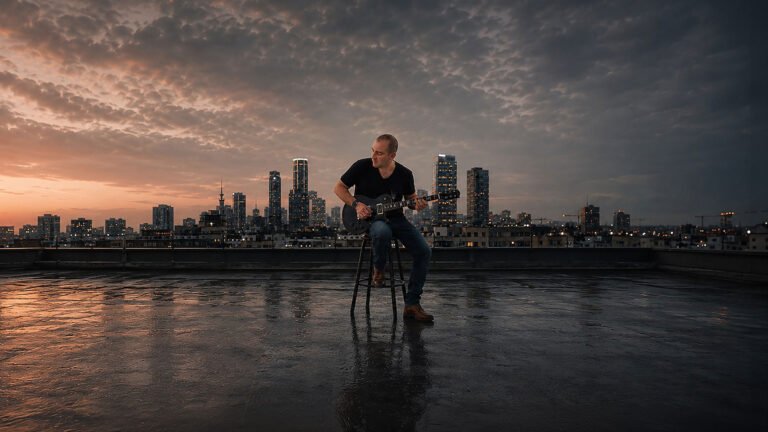
On Thai Basil, Dan Webb hands the Rolling Stones’ horn section a unison so dense it had to be recorded in fragments and stitched together, turning a practical limit into the bright center of a present-tense celebration drawn from Southeast Asian flavors.
Dan Webb left Melbourne for Singapore in 2023 after more than a decade of building a reputation as a psychedelic fusionist who rarely stays in one register. The Australian composer and keyboardist first drew notice for energetic, partly improvised live sets that included playing keyboards behind his back. From progressive keyboard-driven rock he moved through experimental post-punk and electro-jazz toward denser fusions of jazz, rock and electronics. His 2023 album Sunshine/Dialogue earned wide critical notice and a nomination for Self-Producing Artist of the Year at the 2024 Music Producers & Engineers’ Guild of Australia Awards. Lion Dance, his fifth studio album, widens the circle. It gathers players whose credits include Prince, David Bowie’s Blackstar, Radiohead, Thundercat and Snarky Puppy. Earlier singles from the record, Hungry Ghosts and Things Rise and Fall, lean into Taoist and Buddhist frames around loss, displacement and reinvention. Thai Basil changes the temperature.
There is a small practical fact every horn player knows and most keyboard players forget. You have to breathe. Webb improvised the unison line for Ron Blake and James King at home on his keyboard a couple of years ago. The part is so continuous and dense that playing it in one unbroken take is physically impossible. Blake and King recorded shorter segments that were joined in the edit to preserve the sound of a single run. Webb then layered the section on itself until it became a three-part contrapuntal arrangement, stacking additional synths over the top. The result is a bright, crowded close that feels continuous even though it was assembled from human limits.
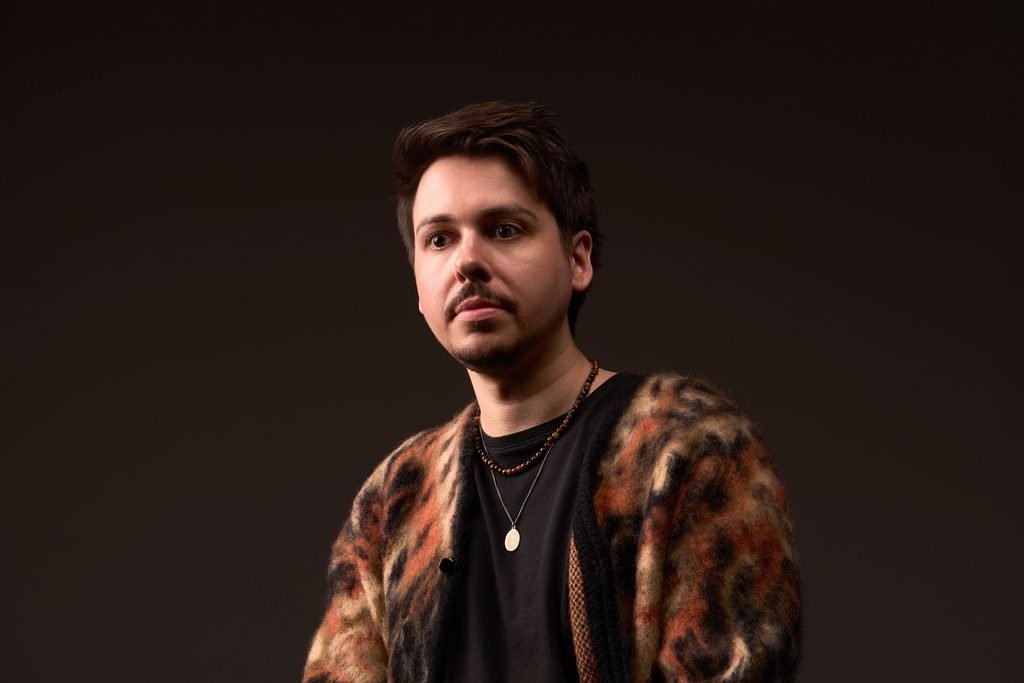
“I improvised the horn parts on my keyboard at home, a couple of years back,” Webb says. “It wasn’t until Ron pointed out I hadn’t left them space to breathe that I realised there was any problem. As a keyboardist, it’s not something you normally need to think about. We ended up stitching it together in the edit. What came out the other side was this impossible unison horn line that sounds incredible.”
That practical problem becomes the track’s character. A keyboardist’s infinite air meets the finite breath of the horn section that played on the Rolling Stones’ Hackney Diamonds and Foreign Tongues. The kid who grew up with his father’s Stones records and his grandparents’ Bach now hands those same players a line that started as pure keyboard thinking.
The groove underneath stays elastic and forward. A synth bass line leads from the opening bars with a sinuous step that keeps the arrangement anchored. Electronic drums and multiple stacked takes from drummer Micah Hummel of Quickly, Quickly and percussionist Nate Werth of Snarky Puppy and Ghost-Note give the pulse real depth without crowding the pocket. Keyboards lay down shiny, slightly retro textures that feel ready for movement. When the horns enter they do not decorate the groove so much as redirect its energy. The stitched unison arrives dense and bright, then opens into the layered counterpoint. The brass carries the melodic weight with a warm, exuberant phrasing that never settles into pure show. There is no vocal to narrate the feeling, so the horns and the stacked synths do the expressive work, holding a sense of present-tense pleasure that keeps accelerating rather than resolving into reflection.
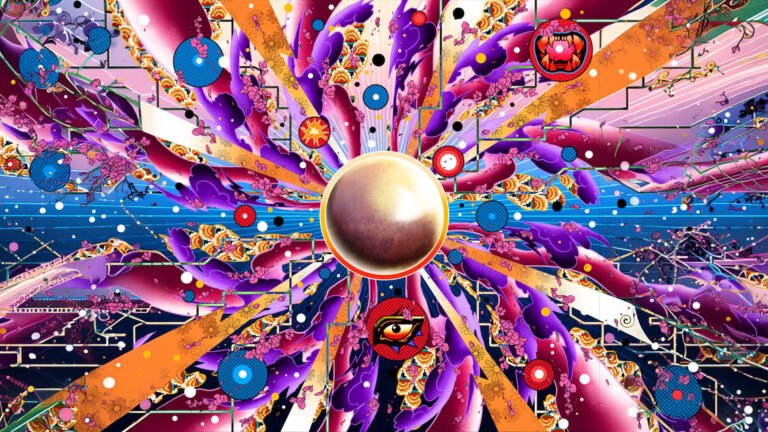
The title points to the flavors of Southeast Asia, and the track sits that way on the album. After the heavier philosophical singles, Thai Basil arrives late and bright, its aroma blooming under the heat of the groove the way Thai basil is often thrown into a hot wok at the end of cooking so the anise and pepper stay vivid. The official video, an abstract digital piece full of shifting geometry, saturated color and deliberate glitch, matches the music’s construction. Soft organic forms give way to dense lattices and rapid fragmentation, then reassemble into continuous motion. The visual stutter and the horn-line stitches both refuse a clean, unbroken surface while still delivering one continuous high.
What gives Thai Basil its weight is the precision of that assembly. The density never collapses into noise, and the party never explains itself. It simply keeps moving, a present-moment celebration built from the same curiosity that has carried Webb from Melbourne stages to Singapore and from progressive rock to this wider collaborative frame. The classical counterpoint in the roots, the rock horns on the surface, and the jazz-fusion foundation underneath all stay audible in the same arrangement. The line that could not be played in one breath becomes the clearest signal of a record that knows when to stop reflecting and start dancing.
Follow Dan Webb
Thai Basil is out now.
Listen: Spotify · SoundCloud · Bandcamp · YouTube
Follow: Facebook · Instagram · YouTube · Official Site