Jouni Hirvonen has spent years inside other bands and projects, releasing Finnish-language albums and EPs before he moved to Berlin. The decision to clear the room of every other voice and finish an entire record by himself arrived as a practical need rather than a manifesto. Through the winter of 2025–26 he worked in a basement studio on the city’s edge, tracking guitars, bass, drums, a broken Rhodes Mark I and the occasional beer bottle struck with sticks. Pekka Kupiainen mixed and mastered the result. Chilly Mazarin Records issued the ten-track album that carries the same name as the project. The songs do not invent a new genre so much as keep returning to one condition: the moment a person realises they have become a stranger inside their own life, observed, slowed, and still expected to remain still.
In older European asylums and in certain modern secure units, patients are watched through thick glass that does not break. Staff stand on the safe side. The person inside is on display, often sedated, movements reduced to something that can be managed. The glass protects the observers. It also keeps the observed from reaching them. That arrangement feels remote from a self-recorded album made in a Berlin basement until the verses of “Break Me” place the listener on the wrong side of the pane: “Through a glass that doesn’t break, I’m on display.” “See how they keep me tame.” “Sedated mind is weak, I slowly decay.” “Behind this plastic wall you watch me stay.” The song names the real context the rest of the record keeps circling. Confinement here is institutional, domestic and relational at once. Someone is kept visible and quiet. Love has already been traded for fear. The speaker is back for more of the same arrangement.
The architecture of the music makes that condition physical. Tracks open on sparse electronic pulses, deep synth bass, clean guitar figures or circling piano that sketch closed rooms. Then saturated guitar walls and acoustic drums arrive and the space collapses or expands without warning. The voice follows the same fracture. It begins low, measured, almost private, as if speaking from inside the glass. On choruses it opens into longer, strained notes that press against the density of the guitars. In bridges it can drop into spoken or filtered delivery, pinning the song to a colder fact before the next rupture. The effect is consistent across the sequence without becoming uniform.
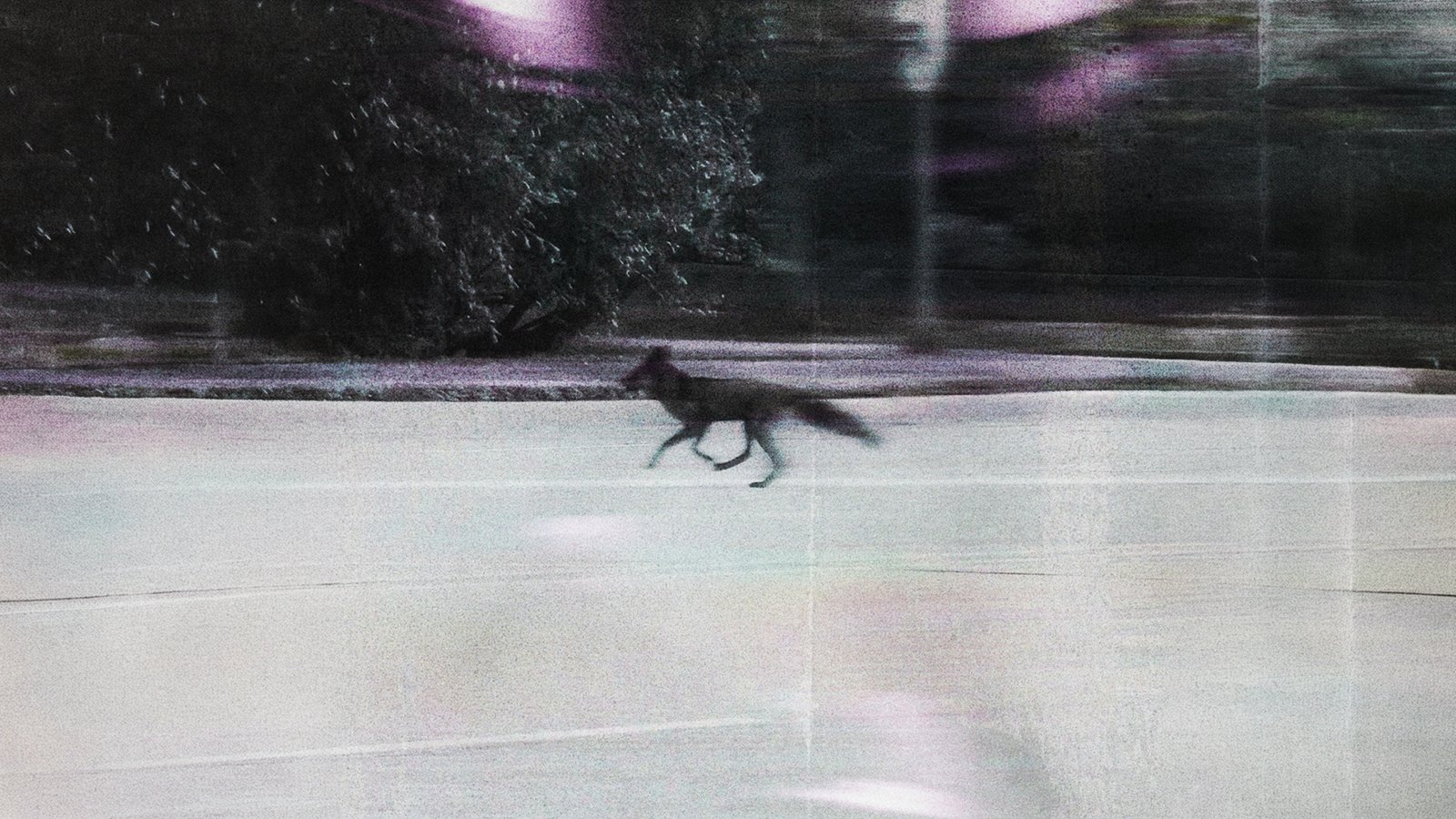
“Chaopian” starts the album with the need for other people’s light. The verses admit the grip of darkness and the fear that without some external brightness the world falls. The arrangement holds the first half in nocturnal electronics and clean arpeggios, then breaks into a long instrumental tail of distorted guitars once the plea for light becomes urgent. “Nightwatch” moves the same watchfulness outdoors. Streets are cold and wide. The observer lies in the snow while trucks pass, tracking steps that slip away. The song began, the artist has said, with wild boars roaming Berlin at night and the image of one moving with an injured leg, which set the crooked 7/8 pulse. By the time the track is finished the animal has become a person who cannot accept that a relationship is over. Control and the refusal to let go sit inside the same watching posture that appears behind the glass elsewhere on the record.
“All These Walls” turns the barrier inward. The speaker has the number and the address but will not use them. Walls made by the self turn the idea of breaking free into an enemy. The request that follows is still to be held close. The dynamic mirrors the contradiction: restrained synthetic sections give way to thick guitar masses that both protect and press. “Stay With Me” freezes the town once the other person is gone. Lights go out. A shadow takes the form of the missing figure and cannot be held. The synth arpeggio and straight pulse keep the maze in motion while the voice moves from measured fatigue to a clearer, more exposed delivery on the repeated offer of light. “You Don’t Belong” places the same estrangement inside a house. Time runs in circles. A painting on the wall becomes a nightmare of hands reaching for a moment already gone. The circular piano figure holds the stasis. When the guitars arrive they do not open an exit. They thicken the recognition that the speaker has been left inside a place that is no longer theirs. The final line cuts off into the returning piano, the sentence left unfinished in the empty room.
“Feet in Mud” accepts the weight as permanent. Endless love will outlast mountains and moons, yet the feet have already sunk. The burden becomes a crown. Clean arpeggios and melancholy synths open the track before layered, slowed guitar walls materialise the sinking. The voice stays warm and measured, choosing resignation over rage, letting the final return of the chorus settle into the feedback rather than fight it. After the institutional clarity of “Break Me,” “Cold Streets” returns the speaker to the snow. A dream ties them to a frozen guillotine. Hail punches holes like knives. The house has no light. The only movement left is the decision to cut the ropes and set sail through stacked ice toward open water. The arrangement keeps the electronic grain and the dense guitar mass in tension until the last double surge. “Won’t You Let Me Go” closes the set inside a room of forgotten dreams. Silver eyes watch. Pale smoke moves around the bones. The plea to be woken when the other has had their fill is answered by a lower, guttural counter-line that repeats the demand to be let out. The track ends on a solitary acoustic arpeggio once the walls have done their work.
Across these songs the record does not treat confinement as atmosphere. It treats it as the actual condition the verses describe: being placed on display behind glass that will not break, kept tame by sedation, left inside a house that no longer recognises its occupant, or sunk under a love that has become a crown. The production, built alone in a basement over one winter, simply makes the temperature of those rooms audible. What gives the album its weight is the precision with which it keeps returning to the same unbreakable surface, and the clarity with which the voice keeps naming who is on which side of it.