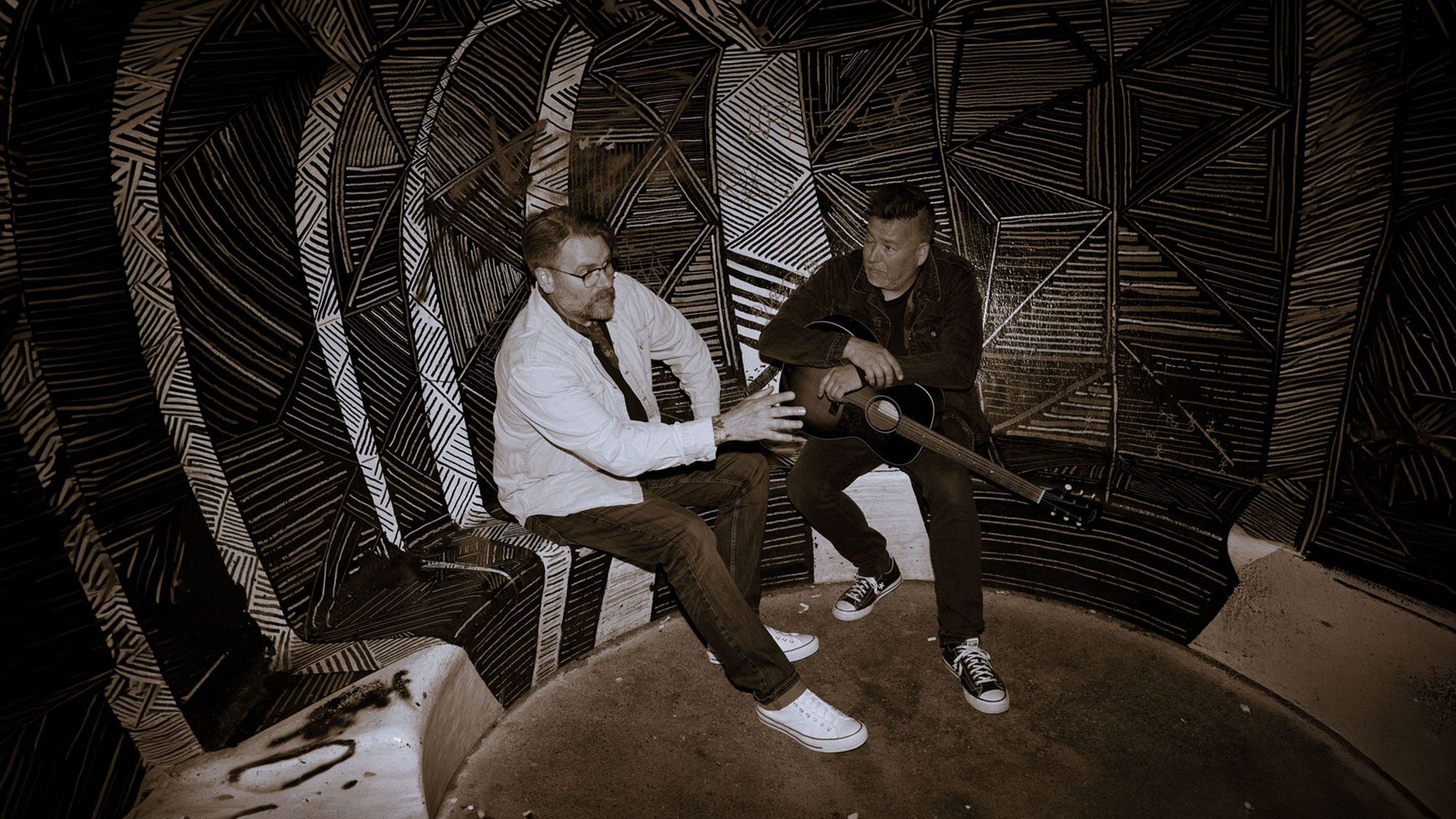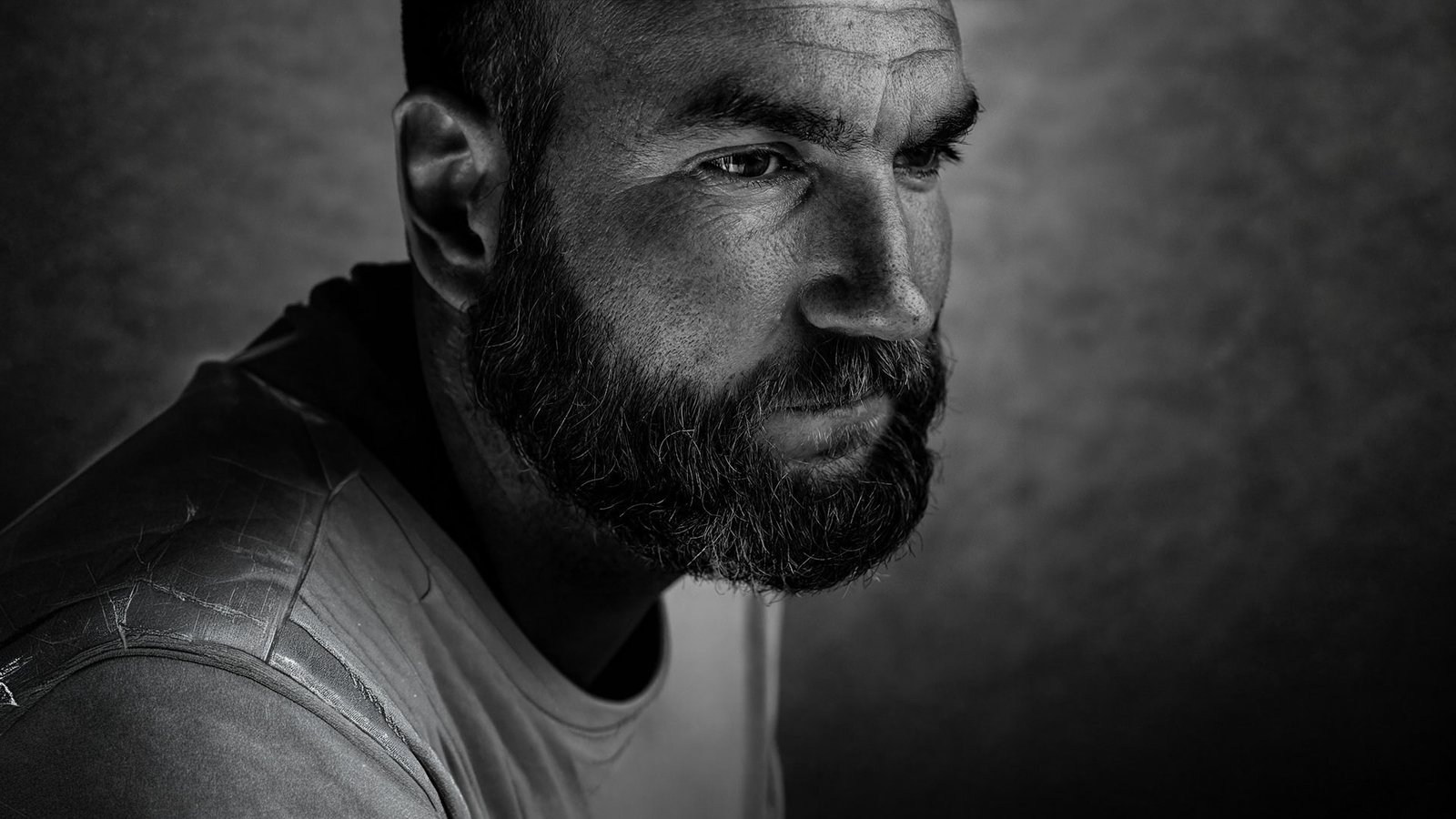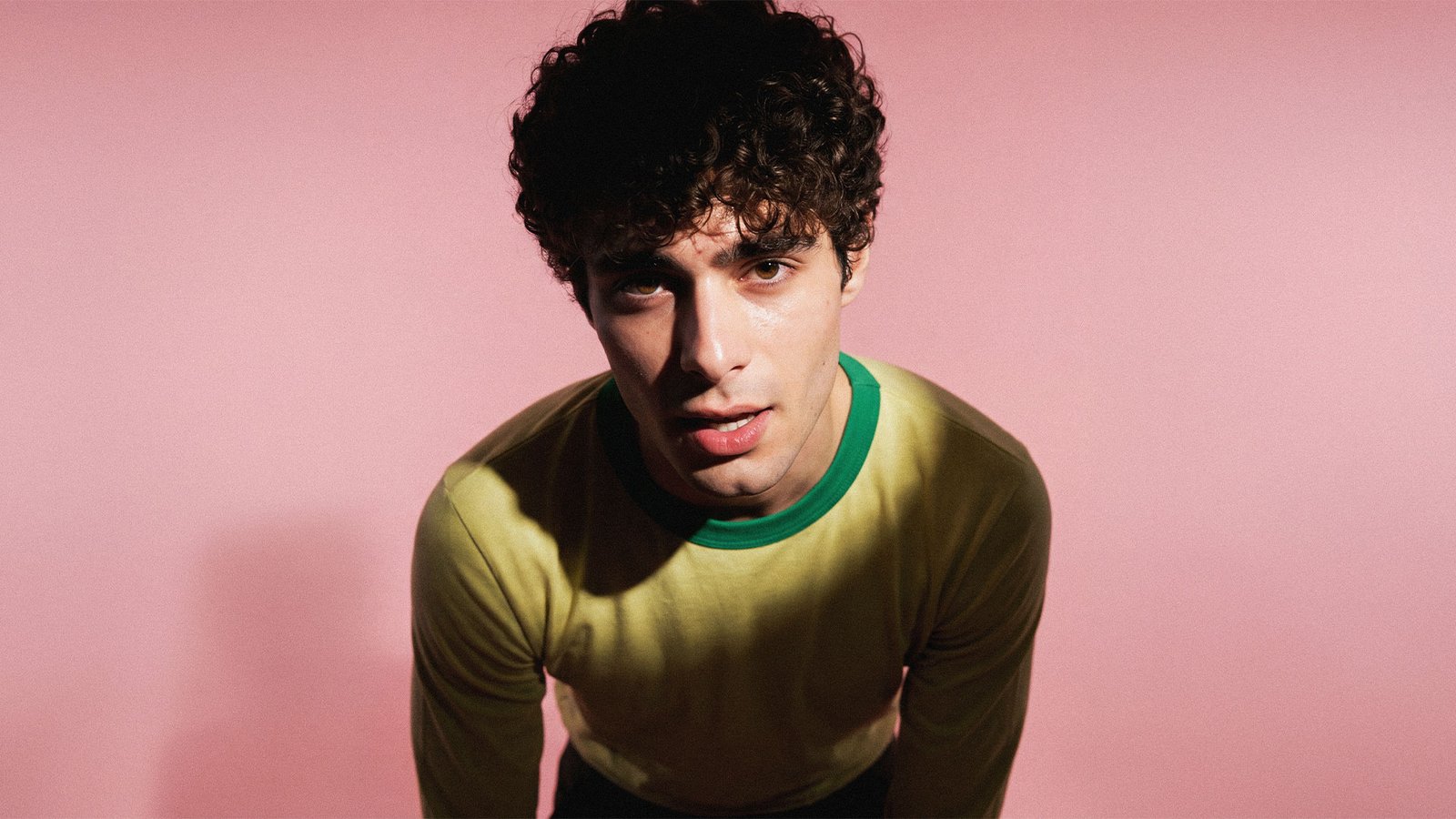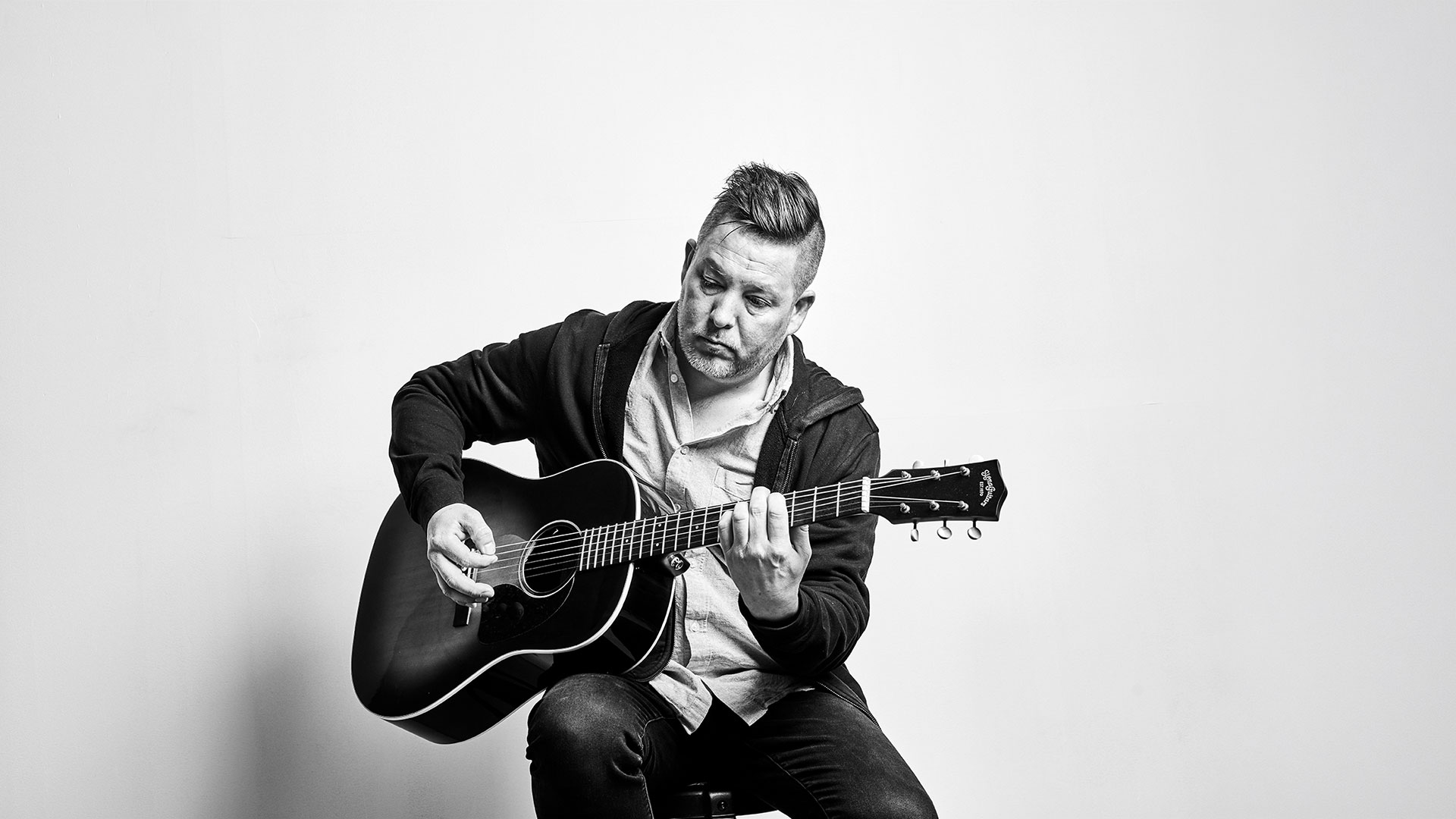
Joakim Lykke has been part of the Danish rock, pop and folk scene since 2006, most often with an acoustic guitar and a voice that treats songs as places where stories can be told without hurry. From Herning he released the solo album Falling Down - Today in 2020 and has since played well over 600 live shows. In 2024 he put out Highway 15 as a charity single for SIND after years of work with vulnerable young people and as co-founder of PotentialeHotellet. The songs tend to circle relationships, longing and the moments that stay after the room has emptied.
There is a quiet practice in certain shelters. A spare key is left in a drawer and a clean sheet is kept ready. The preparation is practical. It is also an admission that the person who uses them may leave without saying goodbye. The work is the readiness, not the guarantee of return.
Short & Fleeting Life, the duet with CFB (Claus Flindt Bjerg) that ROMBO reviewed earlier, sits inside that same practice. Written after a close friendship and professional partnership proved to have been built on lies, the song measured one kind of remaining distance. When CFB, a former deployed soldier living with PTSD and the father of two young children, heard it, the same lines measured another. The lyrics shift from addressing the strength another person has left to claiming that strength in the first person. The shallow breath is asked for twice. What began as one man’s account of trust broken becomes the shared entry of two different scars counted in the same remaining time.
We spoke with Joakim Lykke about the spare key, the last light, and how the recent run of singles keeps the door ready without forcing the story.
In Conversation with Joakim Lykke
1Short & Fleeting Life began as a song written after a friendship and partnership built on lies. When CFB connected with it through his own experience as a former soldier living with PTSD and as a father, the same lines held a different remaining distance. What changed in the writing, and what did you hear in his voice that made the song a duet rather than a solo account?
The interesting thing is that the writing didn't actually change. The song was already written when I played it for Claus. What changed was my understanding of what I had written.
For me, the song came from a very personal experience of betrayal. Someone I considered a close friend, someone I trusted completely, turned out to be a very different person from the one I thought I knew.
The hardest part wasn't losing that friendship. It was what happened after. I started questioning my own judgment. How could I have been so wrong about someone? Could I even trust myself anymore?
When Claus heard the song, he connected with it through something entirely different: his experiences as a soldier, living with PTSD, losing people, and being a father who worries about having enough time with his children.
What struck me was that he wasn't interpreting my story. He was finding his own.
And when I heard him sing, I felt that the song suddenly belonged to both of us. His voice brought another layer of vulnerability and experience into it.
That's when I realized that perhaps the song had never been about one particular story. Maybe it was about something much more universal.
2The lyrics move from addressing another person’s remaining strength (“Any strength you have left as you’re waiting to die”) to claiming that strength in the first person. How did that shift arrive, and what does it do to the way the song holds both stories?
I think that shift is the very heart of the song.
When someone betrays your trust, your first reaction is naturally directed towards that person. You're angry, disappointed, confused. You want answers. You want them to take responsibility. But eventually, something changes. You start turning those questions towards yourself.
Why didn't I see it? Why did I trust him? What does that say about me?
And for me, that's where the real damage began.
The song moves from "you" to "I" because, in my experience, betrayal doesn't necessarily end when you walk away from the person who hurt you. Sometimes that's when the difficult part really begins.
When Claus became involved, that shift took on another meaning. His story isn't about betrayal in the same way as mine. It's about mortality, responsibility, and the fear of leaving something unfinished.
But I think we both recognize that moment when the questions stop being about the world around us and become questions we have to ask ourselves.
Maybe that's what connects our two stories.
3Highway 15 came out of your work with vulnerable young people and the founding of PotentialeHotellet. The single raised money for SIND and carried specific stories from that world. How do those experiences sit inside the newer songs, and what still feels unfinished about that work?
My involvement with vulnerable young people and mental health has had a great influence on how I see the world, and probably also on how I write songs.
One of the things I've learned is that we often know very little about what other people are carrying around inside.
We meet people every day, we talk to them, work with them, perhaps even become close to them. But we rarely know the full story.
That realization has become increasingly important in my songwriting.
"Highway 15" was connected directly to mental health and the work surrounding it. But I don't necessarily see my newer songs as songs about mental health. But they're all songs about being human, and mental health is inevitably a part of that.
What still feels unfinished, though, is the conversation.
I think we have become better at talking about mental health, but we're not always equally good at listening, or at understanding that someone else's experience may be completely different from our own, and that's something I want to keep exploring through my music. Not because I have the answers - but because I believe those conversations matter.
And sometimes a song can open a door that an ordinary conversation cannot. Much like "Short & Fleeting Life" did with Claus.
4Grade-school Lover was written in 2004 and released this year as a look back. What does it mean to put a song written more than twenty years ago into the same run as Short & Fleeting Life and the other 2026 singles?
Okay, so "Grade-School Lover" was written back in 2004. I was much younger then, with far less life experience and a different perspective on the world.
And yet, when I revisit that song today, I can still recognize myself in it.
It actually holds a very special place in my heart because it was the first song I ever wrote and dared to perform in front of an audience. In many ways, it marks the beginning of my journey as a songwriter.
Over the years, I've recorded the song in several different versions, but somehow, I never felt that any of them truly captured what I wanted the song to be or what I wanted it to express. There was always something missing.
When I decided to release five singles throughout 2026, I knew I wanted "Grade-School Lover" to be the first. Not necessarily because it was the most important song, but because I felt it was finally time to let it go.
And this time, the recording just felt right.
There was something very satisfying about finally being able to release a song I'd carried around for more than twenty years.
Looking at it today, I also realize that the song was about more than young love. It was about finding my own identity, learning not to lose myself in someone else, and having the courage to stand by who I was.
And since we're talking about what I write about, perhaps that's what connects it to a song like "Short & Fleeting Life".
I've come to realize that almost everything I write is about relationships. Not necessarily romantic relationships, but the relationships between people, and more often than not, the relationship I have with myself.
These two songs were written more than twenty years apart, but in a way, they're exploring two sides of the same thing.
One is about finding the courage to be yourself.
The other is about finding the courage to trust yourself again.
5You have spoken about moving between intimate solo shows, duo performances and formats where music and storytelling sit closer together. How do those settings change what a song like Short & Fleeting Life can carry in a room?
For me, the most important thing about performing live has always been the connection with the audience.
I've played more than 600 concerts in all kinds of settings, and I've learned that the size of the stage doesn't necessarily determine the size of the experience.
Sometimes the most powerful moments happen in a small room with twenty people.
When I perform solo, there's nowhere to hide. It's just me, my guitar, the song, and the audience. That creates a certain kind of honesty.
But when I perform with another musician, something different can happen. The song becomes a conversation rather than a monologue.
And that's particularly interesting with "Short & Fleeting Life", because the two voices genuinely represent two different experiences.
I also enjoy concert formats where I can share the stories behind the songs. Not because I want to tell people what they should hear, but because I think knowing where a song came from can sometimes make the experience more meaningful.
At the same time, I never want to take away the listener's freedom to interpret it differently.
6The arrangement of Short & Fleeting Life keeps the room small at the start, then lets an electric guitar with a rough edge cut through before the sound empties again onto piano. What were you listening for in those choices, and how did the final retreat to piano alone feel once the perspective had turned inward?
I think the musical journey of the song reflects its emotional journey.
It begins in a relatively intimate space, where the words and the vulnerability behind them have room to breathe.
But the emotions in the song aren't entirely quiet. There's frustration, anger, confusion, and a sense of something breaking apart. To me, the rougher electric guitar brings some of that tension to the surface.
I have to give credit to my producer here. Lucas Illanes at "The Hideout Studio" really managed to capture the emotions of the song, especially with that guitar, which he actually played, as well as the piano.
I like that contrast because it reminds me of what happens when you're dealing with something difficult in life.
There can be a lot of noise. Questions, anger, other people's opinions, your own thoughts going around in circles.
But eventually, you're left alone with yourself.
And that's where the piano at the end feels particularly meaningful to me.
It doesn't provide a resolution. It simply leaves space.
I think that's important because some things stay with us. We just learn to live with them differently, and that space really accentuates that feeling.
7Your songs often return to relationships, longing and the moments that stay after the room has emptied. After writing about betrayal, about the time left for children, and about the scars that do not stay quiet, what do you still want a song to be able to do?
I want a song to make someone feel something.
That might sound pretentious, but I think it's becoming increasingly important.
We live in a world where we're constantly exposed to information, opinions, images, and noise. Everything moves so quickly, and we're expected to react to everything almost immediately. And that's also why I think Storyteller concerts can be so powerful, because I believe that music can make us stop for a moment.
It can remind us of something we've forgotten, help us understand something we're struggling with, or simply make us realize that someone else has experienced something similar.
It's not because I think music has to or somehow can change the world.
But if one person listens to a song I've written and feels a little less alone, then I think the song has accomplished something important.
And it doesn't even have to relate to the story I've told about the song or what originally inspired me to write it. If someone finds their own meaning in it, something that brings them comfort, relief, or a sense of understanding, then I feel I've accomplished something worthwhile.
Just like "Short & Fleeting Life" did for Claus. He found something in that song that I hadn't necessarily put there myself, and to me, that's one of the most beautiful things music can do, and also why I asked if he would do it with me.
And that's definitely one of the reasons I keep writing. But there's also the simple fact that I can't seem to stop. Songwriting is my own way of dealing with things, of processing experiences and trying to make sense of them.
So it's certainly not because I've figured life out. Quite the opposite, actually.
I write because there are still so many things I don't understand.
8The title names a short and fleeting life without turning the song into a chase. Once the last light is logged and the spare key is left ready, what remains of that readiness, and what does the track choose to keep rather than resolve?
I think what remains is the willingness to keep trusting life, even when you know how fragile it is.
For a long time after the experience that inspired this song, I struggled with trusting other people. But even more than that, I struggled with trusting myself.
And I eventually realized that I couldn't protect myself from being hurt again without also closing myself off from the possibility of something good.
Claus has a different perspective. For him, the song became a reminder that he cannot control how much time he has, but he can choose what he does with the time he's given. And I think that's where our stories meet.
Neither of us can change what has happened. Neither of us can guarantee what comes next. But we can choose how we live with it.
Maybe that's what "Short & Fleeting Life" ultimately leaves behind. Not an answer. Not a happy ending. Not even a promise that everything will be alright.
Just the recognition that life is short, that we carry our experiences with us, and that we still have the opportunity to make something meaningful out of the time we have left.
And maybe, just maybe, in the end, that's enough.