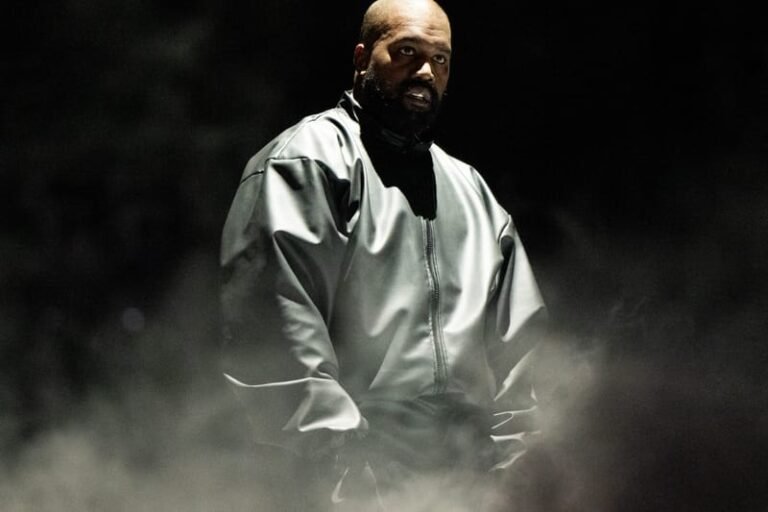
On his twelfth album, Kanye West pares back the spectacle, attempting to find his voice again in the soul samples of his past.
Kanye West’s ‘Bully’ arrives with a context so dense it threatens to swallow the music whole. The public apologies, the health disclosures, the promise of a return to form, they form a prelude that asks for a specific kind of listening, one attuned to redemption arcs and sonic homecomings. The album itself, however, speaks in a quieter, more fractured language. It is less a triumphant return to a classic sound than a careful, sometimes tentative, excavation of it.
The production is deliberately sparse, built on the kind of soul loops that defined his early career. The chops are clean, the drums are crisp, but they often feel like exhibits in a museum of his own past. There is a technical correctness to the sound, a knowing deployment of a familiar syntax that occasionally lacks the chaotic, hungry energy that originally animated it. The minimalist approach seems designed to foreground his voice, which has become the album’s central, unstable instrument.
His delivery wavers between a strained, emotional rasp and moments of detached, almost weary recitation. On the title track, featuring CeeLo Green, the contrast is stark. Green’s full throated, gospel tinged hook embodies the soul tradition West is sampling, while Ye’s verses feel earthbound, grappling. ‘Father,’ with Travis Scott, finds a better balance, the murky atmosphere providing a more natural habitat for West’s introspective murmurs about legacy and failure. The inclusion of Peso Pluma on ‘Last Breath’ is an odd, disjointed moment, a cultural collision that doesn’t generate much heat, feeling more like a streaming play than an artistic necessity.
Lyrically, the album circles themes of isolation, defiance, and paternal reflection. The confrontational posture of the title contradicts the often vulnerable, inward looking content. He is less bullying the world than wrestling with himself, and the friction between the projected image and the audible struggle is where the record finds its most genuine tension. It avoids the grand, messy provocations of his recent work, opting instead for a scaled down personal inventory.
‘Bully’ is not a masterpiece, nor is it the straightforward revival some may have hoped for. It is the sound of an artist trying to use an old blueprint to build a new foundation, with all the awkwardness and promise that entails. The album works best when it stops trying to be a return and simply exists as a document of this specific, conflicted moment. Its power is in its hesitations, in the gaps between the loops where you can hear the weight of everything that has happened. It feels less like a comeback and more like a careful, uncertain first step back into the room.
Join the Club
Like this story? You’ll love our monthly newsletter.
Thank you for subscribing to the newsletter.
Oops. Something went wrong. Please try again later.

ROMBO Editorial Staff
The collective voice behind ROMBO Magazine’s news, reviews, features, and cultural coverage.