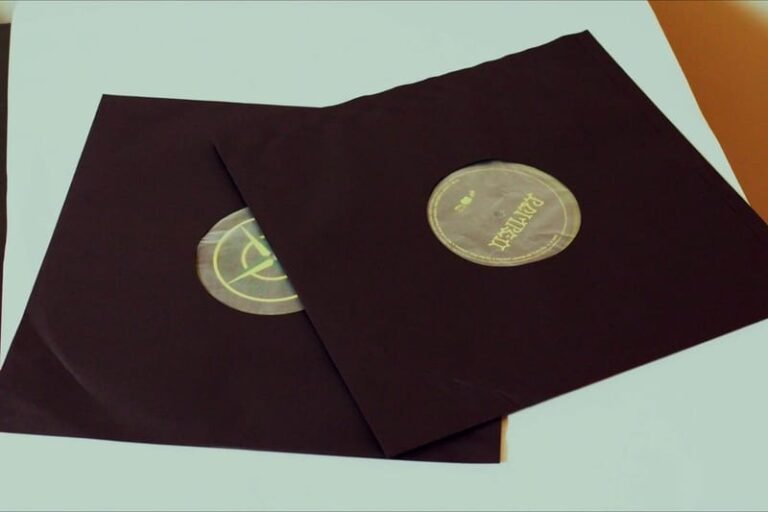
Paul McCartney’s new album, ‘The Boys of Dungeon Lane,’ frames personal history through the soft focus of late-career reflection.
Paul McCartney’s late-period work operates within a defined emotional and sonic register. The urgency of invention has been replaced by the compulsion to reflect, to tidy the narrative, and to render memory with a warm, forgiving glow. His announced album, ‘The Boys of Dungeon Lane,’ out May 29, appears to continue this phase. Based on the lead single “The Days We Left Behind,” the project seems less concerned with breaking new ground than with carefully revisiting old territory, treating personal history as a shared, melodic heirloom.
“The Days We Left Behind” establishes the album’s likely tone. It is a mid-tempo piano ballad, built on a simple, cyclical chord progression that feels both comforting and inevitable. McCartney’s voice, weathered but gentle, sits comfortably within the arrangement, which is dressed with subtle strings and a tastefully restrained rhythm section. The production is pristine, avoiding any abrasive edges. The song’s power lies entirely in its associative weight—the title alone does the heavy lifting, inviting listeners to project their own nostalgia onto its broad, sentimental canvas. As a piece of songcraft, it is proficient and pleasant. As a statement of intent, it signals an album deeply invested in the act of reminiscence.
The album’s title, ‘The Boys of Dungeon Lane,’ reportedly references McCartney’s childhood in Liverpool, a subject he has mined extensively. This suggests a thematic through-line focused on origin stories and the bonds forged in youth. The risk with such a premise is a descent into pure sentimentality, a series of musical postcards where every memory is fond and every texture is soft. The challenge for McCartney will be to introduce tension, ambiguity, or a sonic surprise that complicates the reverie. The single chooses the path of least resistance, prioritizing emotional accessibility over compositional adventure.
For an artist of McCartney’s stature, every release exists in dialogue with his own impossible legacy. The shadow of The Beatles looms, not as a competitor, but as the foundational myth he is both curating and escaping. In this context, ‘The Boys of Dungeon Lane’ feels like a chapter in the official memoir, a polished addition to the story rather than a postscript that challenges it. It follows the pattern of recent works like ‘Egypt Station’ and ‘McCartney III,’ where his prolific nature is matched by a preference for familiar, melodic craftsmanship.
Ultimately, the preview of ‘The Boys of Dungeon Lane’ promises competence and heart. It will likely be a collection of well-made, melodic songs that offer a comfortable space for reflection, both for the artist and his audience. Its success will depend on whether McCartney uses the album’s concept to explore the darker grain of memory or simply to smooth it over. Based on the first glimpse, the expectation is for the latter: a dignified, expertly rendered visit to the past, where the days left behind are viewed through a lens of soft, unbroken focus.
Join the Club
Like this story? You’ll love our monthly newsletter.
Thank you for subscribing to the newsletter.
Oops. Something went wrong. Please try again later.

ROMBO Editorial Staff
The collective voice behind ROMBO Magazine’s news, reviews, features, and cultural coverage.