On her fourth album, Rosalía abandons pop’s dopamine machine for an orchestral, multilingual crusade through the sacred and the sensual.
Rosalía’s artistic trajectory has been defined by a voracious consumption of form. After deconstructing flamenco and reassembling it with hyperpop and reggaeton, the logical next step was not further fragmentation, but a turn toward monumental synthesis. ‘LUX’ is that ambitious consolidation. It is an album that treats the full orchestra not as ornamentation but as primary architecture, building a vast, resonant chamber where questions of faith, love, and artistic purpose echo with formal gravity.
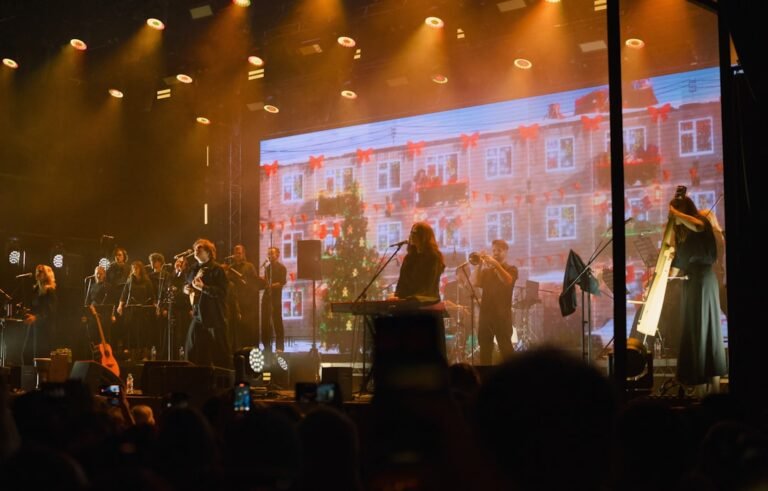
Organized into four distinct movements, the album operates with a compositional rigor absent from her previous work. The chaotic, sample-heavy collage of ‘MOTOMAMI’ is replaced by sweeping string arrangements and choral interventions. Tracks like “Memoria” demonstrate this shift most powerfully, where Rosalía’s voice, stripped of rhythmic manipulation, soars over cinematic swells from the London Symphony Orchestra. The production, led by Noah Goldstein and Dylan Wiggins, focuses on clarity and space, allowing each element—a harp glissando, a sudden blast of brass, a whispered prayer—to land with precise emotional weight.
This classical foundation becomes a stage for Rosalía’s most expansive vocal and linguistic performance. Singing in 13 languages, she uses phonetics and melody as pure expressive tools, transcending literal meaning. On “La Perla,” a waltzing indictment wrapped in elegant strings, her delivery is sharp and theatrical. Conversely, “Focu’Ranni” feels like a genreless incantation, her voice weaving through a minimalist electronic pulse and choral layers. The constant is her command, using technique to serve drama rather than display.
The album’s core tension lies in its fusion of sacred and profane iconography. Rosalía draws from hagiographies of female saints and mystic poets, framing earthly desire as a holy problem. “Sexo, Violencia, y Llantas” opens the album with this thesis, juxtaposing carnal imagery with a quest for celestial return. This philosophical through-line gives ‘LUX’ its compelling cohesion, even as it stylistically roams from the flamenco-pop of “La Rumba Del Perdon” to the cybernetic romance of “Novia Robot.” The subject is always transcendence, whether sought through a lover, a god, or art itself.
‘LUX’ is not an immediate record. It demands a listener’s surrender to its scale and solemnity, trading the instant hooks of “Bizcochito” for gradual, unfolding revelation. In doing so, Rosalía stakes a claim for pop music as a vessel for high-stakes existential inquiry, using every tool at a global superstar’s disposal—symphonic resources, linguistic freedom, devotional scholarship—not for spectacle, but for a deeply personal search. It is a bold, often breathtaking, recalibration of her entire project.
Join the Club
Like this story? You’ll love our monthly newsletter.
Thank you for subscribing to the newsletter.
Oops. Something went wrong. Please try again later.

ROMBO Editorial Staff
The collective voice behind ROMBO Magazine’s news, reviews, features, and cultural coverage.