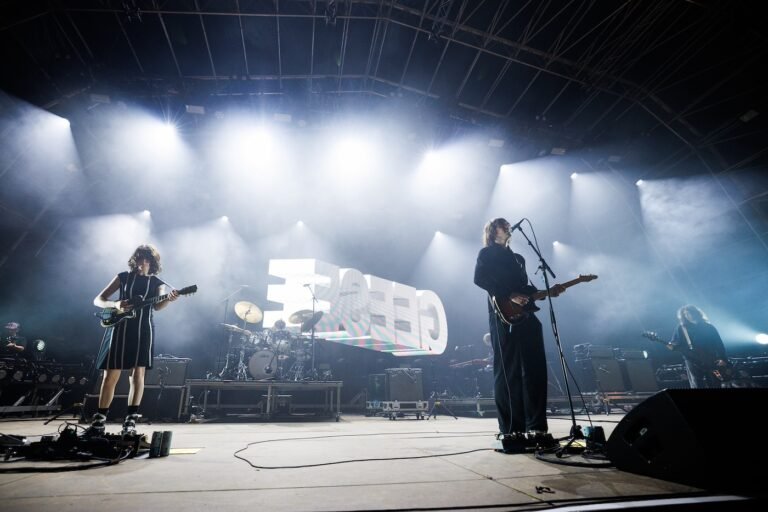
Jon Davison grows into his role as frontman on the new album, and the band’s generational split produces something sharper than compromise.
Four albums in, Jon Davison has stopped auditioning. On Aurora, his voice sits inside the music rather than reaching around it — a shift that matters more than any comparison to the past. Yes’ generational split, three younger members orbiting the twin anchors of Steve Howe and Geoff Downes, could produce a sound caught between homage and irrelevance. It doesn’t.
Davison handles the geometry with more instinct than before. On “Turnaround Situation” he switches from falsetto verse to gravel-toned chorus without theatrical strain. The performance suggests ownership, not reverence. Billy Sherwood, bassist in a role once defined by Chris Squire’s propulsion, decorates rather than drives. The choice works. It opens space.
Howe keeps his playing precise and occasionally surprising. “Love Lies Dreaming” rests on flamenco chord structures, a ballad anchored in texture rather than sentiment. Downes’ piano intro lifts the same track into chamber territory, and Davison benefits from the restraint. The title track, co-written by Davison and Howe, takes a stranger turn into funk — choppy rhythms that nod toward Nile Rodgers and Daft Punk, strings from the Czech National Symphony Orchestra pulling it somewhere closer to an alternate-universe Roy Wood single. Howe’s solo echoes Brian May, a reference point earned decades ago when he guested on Queen’s Innuendo.
Not everything stretches. “Countermovement” is a sprawling power ballad, dense and seriously played. Jay Schellen’s drumming has a survival-instinct urgency that fits the song’s scale. Downes layers symphonic riffs under Howe’s spiky guitar, and the two longest-serving members sound energized by the younger half of the lineup. Sherwood’s pop-leaning lead work on parts of the record distributes the arrangements more evenly than Howe’s producer credit might imply.
The album’s personality emerges in small decisions. Davison sings unadorned passages alone, warning about AI-curated advice and misspent youth. The symmetry could have collapsed into parody — Spinal Tap territory — but professional acumen holds it together. Aurora doesn’t chase the band’s classic era. It treats Yes as a living concern, which is the more difficult trick.
Join the Club
Like this story? You’ll love our monthly newsletter.
Thank you for subscribing to the newsletter.
Oops. Something went wrong. Please try again later.

ROMBO Editorial Staff
The collective voice behind ROMBO Magazine’s news, reviews, features, and cultural coverage.