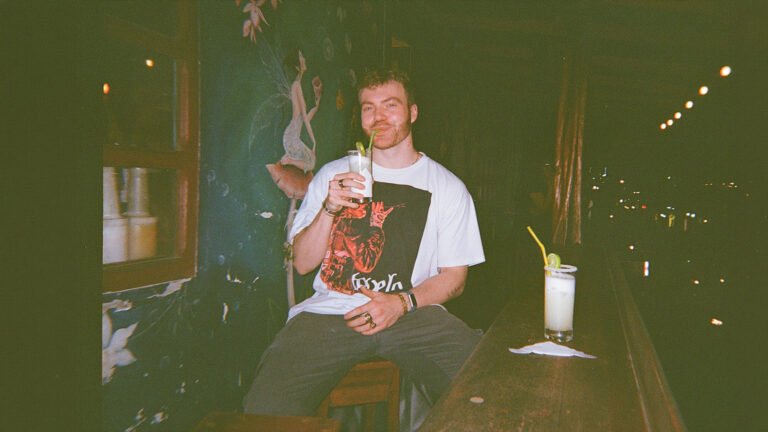
Jane Remover has constructed one of the most distinctive bodies of work in contemporary music by treating genre not as container but as material under constant stress. Their sound moves through distinct phases, early digicore precision, hyperpop fracture, shoegaze expansion, and the hybrid large-scale urgency of recent releases, yet the central method remains unchanged: forms are pushed until they crack, and in the fissures new emotional and structural possibilities emerge. The result is music that refuses resolution while insisting on presence, mapping the exact pressure points of digital-era listening with technical sophistication and unflinching directness.
Production began in 2011 with the physical force of dubstep—Skrillex’s tectonic drops, Kill the Noise’s serrated aggression, Virtual Riot’s technical density—before shifting in the mid-2010s toward EDM’s architectural ambition, with Porter Robinson’s sense of space and emotional scale as a lasting reference point. By 2018 the palette had incorporated trap’s raw emotional directness, shaped by artists such as Trippie Redd and Earl Sweatshirt. Early guest productions circulated through underground SoundCloud collectives including PlanetZero and Graveem1nd; self-released tracks from late 2019 already displayed a distinctive approach to digital fragmentation. Vocal lines were chopped, pitched and layered until they suggested dissociation rather than straightforward expression. Beats moved between half-time haze and double-time urgency without warning. Guitars entered not as melodic hooks but as abrasive interruptions, their distortion calibrated to hover at the edge of feedback. This was not genre fusion but genre stress: each element placed in deliberate tension with the others, creating a sound that felt both microscopic in detail and overwhelming in cumulative effect.
The 2021 debut album Frailty, released on DeadAir, refined this method into something sharper and more personal. Hyperpop’s synthetic brightness is constantly undermined—808 patterns buckle under sudden guitar stabs, vocal fragments fracture mid-phrase and reassemble in unrecognisable configurations, structures lurch between verse and breakdown without offering catharsis. The record captures adolescence not through narrative confession but through sonic instability: moments of melodic clarity are punctured by digital overload, as if the emotional centre cannot hold under the weight of its own contradictions. Pitchfork placed the album among the year’s most significant releases, recognising a debut that treated coming-of-age as live architectural stress rather than nostalgic reverie. What distinguishes Frailty is its refusal to resolve tension; the fractures remain exposed, and the listener is left inside the crack rather than guided safely to the other side.
Expansion and Return: Census Designated, Revengeseekerz and the Current Phase
Census Designated (October 2023, DeadAir) represents a deliberate expansion of the same core principle. Conceived after a near-death road trip, the album trades hyperpop’s pixelated stutter for slow-building walls of shoegaze and post-rock guitar. Layers of reverb-drenched instrumentation accumulate like sediment, each new overdub increasing harmonic density until the mix threatens to collapse under its own weight. Feedback is permitted to bloom into melodic material; drums recede into distant thunder rather than driving the pulse. The influence of My Bloody Valentine and Slowdive is audible in the textural approach, yet the emotional register stays closer to bedroom pop’s quiet desperation, only scaled to stadium proportions. Tracks such as the title song and “Lips” demonstrate how Remover transforms what was once digital fragmentation into analogue haze while preserving the underlying tension between intimacy and immensity. The shoegaze phase does not abandon the earlier method; it stretches it across greater sonic space, proving that pressure can be applied through accumulation as effectively as through abrupt rupture.
The 2025 album Revengeseekerz (4 April, DeadAir) reintroduces urgency without discarding the lessons of the shoegaze detour. Twelve tracks operate at the intersection of digicore, experimental hip-hop, rage and EDM, yet every production choice remains unmistakably Remover’s. Low-end carries rage-influenced distortion while high-frequency synth stabs and vocal chops maintain hyperpop’s serrated edge. Beats accumulate pressure through rapid syncopation rather than straightforward four-on-the-floor drive; sudden breakdowns dissolve into melodic haze before snapping back into focus. “Dancing with Your Eyes Closed” functions as both single and manifesto—arena-scale energy delivered through microscopic attention to detail, the vocal manipulation creating a sense of emotional dissociation even as the track pushes toward collective release. Danny Brown’s guest appearance on “Psychoboost” arrives like a foreign body in the machine: his distinctive flow collides with the track’s glitch matrix rather than riding comfortably atop it, adding textural friction that heightens the overall sense of controlled instability. The surprise EP Heart (December 2025) collects four 2024 singles—“Magic I Want U,” “How to Teleport,” “Flash in the Pan” and “Dream Sequence”—and adds two new pieces, “So What?” and “Music Baby.” Material originally shaped in a more expansive mode is reframed inside tighter, more intimate electronic structures, demonstrating that scale and closeness are tools to be deployed rather than fixed identities. Across both projects Remover continues to stress genres until they yield new possibilities, refusing any single aesthetic from hardening into formula.
“Dancing with Your Eyes Closed” captures the hybrid urgency that defines Revengeseekerz.
Live Command, Side Laboratories and the Widening Circle
Parallel projects function as essential pressure-release valves and testing grounds. Under the Leroy alias Remover pioneered dariacore, a microgenre of sample-saturated deconstructions that treat 2010s pop, viral clips and even their own earlier material as raw material for chaotic recombination. The three Dariacore albums and Grave Robbing (2023) remain vital documents of that impulse. The Venturing project yields slower, more narrative-driven indie-rock textures, most fully realised on the 2025 album Ghostholding and the single “In the Dark” (February 2026). These outlets prevent any one phase from becoming static while feeding new ideas back into the main catalogue.
Live, the same principle of sustained tension becomes physical and communal. After opening slots for Brakence (2022) and JPEGMafia (2024), Remover headlined the 2025 Turn Up or Die tour alongside Dazegxd and supported Turnstile across North America. A November 2025 review of the Manchester Ritz show captured the effect with precision: the artist moved “effortlessly and assuredly” across disparate influences—dubstep aggression, pop immediacy, shoegaze haze—while maintaining a coherent, commanding presence that felt definitive of a generation navigating fragmented reference points. Festival appearances at Fuji Rock and Lollapalooza in 2025, followed by Coachella in April 2026, extended that reach into larger fields. An upcoming North American Live Exhibit Tour with Dazegxd in 2026 continues the expansion. In live rooms the studio’s textural contrasts—clean synth lines against distorted low-end, microscopic vocal fragments against overwhelming collective energy—translate into shared intensity. What registers as internal fracture on record becomes temporary community onstage.
The audience has grown in parallel with the music’s expansion. It began in the digicore and SoundCloud underground—listeners attuned to rapid formal shifts, emotional directness and the refusal of polished surfaces. As the sound moved through shoegaze and hybrid large-scale work, new listeners arrived from adjacent scenes: experimental electronic fans drawn to technical sophistication, alt-rock and festival audiences seeking artists who treat genre as mutable material rather than fixed identity, and a widening cohort who value music that mirrors the speed and fragmentation of contemporary life without offering false resolution. The core appeal remains consistent: Remover’s work offers recognition rather than escape. It maps the exact pressure points of digital-era attention and emotion—moments of clarity punctured by overload, intimacy undercut by immensity—through production choices that reward close listening while scaling to communal experience. In an industry that often rewards simplification and fixed positioning, Jane Remover’s insistence on unrelenting tension functions as both aesthetic signature and quiet act of resistance. Their catalogue demonstrates that fracture need not be decorative; it can be the very architecture through which feeling becomes legible. The cracks are not healed. They are held open, and in the space they create, something sharper and more honest is allowed to emerge.
Join the Club
Like this story? You’ll love our monthly newsletter.
Thank you for subscribing to the newsletter.
Oops. Something went wrong. Please try again later.

ROMBO Editorial Staff
The collective voice behind ROMBO Magazine’s news, reviews, features, and cultural coverage.