The lead single from motko’s debut album home is a slow, heavy meditation on becoming closed off, bitter, and certain. It turns personal unease into enveloping alternative rock that refuses easy resolution.
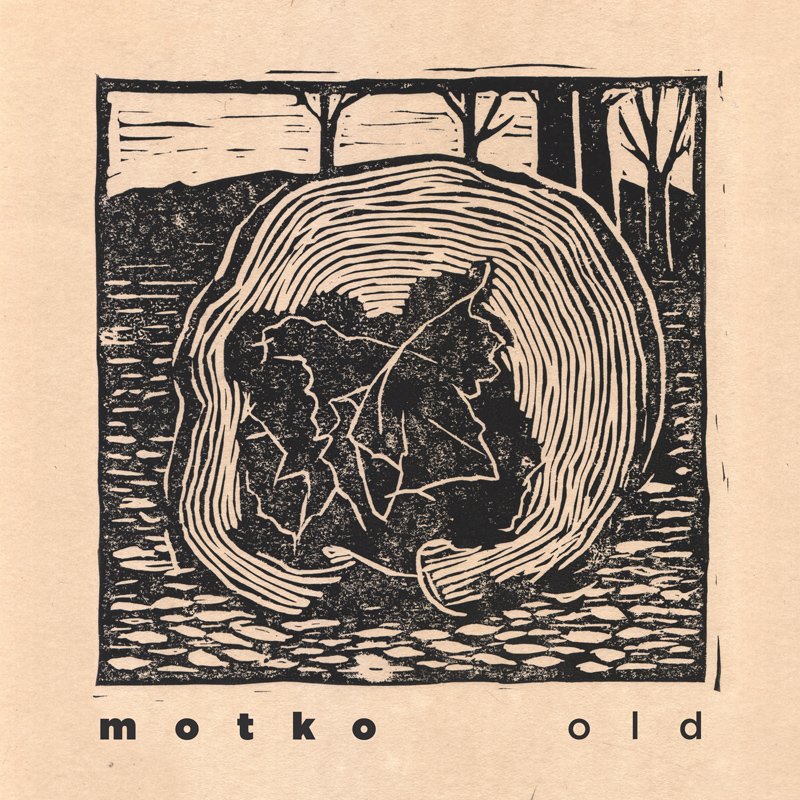
The artwork for motko’s debut single shows a single leaf suspended inside concentric rings of woodgrain, carved with the stark economy of a linocut. It feels less like decoration and more like a diagram of time itself: growth rings that speak of age, pressure, and the slow accumulation of years. The image sits perfectly beside the music. When the opening guitar riff of “old” arrives, it carries the same quiet weight, the same sense of something organic slowly hardening into permanence.
motko is the solo project born when a musician who had spent years inside the shared energies of bands such as Millhouse, Symbiosis, and the progressive metal outfit IONS chose to work entirely alone. The decision came from simple curiosity. The result is the forthcoming nine-track album home, due towards the end of July. The record moves with deliberate slowness. Its nine pieces function less like discrete songs and more like scenes from an extended film: sustained atmospheres, emotional landscapes, and carefully layered moods that invite immersion rather than immediate gratification. The lowercase name is deliberate. It points toward restraint and interior focus.
Although released as the lead single, “old” actually sits as the sixth track in the nine-track sequence of the forthcoming album home. The first guitar line enters like an uninvited memory, nostalgic in colour yet edged with a darkness that settles deep in the chest. From that initial gesture the track unfolds with patient, almost geological patience. Slow, heavy alternative rock builds in careful layers. The rhythm wraps around the listener rather than pushing forward. Tension gathers gradually while the music steadfastly refuses any quick release. Each new element adds density. The entire piece remains suspended in a state of introspective unease. Time itself becomes a material here, stretched and examined until it reveals its own weight.
The song grew from a very specific fear. Its creator has watched people around him, sometimes those considerably younger, undergo a particular kind of aging. Not the passage of years in the body, but the slower, more insidious hardening of the mind. Bitterness takes hold. Openness recedes. Certainty arrives early and stays forever. The artist chose to stare directly at that fear instead of turning away. The result is an unflinching examination captured in one haunting image: a massive stone slowly growing around the heart. The lyrics do not dramatise the feeling. They simply let it exist with complete honesty.
Sonically the track achieves a rare alignment between form and subject. The production treats atmosphere as architecture. Concentric guitar lines trace rings of quiet dread. The low end supplies an almost physical gravity. Around the two-minute mark a controlled distortion swell rises with visceral force. It is the exact sonic counterpart to the internal pressure the song has been describing. The moment feels inevitable, the way stone finally breaks through the surface. Echoes of Failure’s textural patience, Radiohead’s emotional precision, and the heavy spaciousness once explored by Queens of the Stone Age appear, yet they are reshaped into something distinctly personal. The influences serve the vision. They never define it.
What elevates “old” beyond a strong opening statement is the way it establishes the grammar for the entire album home. The nine tracks form a cohesive world. Scenes accumulate meaning through repetition, restraint, and deliberate emotional mapping. In stepping away from the collaborative dynamics of earlier projects, the artist has located a space where personal unease can be examined with clarity and courage. The music stays introspective without ever becoming solipsistic. It feels uncomfortable at times, yet it carries a subtle catharsis that arrives only after the listener has sat with the discomfort long enough for it to begin its slow transformation.
This approach situates motko within a particular lineage of contemporary alternative music. The work values duration and psychological depth over immediacy. It recalls the way certain records from the 1990s and early 2000s allowed atmosphere to become structure itself. At the same time it feels unmistakably of the present moment. Emotional calcification can register as both a private affliction and a wider cultural condition. In an era defined by constant stimulation and performative openness, the choice to move slowly and demand sustained attention becomes its own form of resistance. motko enacts relevance through patient craft and emotional honesty.
The visual identity reinforces every sonic decision. The linocut artwork that accompanies the single presents stark black-and-white forms on aged paper. Layered natural elements suggest the same tactility heard in the music. Nothing appears glossy or overly polished. Everything feels handmade and considered. The lowercase presentation and the absence of unnecessary spectacle extend the same internal logic that shapes the songwriting. These choices resist the disposability that marks so much contemporary release culture.
As the emotional centrepiece of home, “old” sets a high bar for everything that follows. The album promises to continue exploring themes of departure and return, of moving far enough away to understand what it means to remain. In an independent music landscape often driven by volume and velocity, motko offers something rarer. A debut that trusts the listener’s capacity for sustained attention and rewards it with genuine depth. The record does not chase trends or attempt to define a scene. It simply occupies its own carefully constructed space with conviction and invites the audience to enter on its own terms.
In transforming private unease into shared sonic territory, motko has produced more than a lead single or even a promising debut album. The work offers a thoughtful meditation on vulnerability. It asks the listener to remain with discomfort long enough for it to begin its slow, necessary transformation. In doing so, it reminds us why certain records continue to matter long after the first listen. They understand the weight of what remains unspoken.
Follow motko
old is out now. The album home follows towards the end of July. Stream the single and explore the catalog below.
Listen: Hyperfollow (DistroKid) / Bandcamp
Official: motko.eu